• Having travelled by Eurostar more than a few times now,  I’ve picked up a few ideas about how to make experience pass as smoothly as possible. Here are my top ten tips for travelling from London:

    1. Firstly, if you’re travelling from another UK mainline station you can book a through ticket via the Eurostar site (eurostar.com). This will almost certainly save you money, possibly lots of it. Just click on the United Kingdom tab when searching and find your local station. 
    2. On arrival at St Pancras the Eurostar terminal is well signposted and there’s a nice sized area outside the barriers to gather yourselves. Here you will also find the help desk and the collect at station ticket terminals. There are quite a few gates and they’ll have particular trains showing on the screens above them but you can use any that are open if the queues are shorter. (Update: the queueing system has changed a little since Brexit and the pandemic so is actually now a little smoother)
    3. BUT before going any further get yourself ready for the security check the other side of the ticket barrier. There’s very little room once through the gate so empty your pockets now. If you have a coat you will have to take it off for the check so put all your loose items; phone, coins, keys, wallet etc., in its pockets, otherwise put it all in your hand luggage or even a carrier bag. 
    4. Have your tickets and passports ready. If you’ve printed your own tickets you’ll need to have the QR code showing so you can press it up against the reader on the barrier – this takes a couple of seconds so don’t take it off until the light goes green and the barrier opens.
    5. The security check area is, as I said, immediately after the gate. Hopefully you’ll have read and acted on point 3 and are completely ready to proceed. You’ll need a tray. They are kept under the conveyor so grab one and put your coat in it with your bags on top. If you’ve got a suitcase get another tray for that and push them up towards the x-ray machine. Walk through the metal detector and collect your belongings from the other end of the belt. Remember to push your trays towards the end where they’ll get swallowed up and sent back to the start. Not doing this annoys other people. Move away towards passport control before even attempting to put all your stuff back where it belongs but preferably wait until you get all the way through. The checks are much less onerous than at the airport but getting ready cuts time and allows a brief smug smile to pass across your lips.
    6. This is not really a tip but there are two passport checks, UK and France, out and in, and of course your passport is already in your hand by now isn’t it? Join the right queue – all windows will take EU passports, only one or two will take non-EU ones (edit: sadly that is now the window you want). Hand it over open at the appropriate page and wait politely. Try to avoid getting in the queue behind the thoroughly disorganised person with at least two massive suitcases because there’s always one.
    7. When you get through to the waiting area you can finally reorganise yourself at your leisure. You won’t need your ticket again but make a note of which coach you are in and check the screens for boarding notices. There are two travelators up to each of the platforms and getting the right one will depend on your coach number. Incidentally, coach 1 is always nearest the exit in London, while coach 18 (or 16 in the new e320 trains) is always nearest in Paris – useful to know if you’ve got a tight connection.
    8. Once it’s announced that your train is boarding, people will rush. Everyone has a reserved seat and there’s plenty of time so rushing seems unnecessary, but if you have a large case you’ll need space on the luggage racks by the entrance doors to your coach. However, there’s usually another rack just inside the carriage and medium cases will fit in the above seat racks so assuming you aren’t the person with two massive cases getting in everyone else’s way, you can confidently saunter along and take your seat once all the hullabaloo has died down. 
    9. Going to Brussels? Look out for the escalator halfway along the platform at Brussels Midi if you’re making a connection for an onward train, it’ll save you time and hassle.
    10. Exiting Gare du Nord Paris is just like any other regular station, but when coming back it has one of the most uncomfortable waiting areas going, so try not to get there too early!
    Overall, travelling by Eurostar is quick and hassle-free and hopefully these tips will aid restful travelling. 
    Any comments, thoughts or suggestions, even corrections are most welcome.
  • Amsterdam

    Amsterdam

    May 2015

    Our third visit to Amsterdam was lovely; it’s an easy-going city perfect for a short break and we always have a great time. Our previous visits have been in winter so a trip in spring is a welcome change, especially as on our first trip coincided with frozen canals and the lowest temperatures for 20 years. One of the main reasons we’ve come back again is to visit the newly refurbished and fully reopened Rijksmuseum as well as to enjoy a much needed holiday. Usually we opt for the Iamsterdam city card, but this only gives a 10% discount for the Rijks, so planning ahead I discover that there is also the 30 day Museumkaart which will get us in to everything the city card does, plus the Rijks, for free. Alongside a four-day travel pass from GVB it works out at much better value all round. Armed with this information and a clutch of train tickets we set off from Fratton on a promisingly sunny morning.


    Booking a through ticket via Eurostar.com is both simple and usually excellent value as the Fratton to London portion can be very much cheaper this way and is valid for travel from whatever terminal you arrive at, across London, to St Pancras. However, every time we approach the underground clutching our Fratton to London International tickets, we are ever more certain that they will fail to open the barrier and we’ll have to show them and explain ourselves to the busy TFL attendant to let us through. And then of course, out again. Why this should be is beyond me but these frustrations aside, boarding the Eurostar is as straightforward as ever and we’re soon on our way.

    Brussels midi station is still a bit on edge after the recent attacks, so the usually convenient escalator down from the Eurostar platform is closed.  We end up working our way around and down to find the Thalys departure area where no-one is as sure as our Eurostar train manager was as to which platform the train to Amsterdam will be leaving from. Twenty minutes, we are told, and all will become clear. Hanging about for this revelation in a rather stark waiting room is fine but there’s no departure board in there or indeed any other information source so we’re taking turns to check the board before our train appears proving the Eurostar announcer right all along. However, there’s a little more confusion as we’re initially directed towards the wrong train but a very helpfully strident platform assistant points everyone across to another Thalys arriving on the other side of the platform and we’re soon hurtling through Belgium at speeds far in excess of those managed by even the fastest UK trains. A standard class seat in a Thalys is also much more comfortable, even if the much trumpeted WiFi is patchy at best.

    Arriving in Amsterdam I realise my complacency in having been twice before means my planning has fallen short of actually getting to the hotel, I haven’t even brought a map, so after buying our travel chipkaarts there’s a few minutes working out where the hotel is exactly and what tram we need to catch to get there.

    The hotel is in a very nice area by the Vondelpark and looks quite promising from the outside but once inside things get different very quickly. We have to pay in advance which is never a good sign, and there’s no lift. We’re on the third floor. Struggling up the increasingly steep stairs I manage to knock a picture off the wall before the stairs turn up the final flight almost vertically. The bed is great but the bathroom is pokey and a bit worn and, get this, we share a window with next door!

    Tuesday

    Breakfast is not included and at an extra €10 per person, not worth it, so we head off towards Museumplein for on the way is Bagels and Beans where we enjoy a fresh and tasty.breakfast in a funky setting before our visit to the Stedelijke, which is rapidly becoming my favourite modern art museum. Alongside the regular and intriguing exhibits there’s a special exhibition of the Amsterdam School, the architectural style movement looking a lot like the bastard child of Charles Rennie Mackintosh and the Vienna Secession and absolutely fabulous.

    Lunch is at our favourite old style (but actually modern) café up by the Blauwbrug. We discovered its welcoming embrace during our first visit that freezing February and spent half the afternoon lounging on their sofas drinking coffee and mulled wine and stroking the cat before venturing out into the cold again. Now unfortunately cat-less, it’s still a nice place to go and we enjoy a fine sandwich before heading back to Foam, the photography gallery, where there’s a couple of  thought provoking interpretations of the migrant crisis.

    Our first two evenings have followed much the same course; beers at Het Hok before traditional Dutch fare at the very popular The Pantry two doors down. ”Traditional” here means various flavours of mash with a smoked sausage or giant meatball alongside other hearty cooking like ham hock and beef stew. The food is delicious and the atmosphere convivial.

    Wednesday

    Wednesday is all about the Rijksmuseum. Well, nearly all.
    It’s another sunny day as we stroll across Museumplein past the holocaust memorial and iamsterdam sign. The entrance to the museum is through the basement so, skipping the queues with our museumkaarts in hand, we dive in.

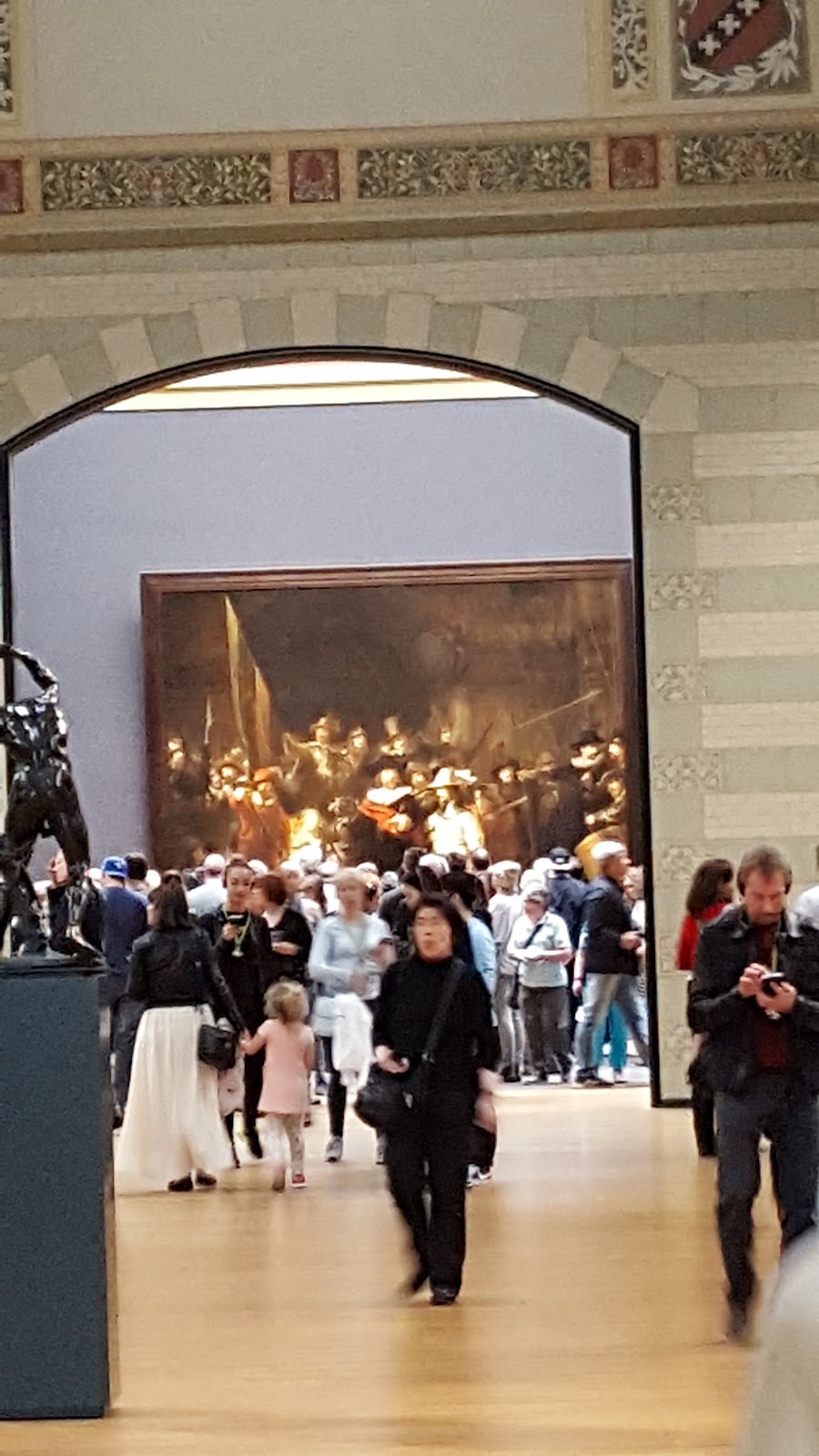
    We spend more than half the day exploring the newly and brilliantly refurbished Rijks. And while much attention is focused on the “Gallery of Honour” with Rembrandt’s Night Watch taking centre stage among some of the greats of the Dutch Golden Age, the lower galleries house examples of some of the most exquisite craftsmanship you can imagine and there are other stunning works at every turn. The museum displays are well organised, by date mostly, but it’s worth taking some time to plan your way around as it’s not necessarily obvious which is the best route to take. The first floor, for instance, is in two unconnected halves as the roadway cuts through it. All things considered it’s a brilliant way to spend a few hours even if the lavatories are harder to find than you’d prefer.

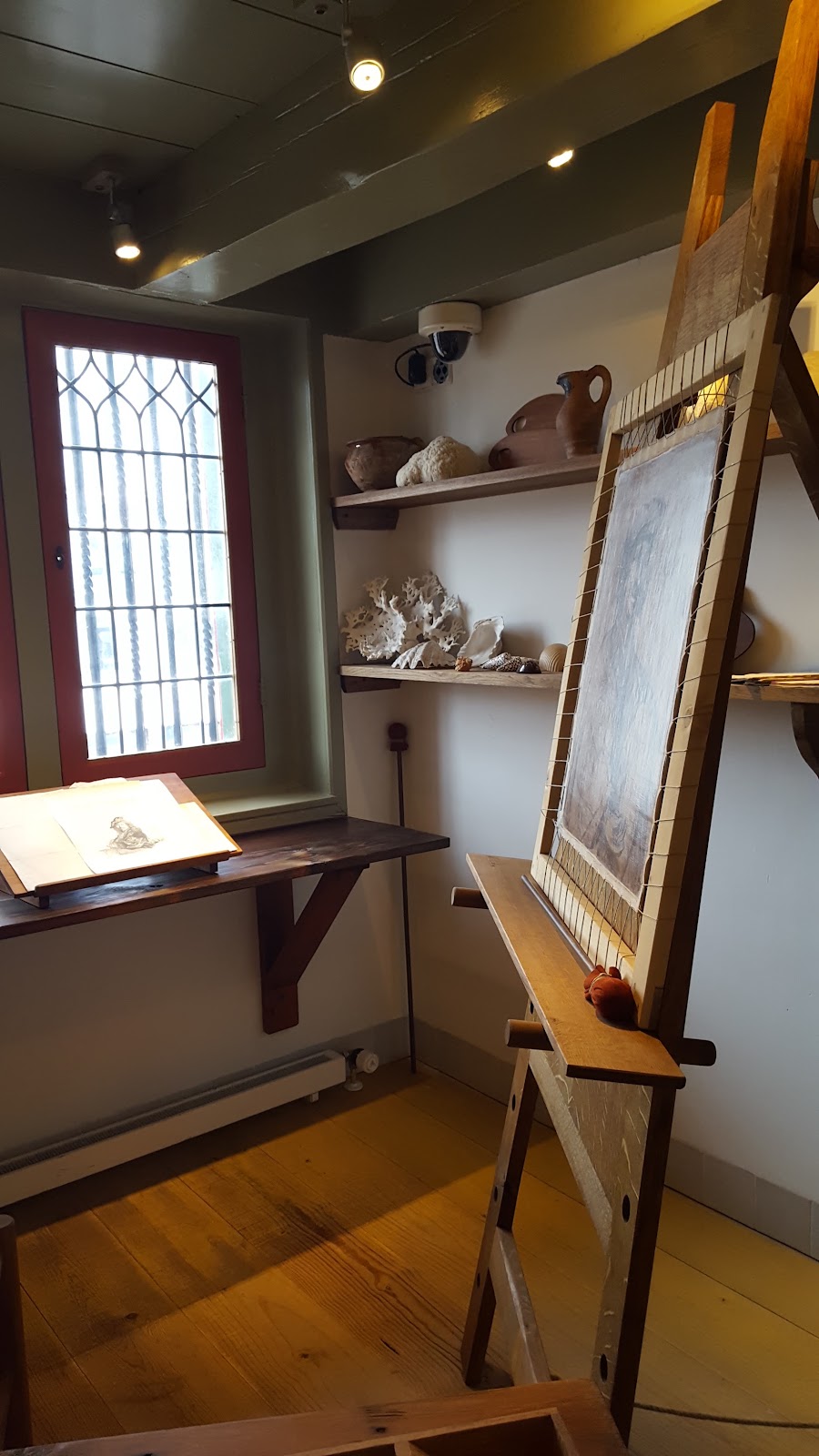
    After a late spot of lunch we head off across the city so we can visit Rembrandt’s House again. Our route to Waterlooplein takes us for the first time in three visits along the metro, which is as clean and efficient as you’d expect and after a wander through the flea market we arrive. To my mind Rembrandt van Rijn was something of an alchemist with paint and a trip to this house museum is always a joy, for me at least. Today we are in time for the paint mixing demonstration and we discover they’ve recently opened the top floor showing the studio space his students would have used, and in the new building there’s a great exhibition of nudes drawn by him and his contemporaries too.

    Across the road is a bar on the canal and a much needed beer is enjoyed while watching the boats pass by. On the opposite corner of the canal, nesting in a half submerged boat, is a family of cootes and unfortunately one chick has got out onto the water. One of the parents desperately tries to persuade it back into the boat, a task seemingly beyond the chick’s capabilities – the side of the boat is a good foot out of the water – unfortunately all to no avail as a seagull swoops down and carries the youngster away. Nature red in tooth and claw, so to speak, was not what we were expecting in this quiet corner of Amsterdam!

    Today is also the day in the Netherlands when they remember the war dead. There’s a two minute silence at 8pm and a big gathering in Dam Square with the King attending, which is throwing the tram schedules well out of whack and we end up walking most of the way back to the hotel for a rest before dinner. We’ve booked at the Koffiehuis van der Volksbond where we’ve dined on previous trips and it’s just as lovely as before, even if it’s a bit weird being there in daylight on a warm spring evening. A perfect end to the day.

    Thursday

    The following day is Liberation Day, a public holiday, and the crowds are out in force on another beautiful sunny day. We wander up to Dam Square with a view to seeing the World Press Photo exhibition at the Niewe Kerk but it doesn’t open until the afternoon so we visit the fairly dull royal palace instead before pottering about the city centre and having a beer by the Niewe Maarkt.

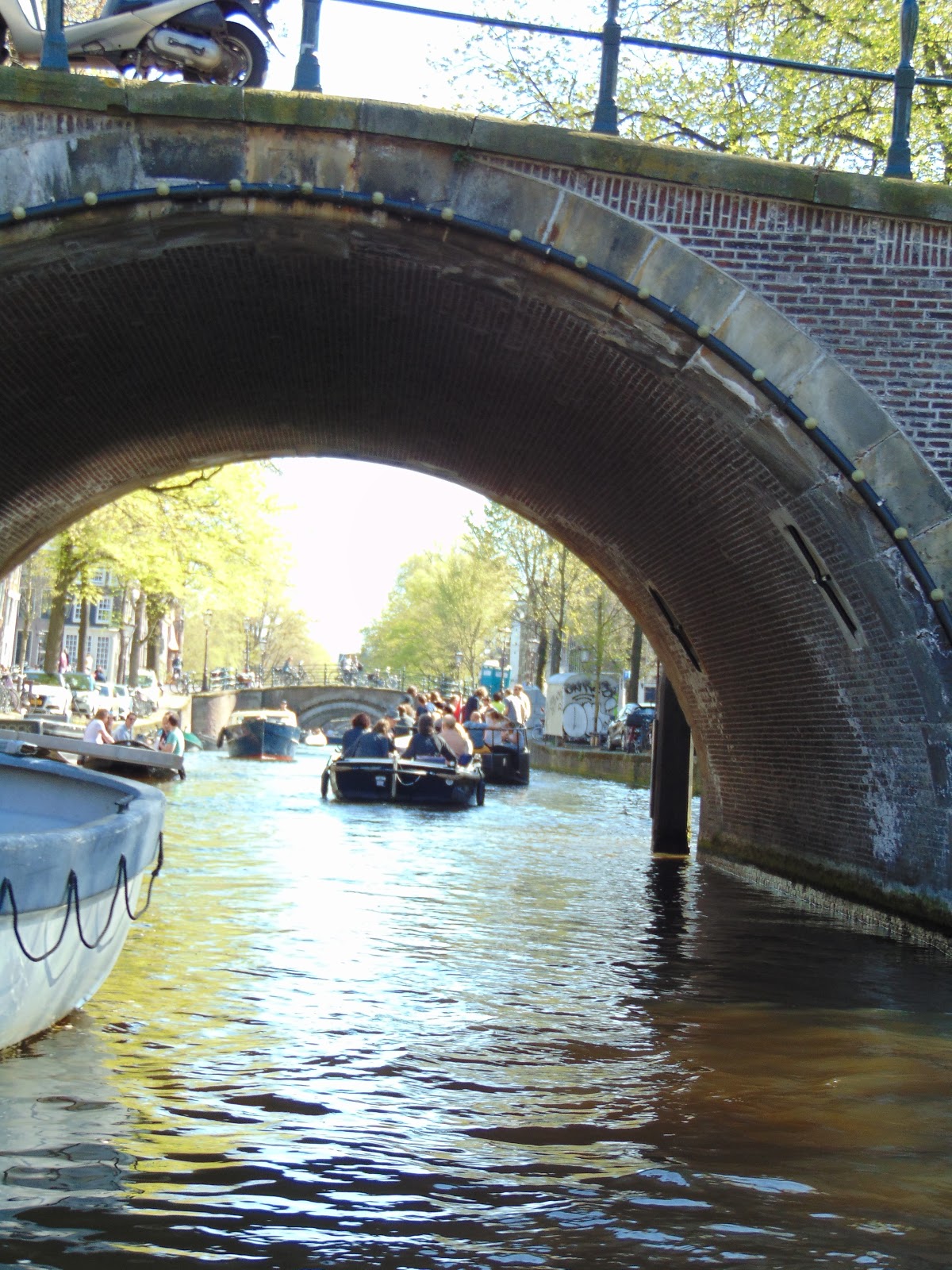
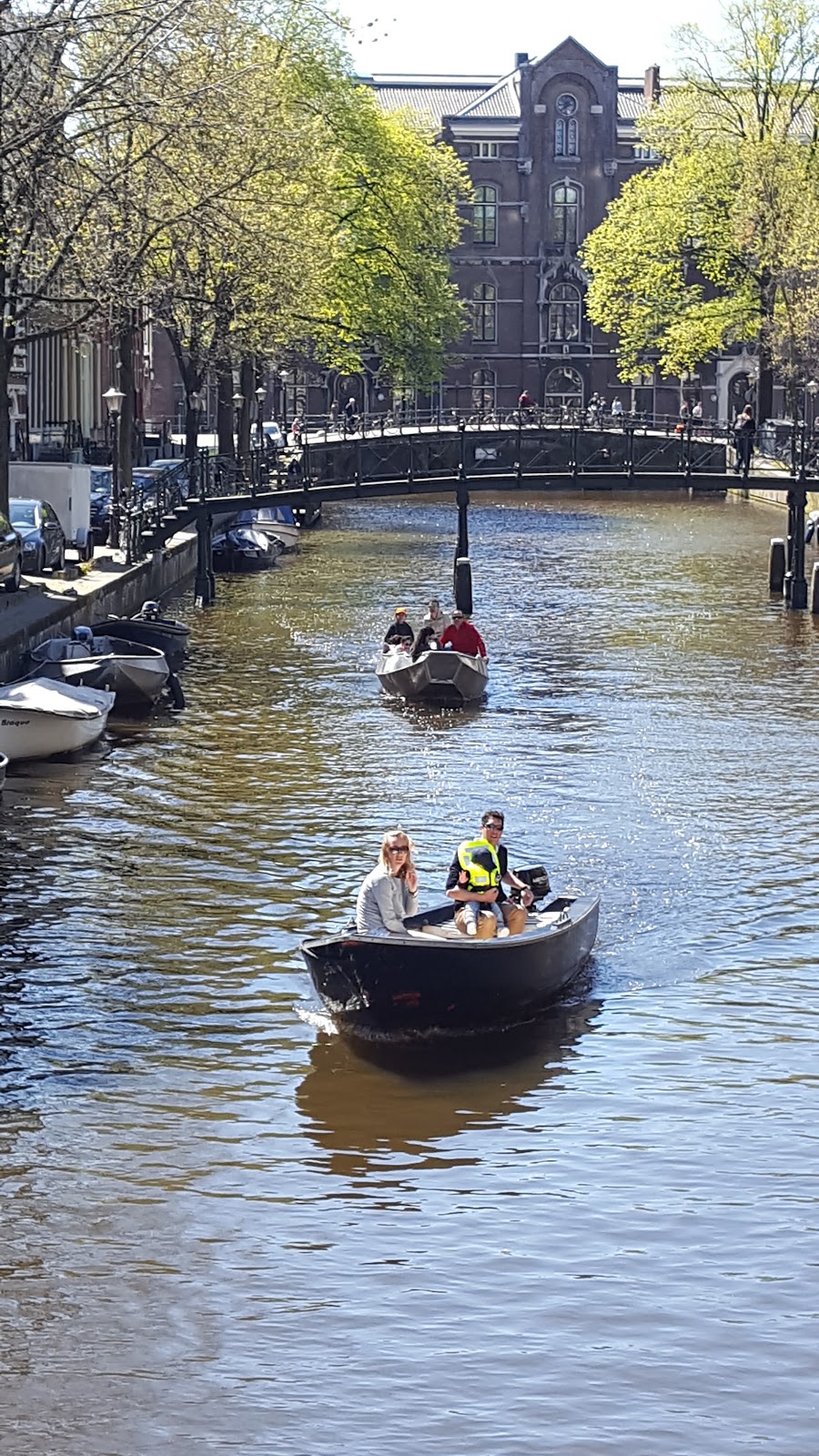
    After returning for the photography exhibition and some coffee and cake we decide it’s high time we took to the water. There are boats of all types and sizes thronging the canals and more than one collision but it’s wonderfully relaxed and good humoured and we have a ball.

    Dinner is at a nice little restaurant in the centre that our friends have used before. There are no reservations taken at this very popular place so timing is everything. We get one of the last tables and enjoy a decent meal with excellent service.

    Oh, and if someone offers you a Dutch salted caramel lolly just politely decline. If you don’t, at some point later your mouth will be filled with the most hideous liquorice powder and you’ll be left gagging into a nearby canal.

    Friday

    Friday morning sees us grabbing breakfast in a café near the station before catching the train home. Brussels’ Eurostar experience is about the most relaxed of the three principal stations and aside from a brief stop at Calais, completing the set, we’re back in London by (late) lunchtime. We’re travelling back to Portsmouth via London Victoria and thanks to the ongoing disorganisation of British railway operators we stand, necks craned, staring at the departure boards for an eternity until just five minutes before departure it finally shows us which platform our train will be leaving from. This, naturally, precipitates a mad rush for a seat in the right part of the train before we can settle down for the final leg home.

    Carbon saved: 50kg

  • Southend on sea

    Southend on sea

    April 2016

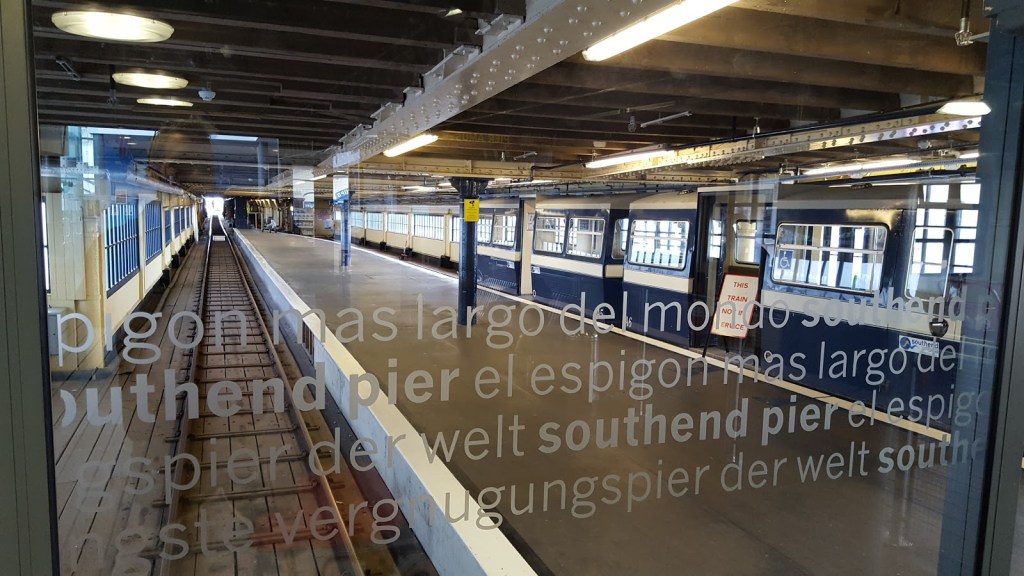
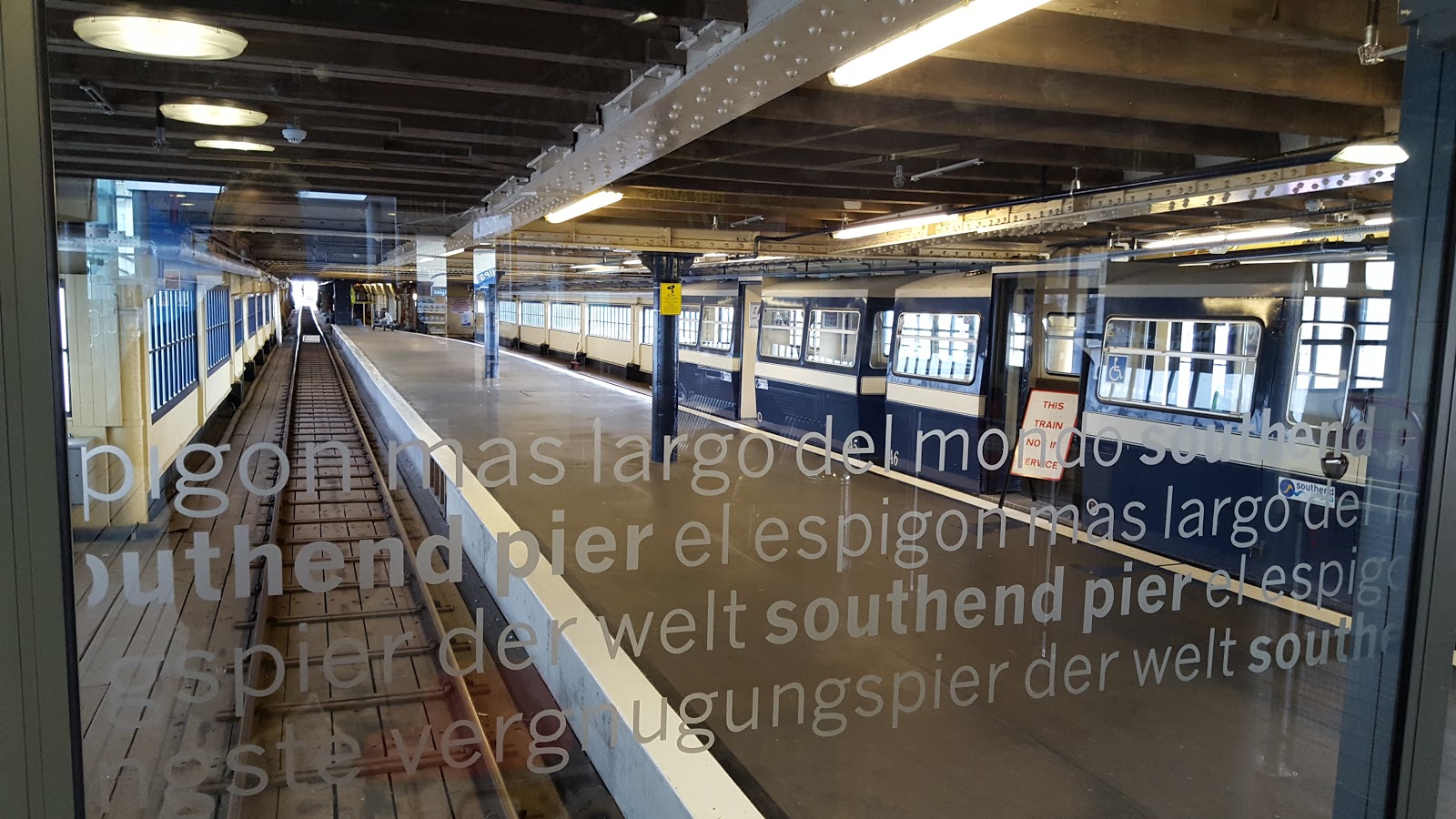
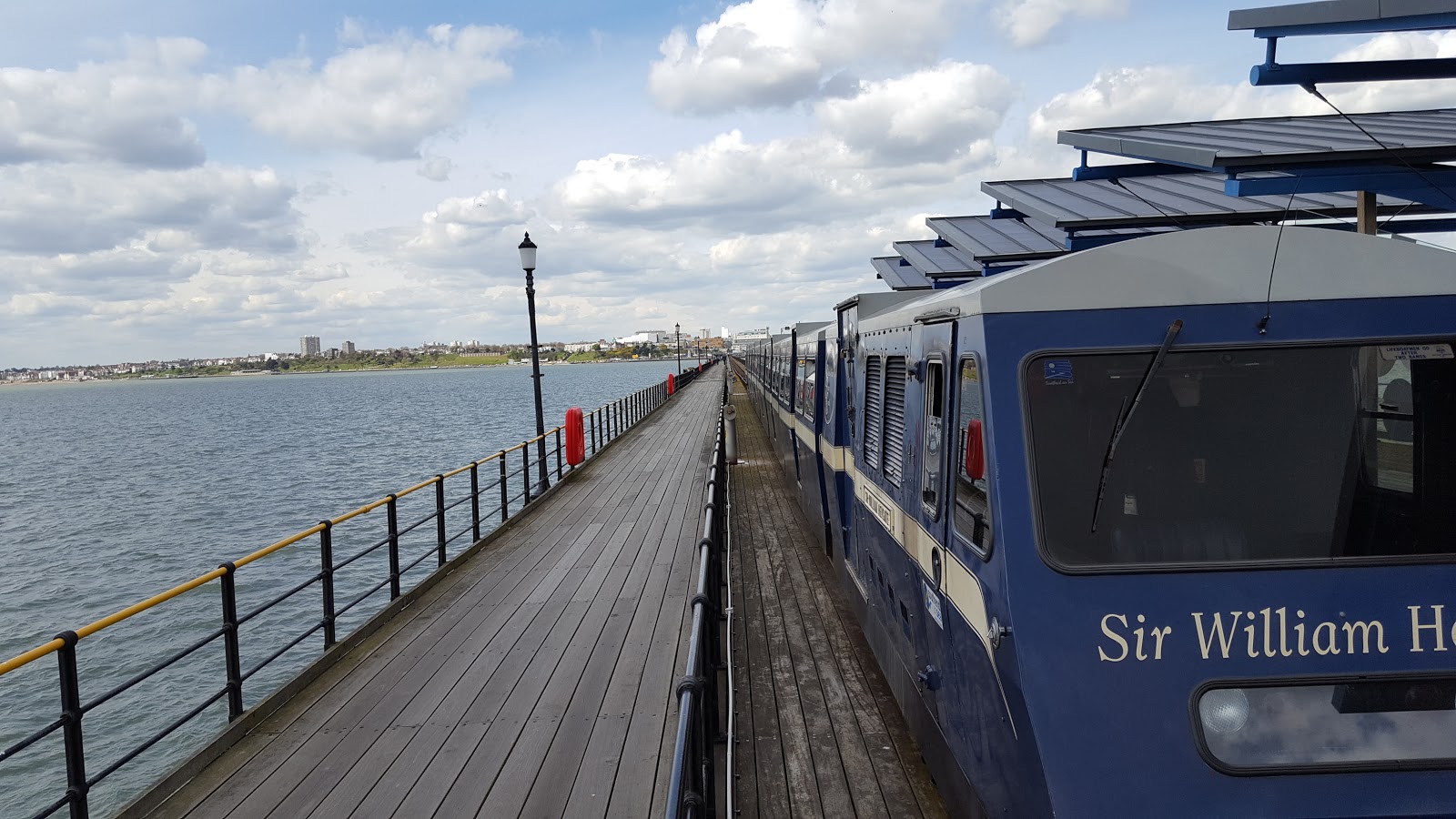
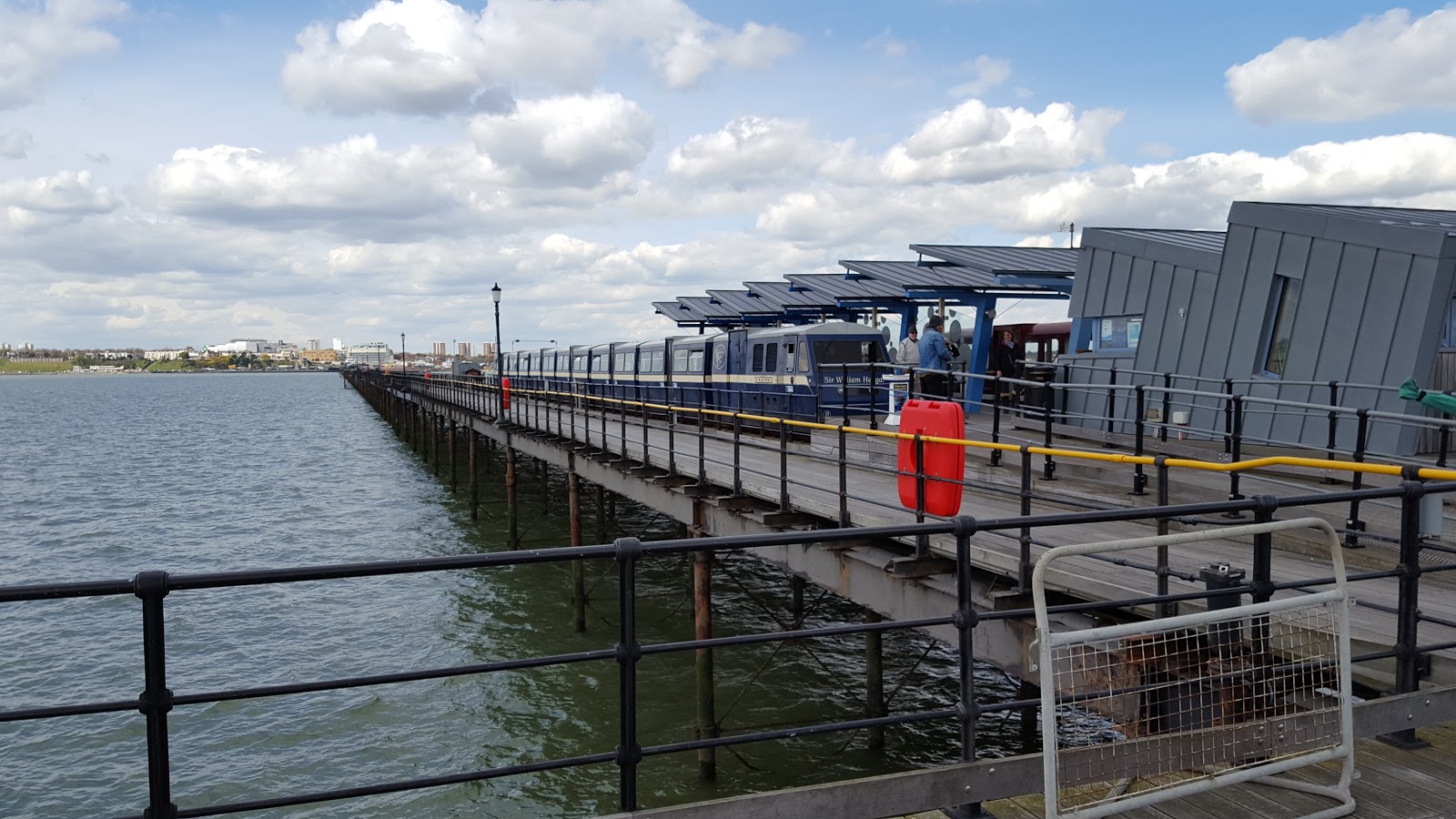
    Not strictly a proper train journey as we drove to Essex to visit some childhood haunts and attend our last ever Bellowhead gig, but we did take the chance to ride the Southend pier railway while we were there. Southend pier is the longest pleasure pier in the world at a mile and a third, stretching out into the Thames estuary and its trains trundle back and forth every 15 minutes to the café and lifeboat station at the end.

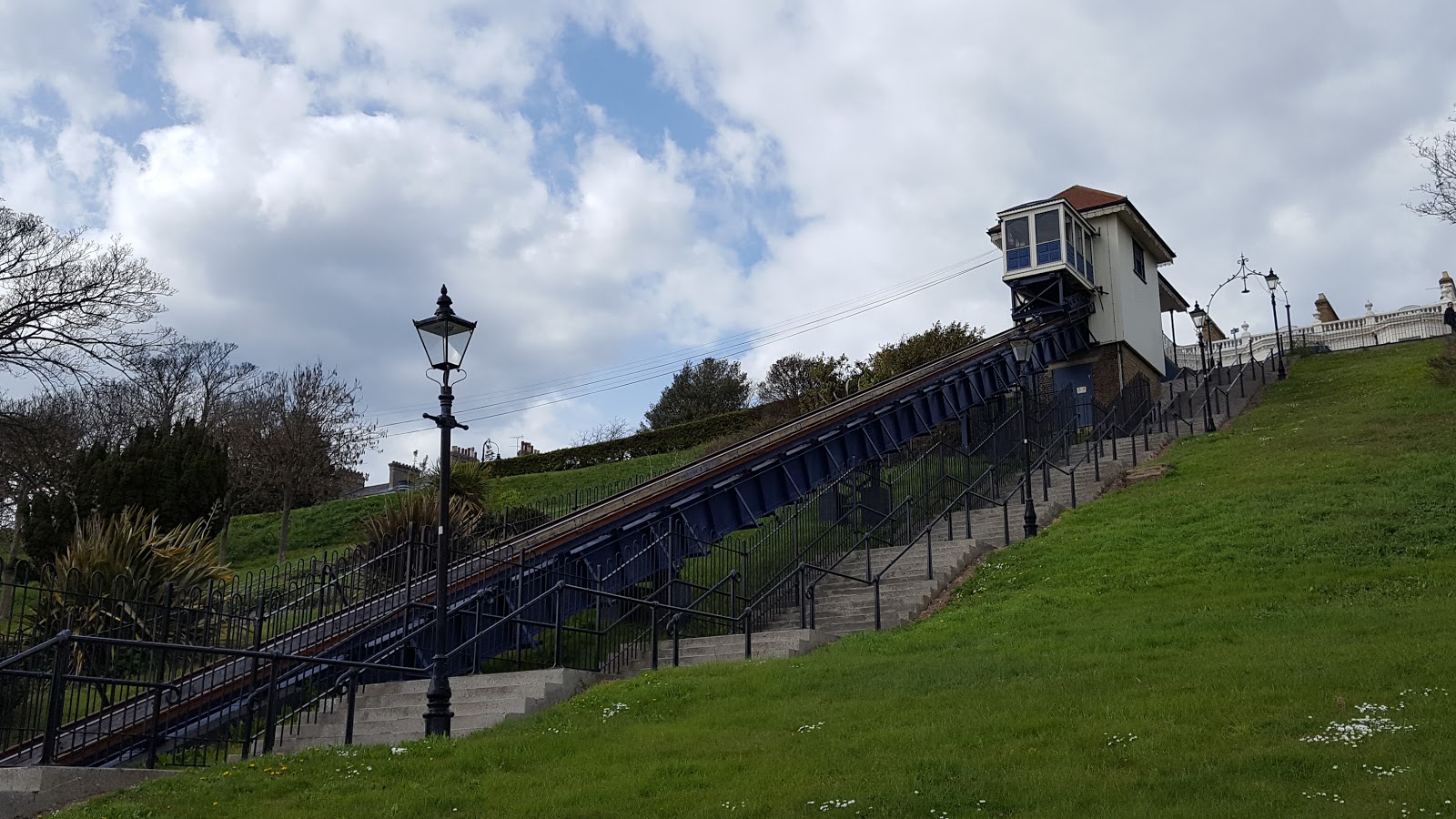
    Then there was the added bonus of the “Cliff Lift”, a short funicular from the seafront to the top of the cliff gardens. In fact the only downside to the whole day was the absence of the tutti fruiti ice cream I was looking forward to.
    We’re off on our travels again next week, back to Amsterdam by Eurostar and Thalys, so more soon.

  • Danubian Adventure – part two; Vienna

    Day six of our holiday dawns and we’re off to Vienna, picking up our tickets, first class this time, from the automatic machine at the station. The weather’s turned, there’s rain in the air, which by the time we reach the border is hitting the ground pretty hard. Budapest and Vienna are within spitting distance of each other and we roll into the Westbahnhof before lunchtime. Our hotel is six stops on the metro, near the Donaukanal. It looks a bit 1970s from the outside but is very comfortable and with a metro and tram hub right outside, handy for everything. The rain has eased and we wander into the centre and have a look round. I’m trying not to burst into song but there’s a post-downpour mistiness and the steady beat of a synth drum in my head.

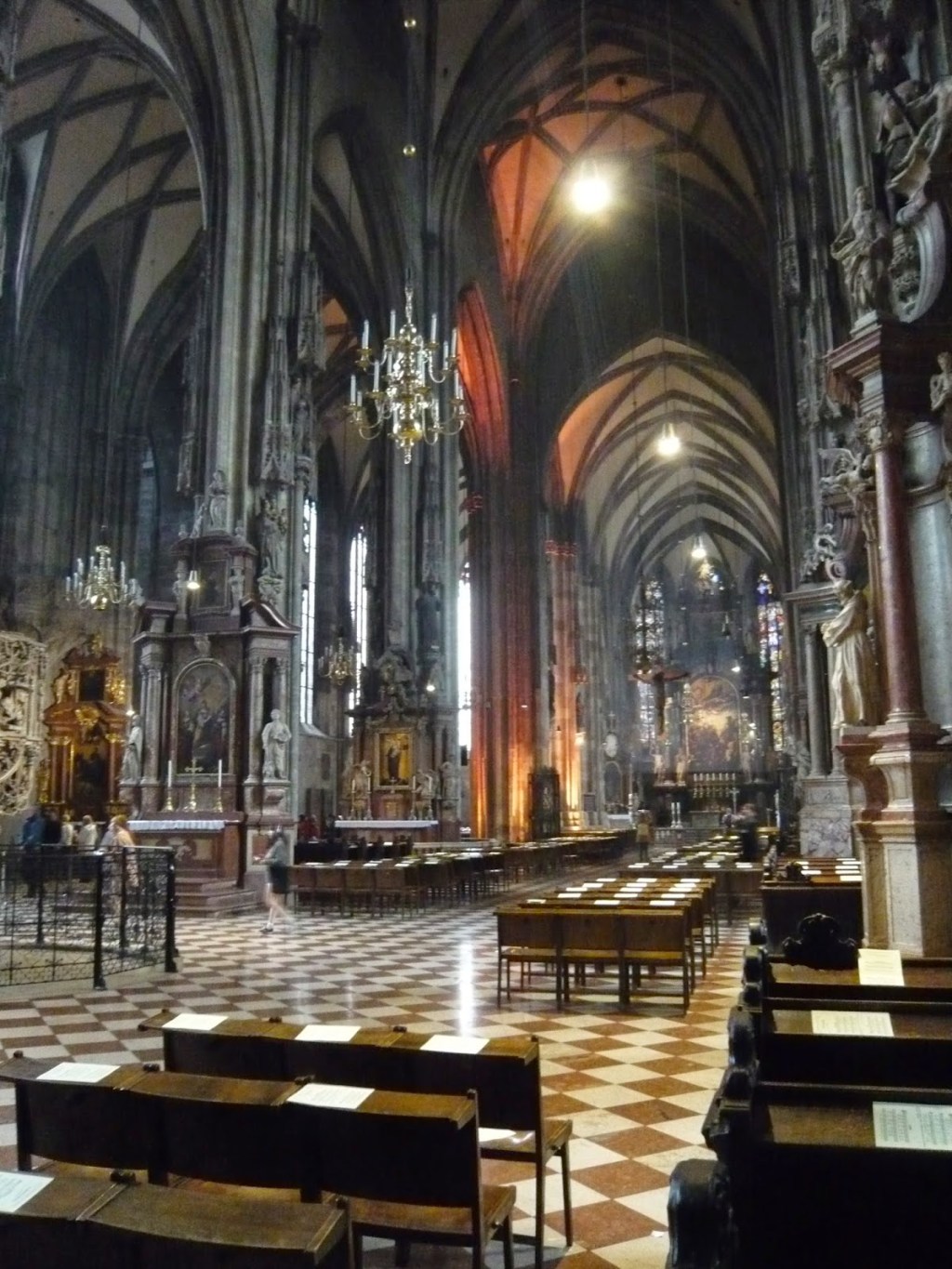
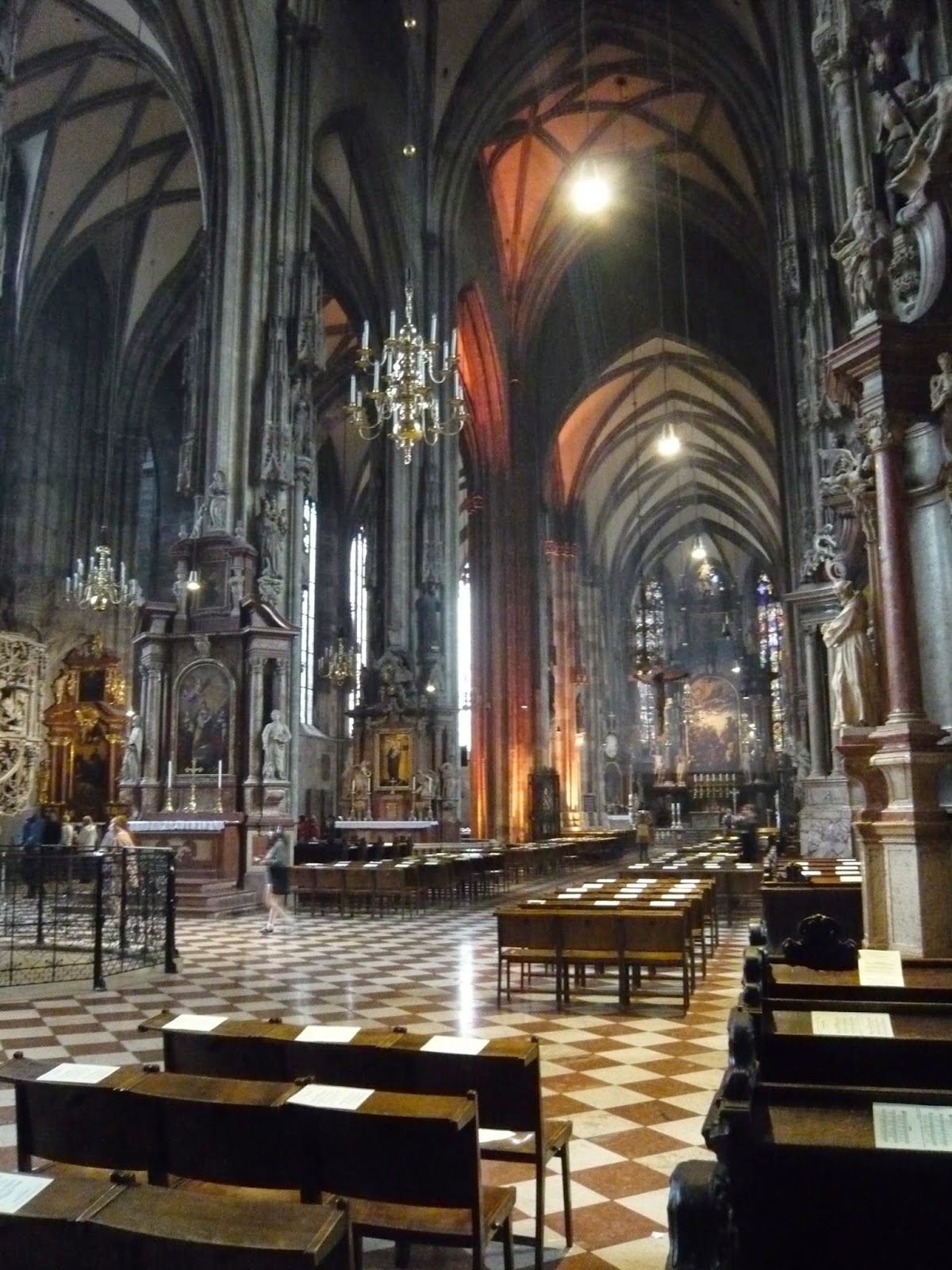
    Just around the corner from Stephanplatz and its dark and brooding St. Stephen’s cathedral, so different from its Hungarian namesake, is the Mozarthaus and we go in just as the rain restarts. The composer looms large across the cultural landscape of Vienna but despite this ubiquity we later manage to buy a small bust of Beethoven for our souvenir by mistake!
    The museum is a fascinating tour through Mozart’s life and times in one of his many Viennese houses with scores, a few instruments even some original décor. It also sets the record straight on the Salieri controversy. The rain has stopped again by the time we leave.

    We’ve scouted out three options for dinner just round the corner from the hotel, but one of them is shut and another doesn’t appear to be there any more so we head into the third. It advertises traditional Austrian fare and I’m down for an authentic Wiener schnitzel followed by apfel strudel. Obvious but so tasty. Sarah’s main course comes in two halves it’s so substantial. It seems a really genuine place, there’s an old man and his very small dog at a table by the door and the patron is very friendly. We like it so much we eat here both nights.
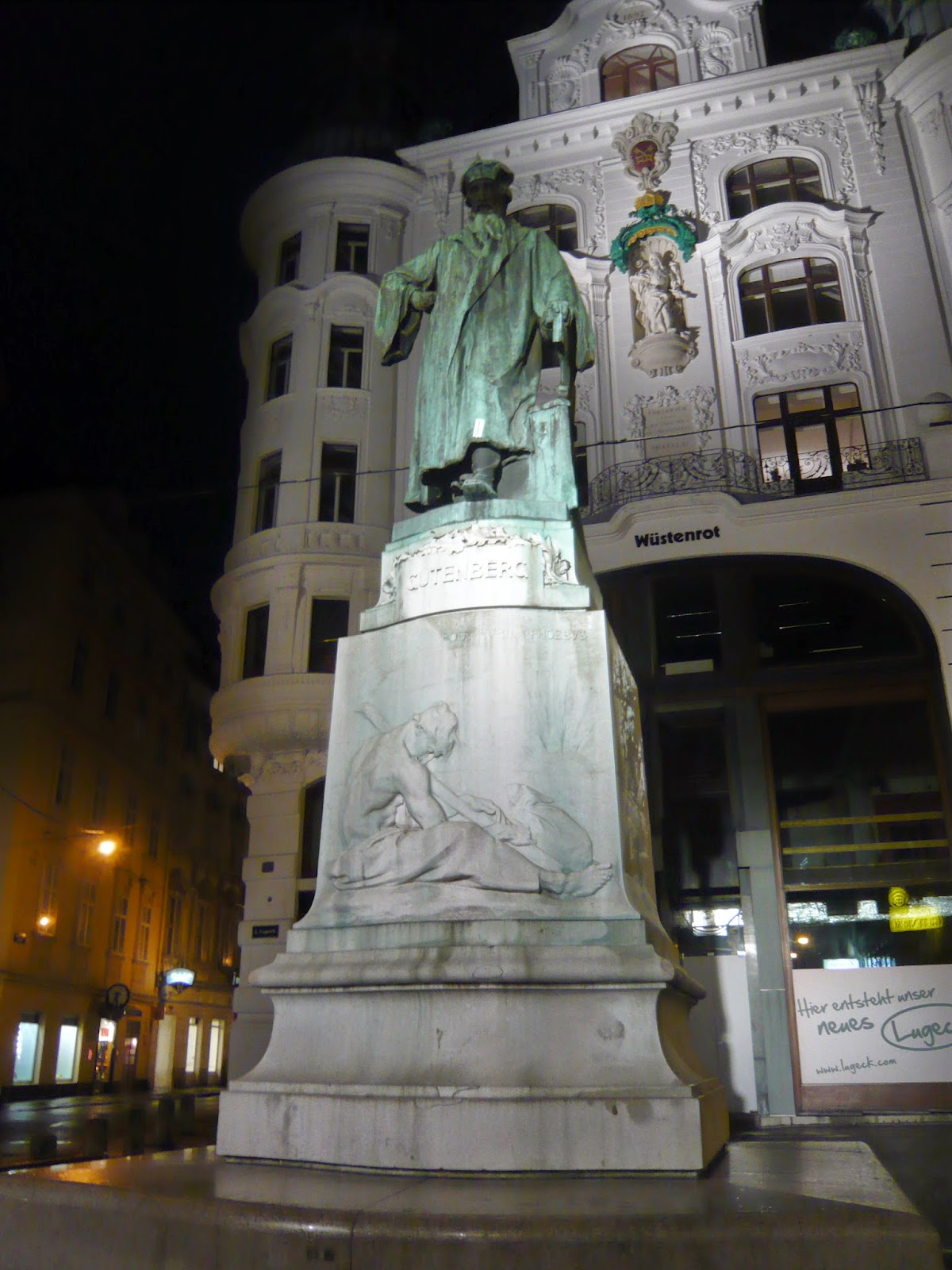
    A post dinner wander finds us back at the Stephansdom where an art installation is being projected on to the façade, and we stumble across a statue of Johannes Gutenburg, father of modern printmaking and arguably one of the most important figures of the second millennium.

    Our second and only full day in Vienna is one filled with art and cake. It’s bright and sunny again and we spend the morning in the MuseumsQuartier, principally visiting the Leopold Museum of modern art and being blown away by its brilliant Schiele exhibition as well as a well curated tour through the Vienna secession. After lunch and a quick tour round MuMoK it’s time for a little more tradition.

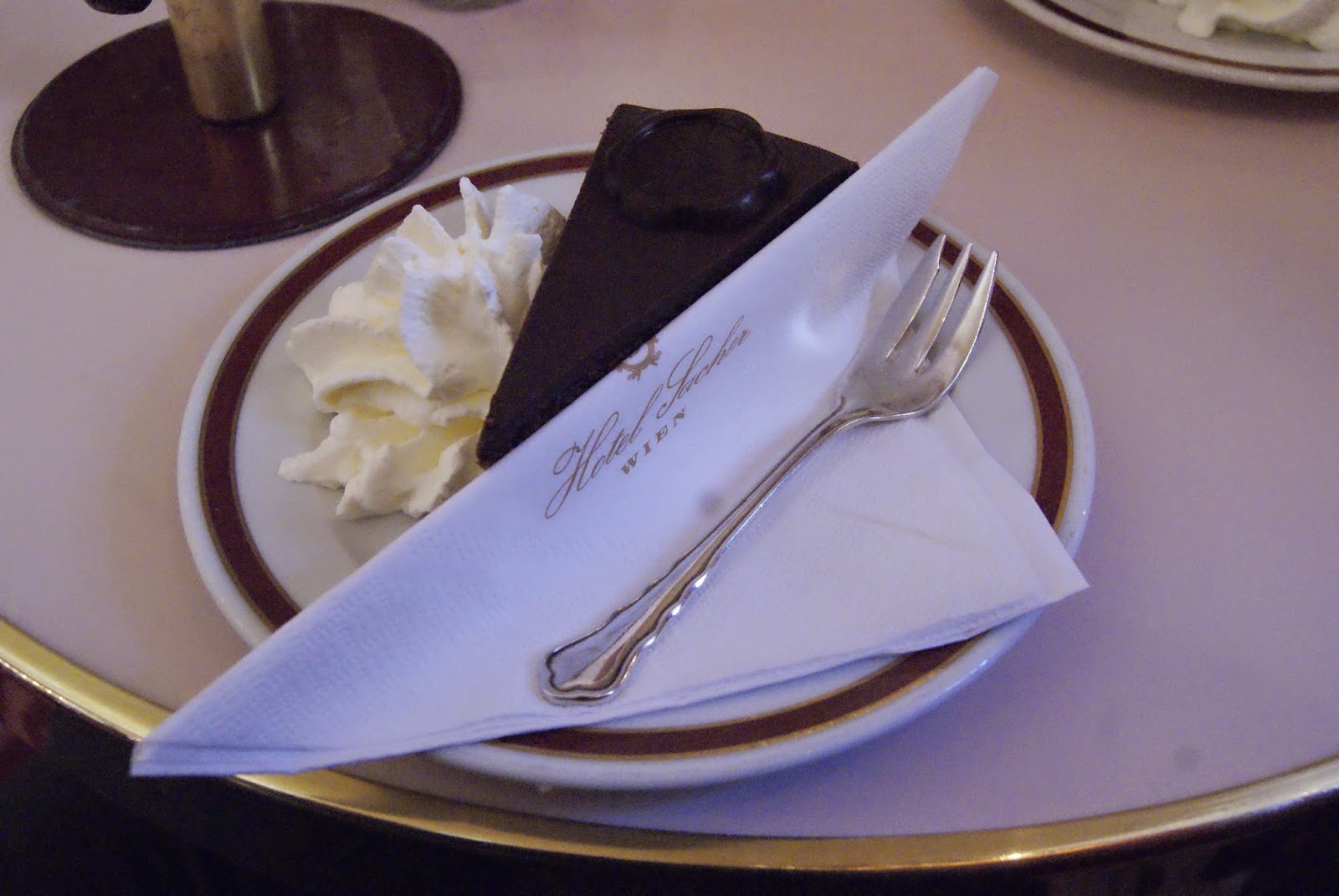
    We head off across the Burggarten towards the Opera, pausing to admire the large Mozart statue, and onward to the Café Sacher because today’s afternoon tea just has to be the world renowned Sacher Torte. It doesn’t disappoint. Wedges of chocolatey, cakey loveliness duly consumed, we catch a tram around the inner ring back to the hotel. It’s been a few weeks since Eurovision and Conchita Wurst’s famous win, but the trams are all decked in rainbow flags alongside the city standard.

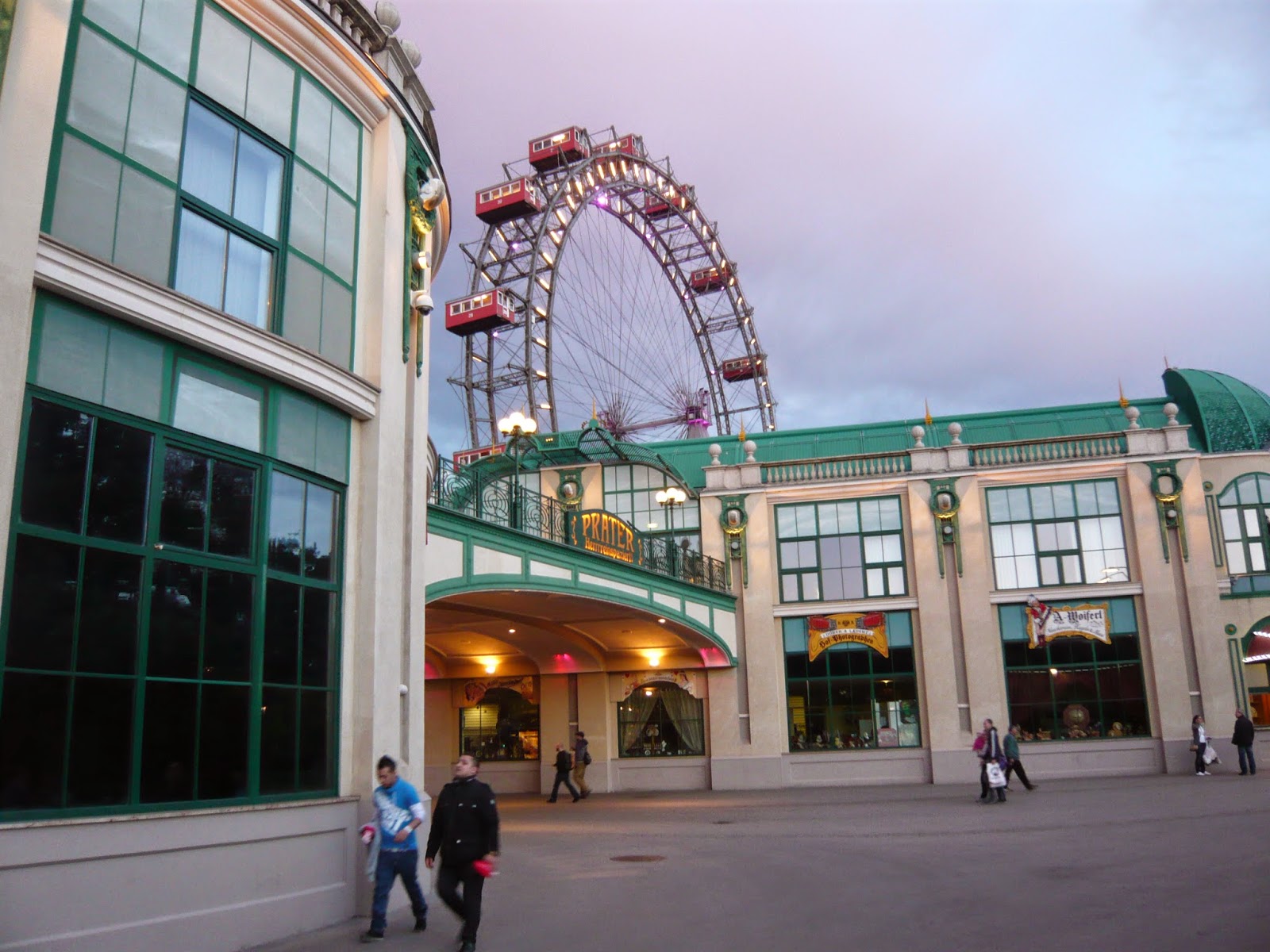
    The plan for our early evening entertainment before dinner is to visit the Wiener Riesenrad – cue bouzouki music…

    We enter the park and the sounds of Mozart hit us again, this time accompanying the dodgem riders. The Ferris wheel dominates the otherwise modern amusement park and we buy our tickets joining the thankfully sparse queue. Halfway round it gets a little rocky and my hand gets a bit crushed as the vertigo strikes. Otherwise, it’s a thrilling end to the day.

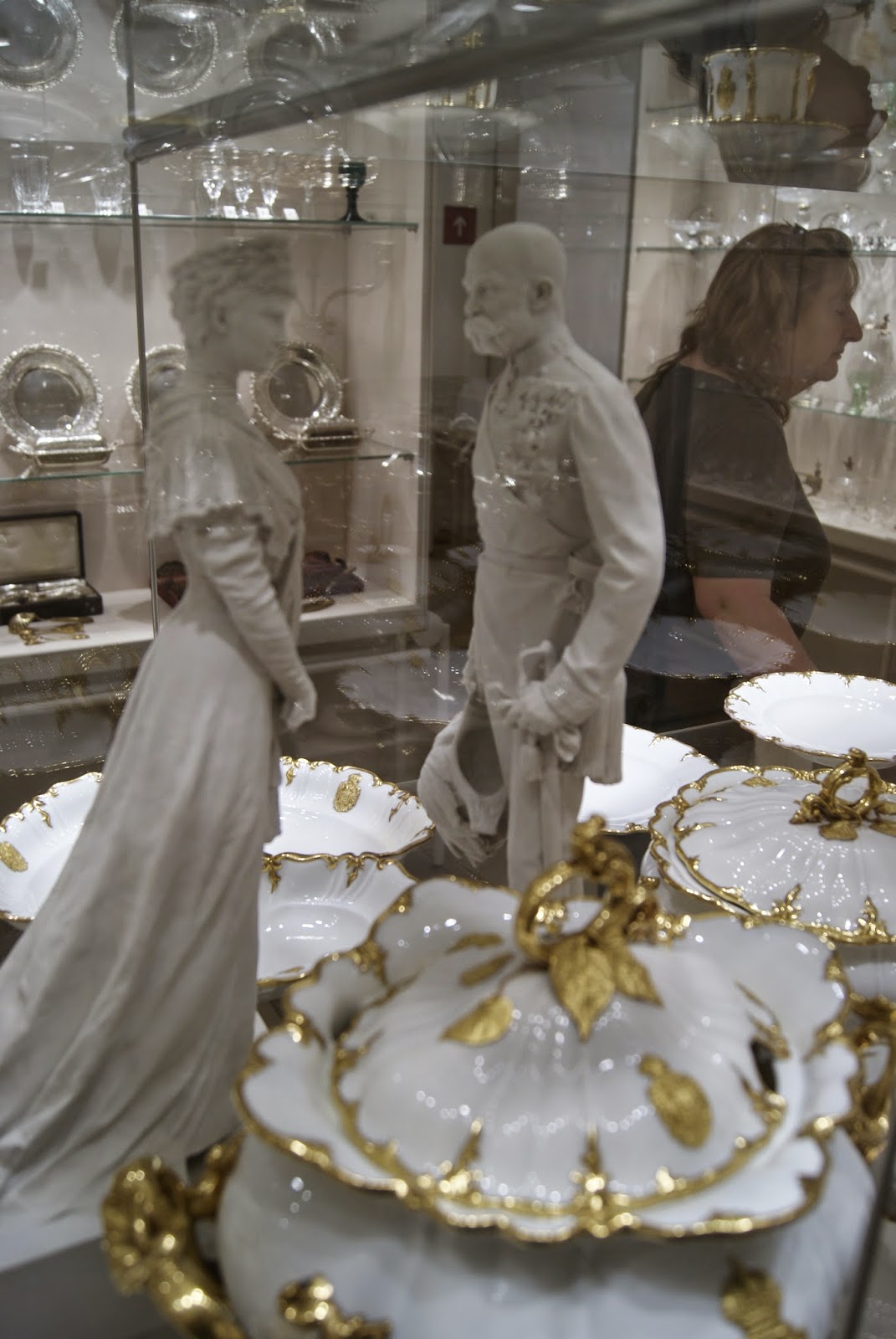
    Our final day in the Austrian capital is even busier, even though our train leaves that evening. After dropping our bags at the station we spend the morning at the Hofburg Palace with its ridiculous displays of opulence and wealth. There’s a museum devoted to the royal silver collection, elaborate place settings and the finest porcelain the Hapsburgs could plunder and a very interesting exhibition on the life of the Empress Elisabeth.
    We pass out through the stables of the Spanish riding school, catching some of the white horses being groomed, and on to the Albertina gallery – also part of the palace complex. Curiously there’s a large pink rabbit on the canopy and we decide to go in. This last minute decision to visit turns out to be very serendipitous as it’s one of the rare occasions that the extraordinary Albrecht Durer drawings are on show, hence the rabbit. But that’s not all, the whole collection is stunning.

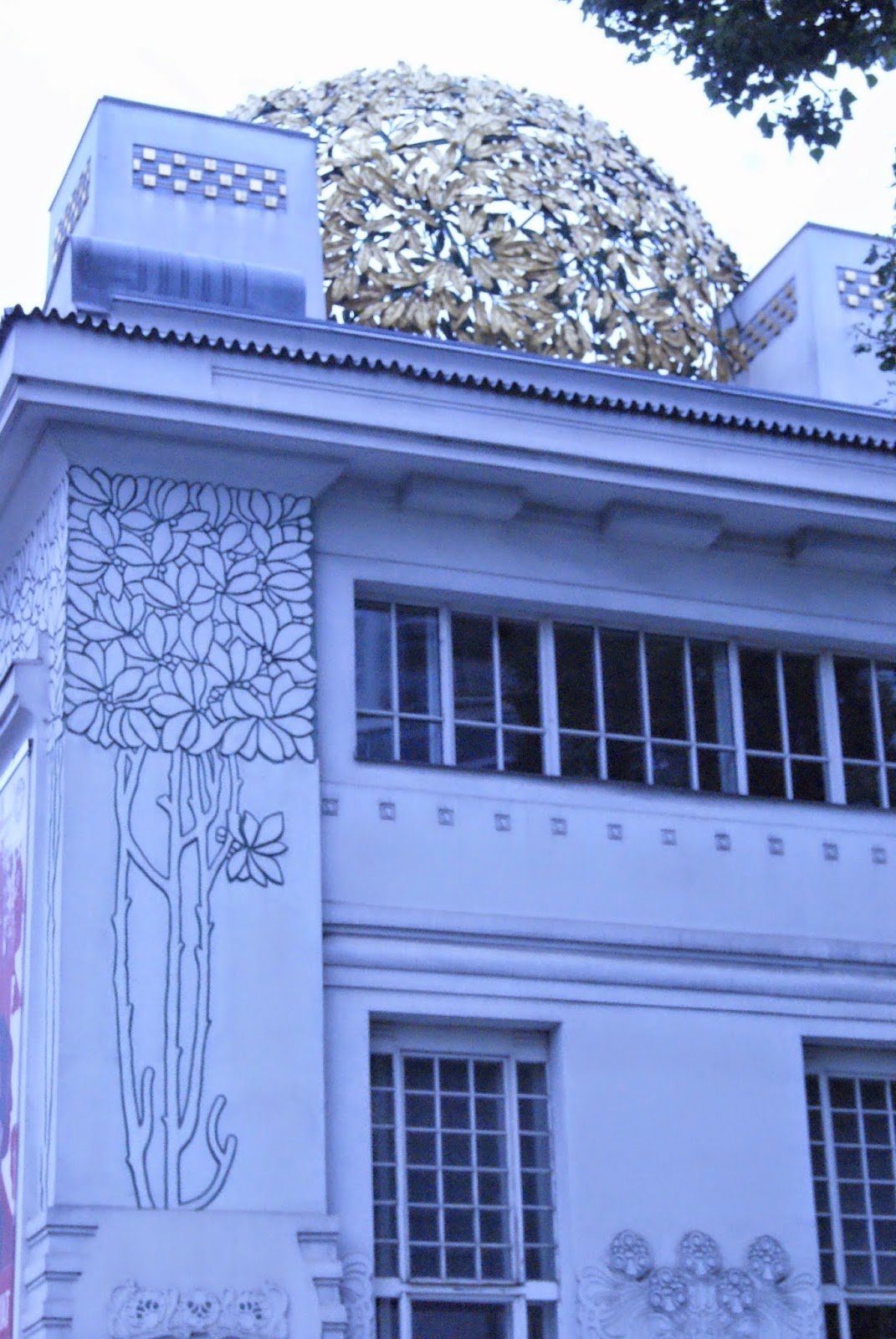
    We had planned to finish off the day at the market getting provisions for the evening, but first we visit the Secession Building. A stunning architectural statement and exhibition space it also houses Klimt’s famous Beethoven Frieze. It’s breathtaking.
    Alongside the market, Vienna’s version of the Hollywood walk of fame, the Musik Meile, is little more classy than its American counterpart, a succession of the great and good of classical music are represented; we spot Strauss, Berlioz, Tchaikovsky, Beethoven and of course Mozart before we wander off and spend a small fortune on our train picnic. There’s a bar with a massive bottle of Aperol on display so we sit a while with a spritz but find we still have a couple of hours spare. We decide to bite the bullet and cram one more sight in so head off to the Belvedere Palace, a large gallery housed in the former summer palace of Prince Eugene of Savoy. It’s a little way out of the centre and I have a minor internal panic about missing the train but half way round the tour is the reason we came; a heart-stopping room full of the most sumptuous works of Gustav Klimt. There’s a small crowd gathered at the far end and as they move away, there it is; The Kiss in all its golden glory. A fitting climax to a wonderful trip, and one we nearly missed.

    Vienna is so beautiful and we’re sad to leave but the Cologne sleeper pulls out at 21:40 and we have to be on it. As we wait at the station we’re briefly tempted to get back on a train to Budapest but we restrain ourselves and board the EuroNight train as planned. We tuck into our picnic with a glass or two of a tasty red and are asleep not long out of Linz. After a restful night, breakfast is taken as we speed along the beautiful Rhine Valley, waving to our friend Marlene in Remagen as we pass.

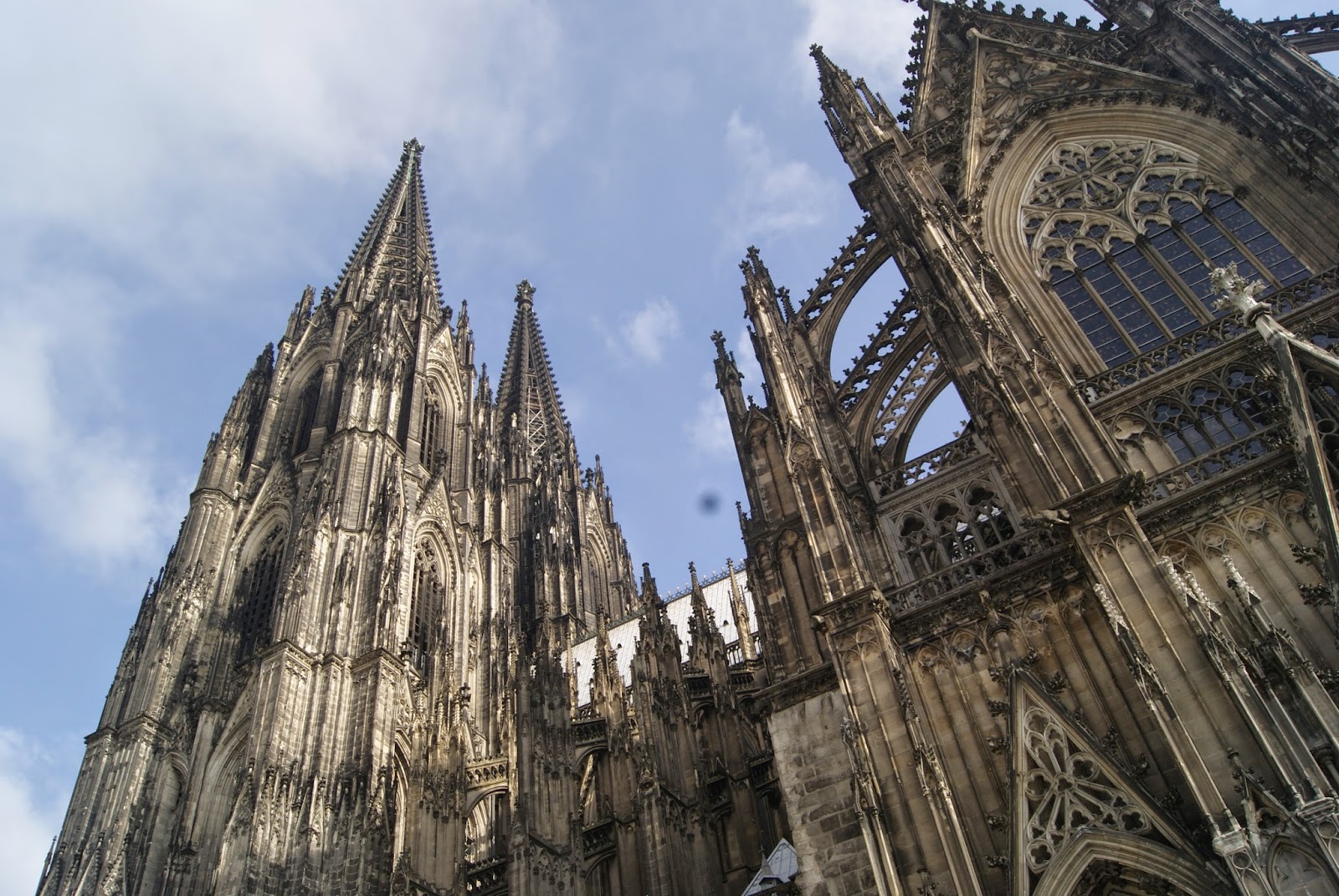
    We have the rest of the morning to kill in Cologne and as it’s right there by the station we visit the famous cathedral before joining the Brussels express for the Eurostar home.

    Carbon saved: 210kg

    May 2014

  • Danubian Adventure – part one; Budapest

    May 2014

    It’s nearly two years now since our first self-planned big adventure, a two centre jaunt to Budapest and Vienna. After Venice we were determined to travel more by rail and after a successful trip via the Dutch Flyer to Amsterdam we set about planning a more ambitious journey. Travelling via Paris and Munich, we would spend four nights in the Hungarian capital before transferring for two further nights in Vienna.

    We left Fratton early and got to Paris with plenty of time for lunch before we needed to board the train to Munich. It’s a short walk between the Gares du Nord and de l’Est and en route you will find Au Train de Vie, a railway themed café bistro serving a very tasty tartiflette among other delights. A couple of beers to wash it down and we’re off down the steps by the Gare de l’Est (as featured in Amélie) to await the Paris-Munich train.

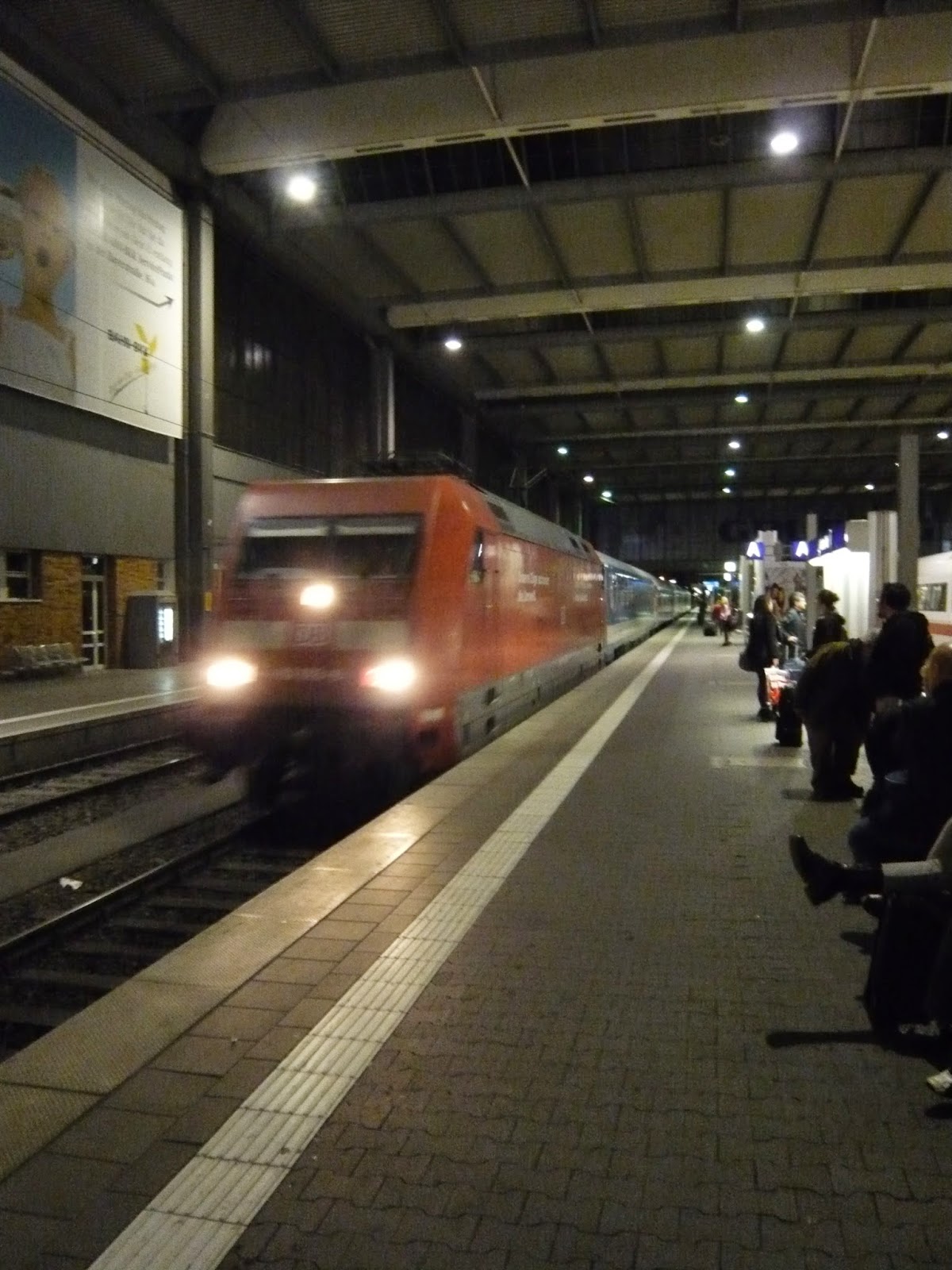
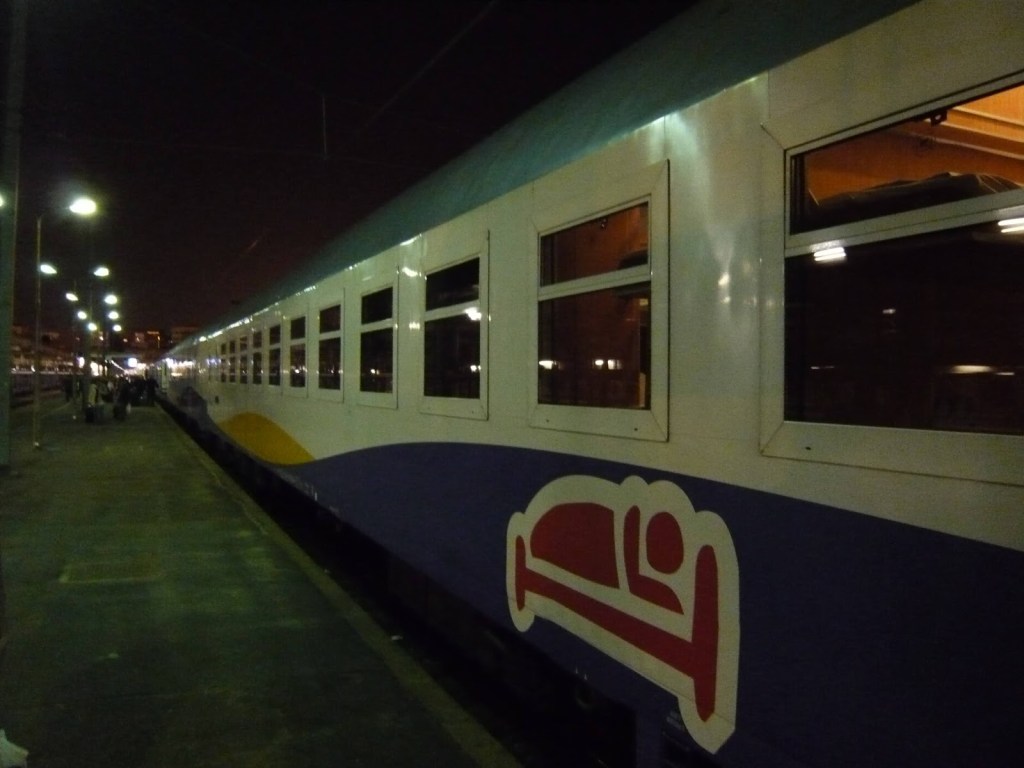
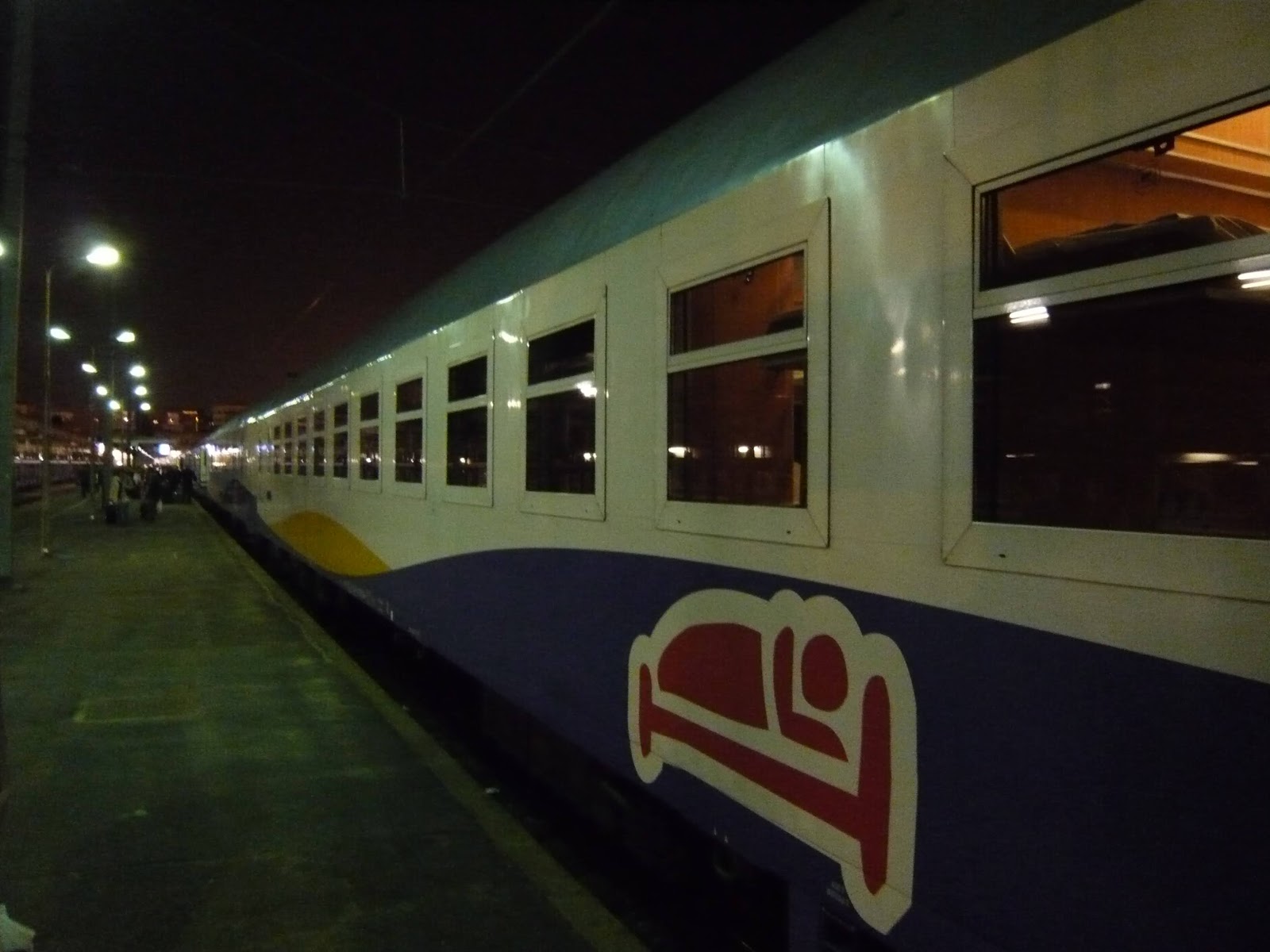
    The Budapest sleeper,
    Kalman Imre pulls in
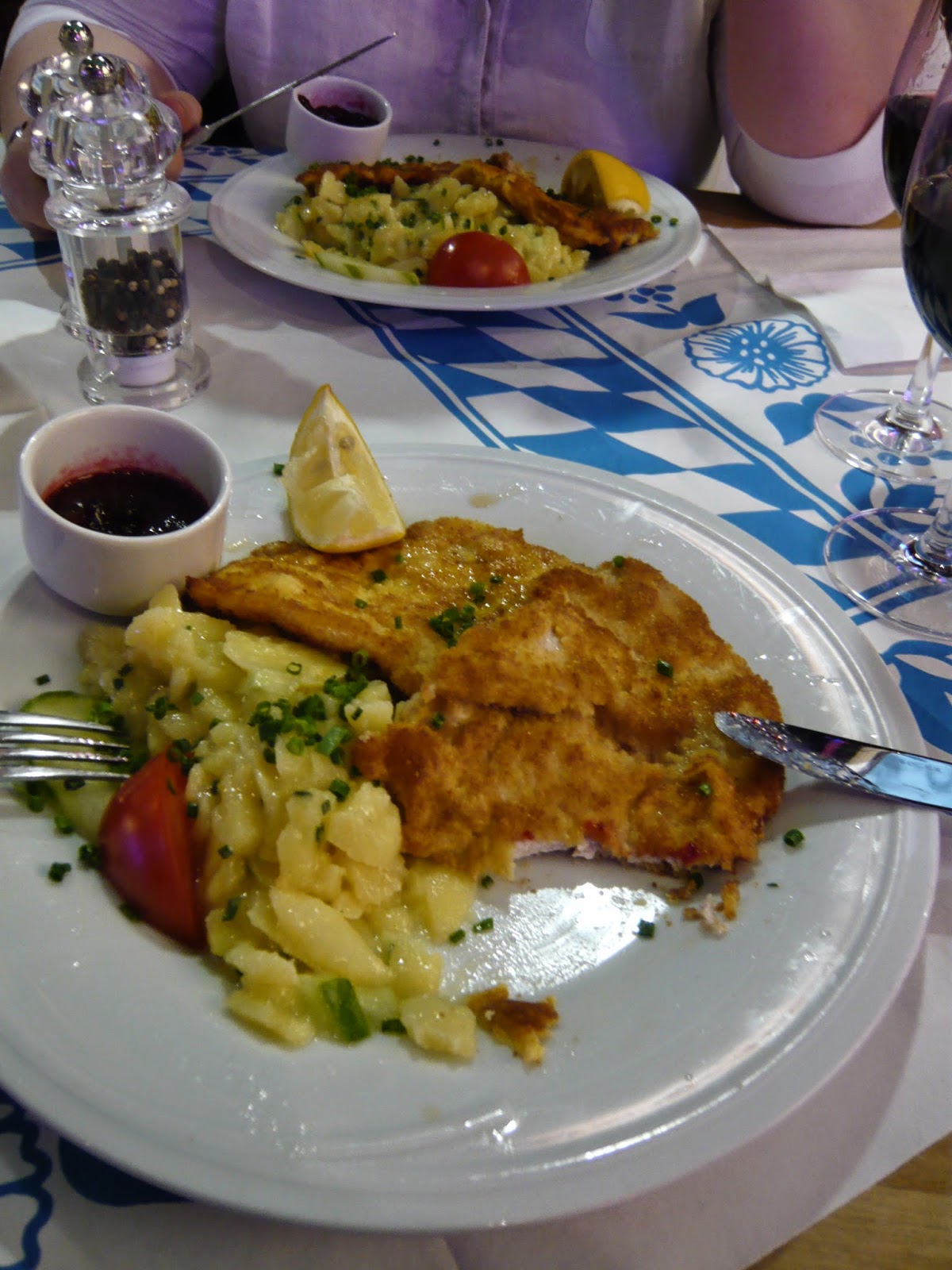
    Schnitzel at Mongdratzerl

    The train speeds through France to Strasbourg before taking a more stately progress through Germany, arriving at busy Munich Hauptbahnhof at around 9.30pm leaving a good two hours for dinner at Mongdratzerl (sadly now closed down) where we dive into our first schnitzel of the trip. Our sleeper to the Hungarian capital, the Kalman Imre, pulls into the station ready to leave less than half an hour to midnight, it’s reasonably comfortable and we settle in for the night.
    Quick tip: in every sleeper train we’ve used on our travels so far, the only real disappointment has been the wholly inadequate pillows they give you, so if you can bring your own, do.

    Day two

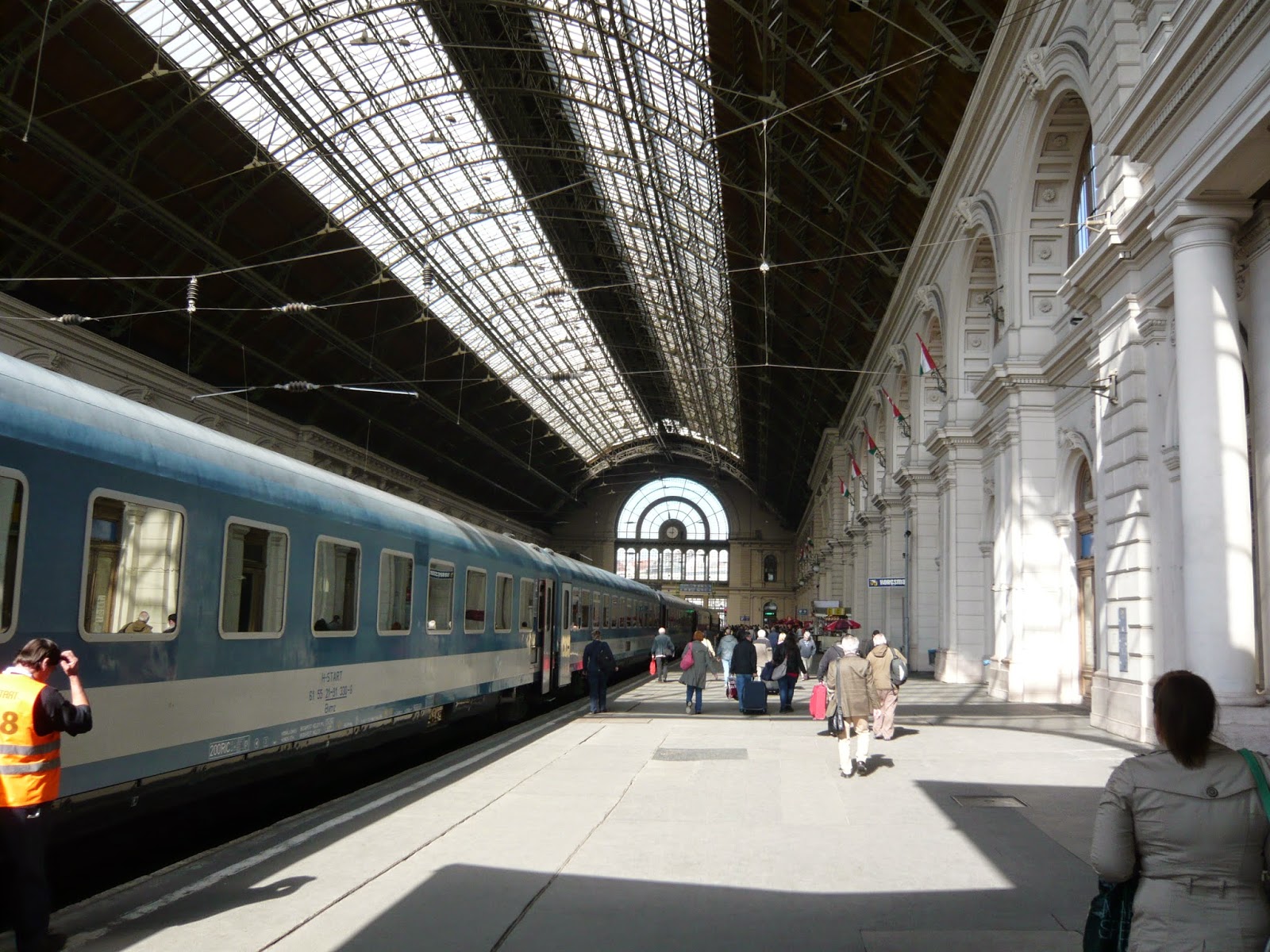
    Feeling thoroughly rested, we roll into Budapest Keleti station at 9.30 the following morning.

    I had booked an apartment hotel, the 7seasons, close to one of the main transport hubs, Deák Ferenc Tér, which proved an inspired decision on both counts. The accommodation was excellent, all the comfort of an apartment with the service of a hotel, and it was really nice to only have to walk about 50 yards home at the end of a busy day’s sightseeing.
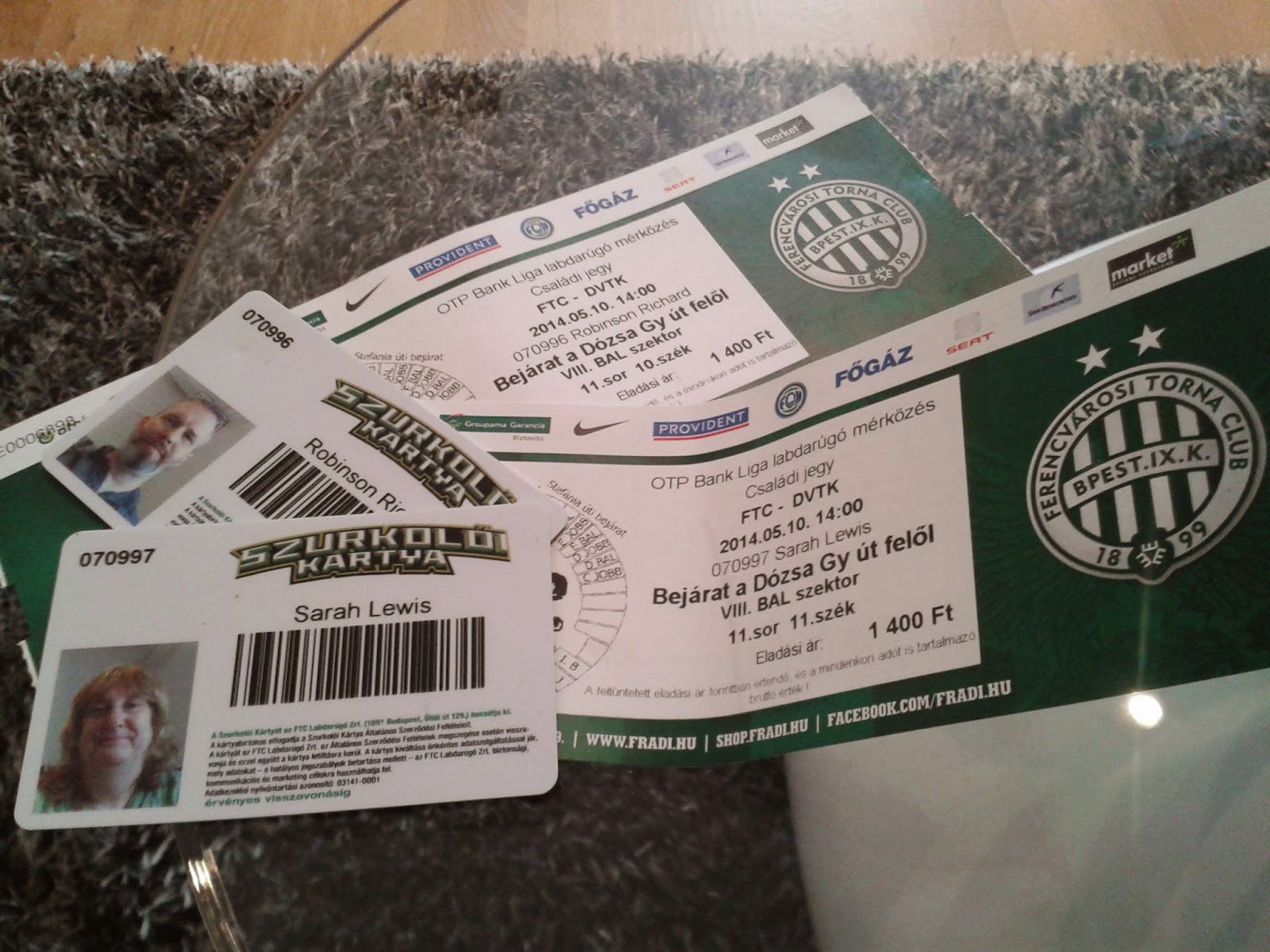
    One of the first things we had resolved to do was to sort out tickets for the match on the Saturday. The tricky part is, thanks to years of hooligan violence, to watch football in Hungary you need to be a member of a supporter’s club. We head for the metro and find our way out to the Ferencvaros supporters club building, which turned out to be a dodgy looking concrete bunker on a street corner near the old stadium. We tentatively wander inside and are greeted by some bemused but friendly Fradi who take copies of our passports and our photos for our membership cards. We are now able to buy our tickets and be on our way.
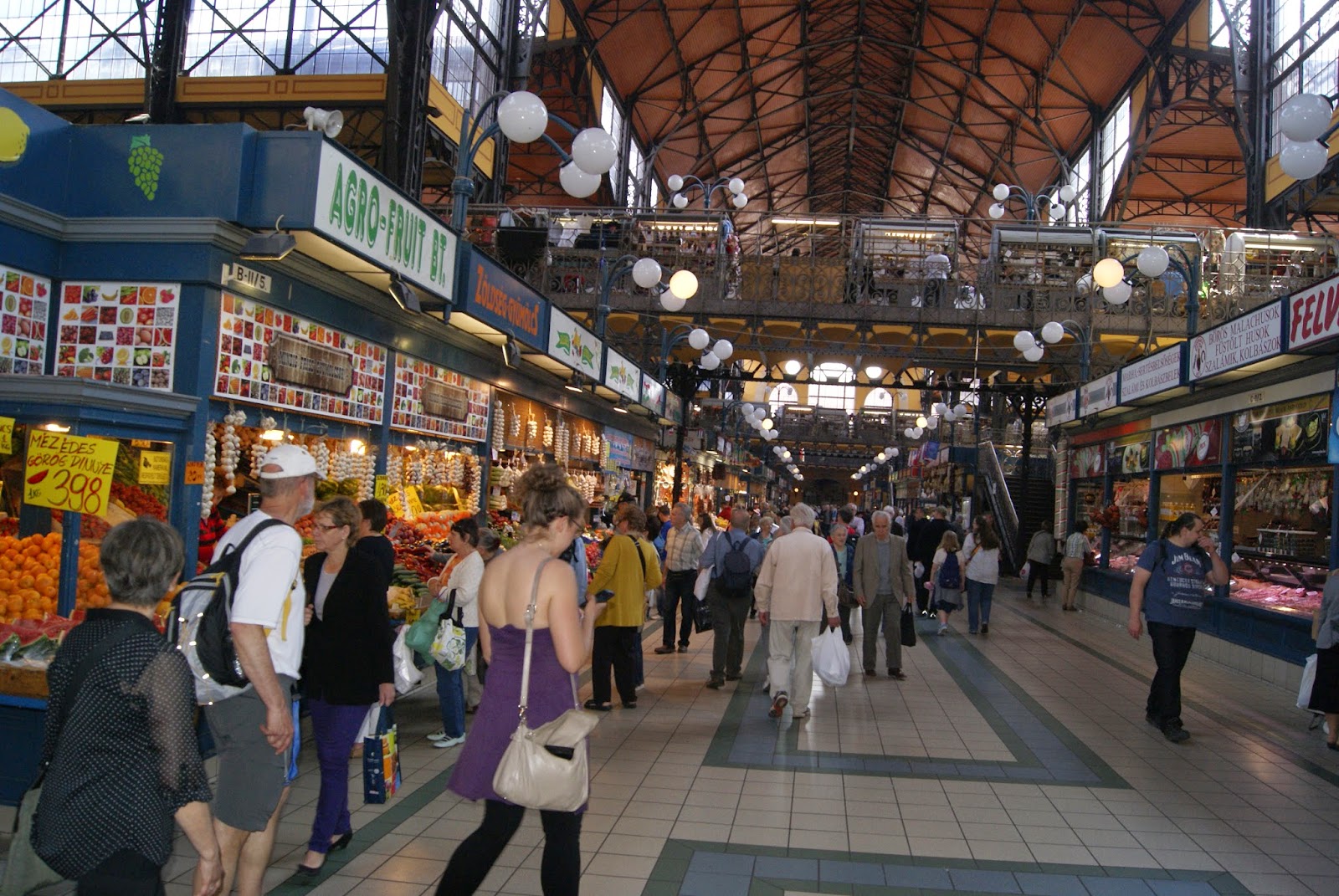
    The Budapest transport system is nicely integrated and easy to navigate so after our successful foray into the 11th district we took a tram to the covered market near the river. Visiting the market is always a good way to get to know a city and we thoroughly enjoyed poking around this impressive structure on two levels with household, souvenir and myriad colourful food stalls. We bought some interesting looking bits and pieces for lunch, as well as a pork fillet and ingredients for goulash, and some paprika to take home. We also secure our traditional “tacky” souvenir for our holiday shelf. Our picnic lunch is enjoyed sitting by the Danube before heading back home to drop off the shopping. 
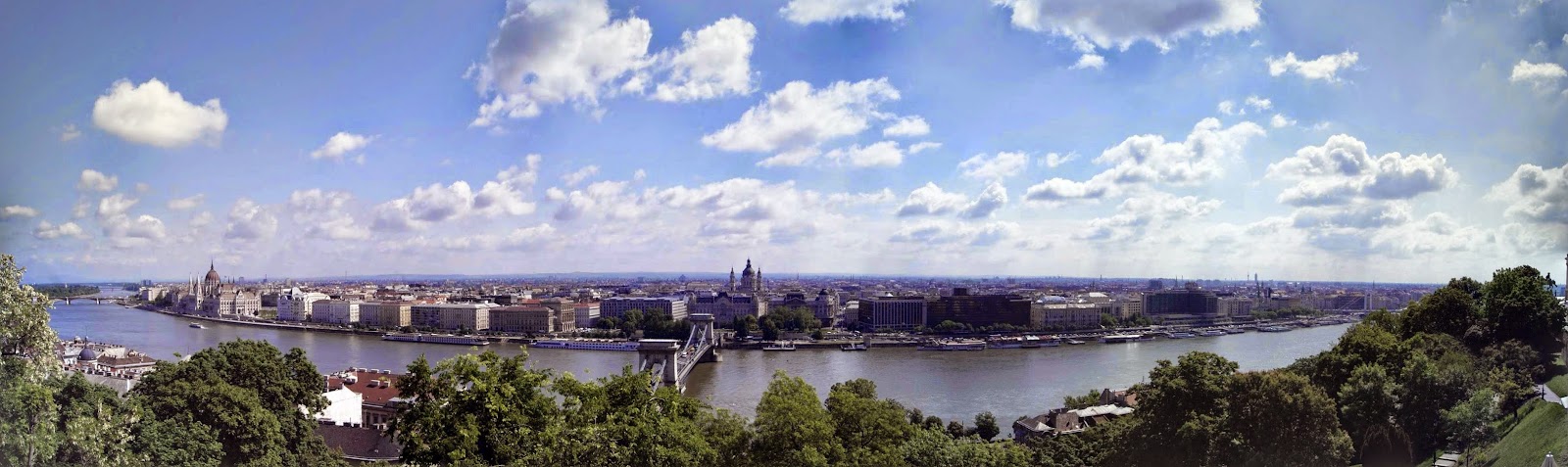
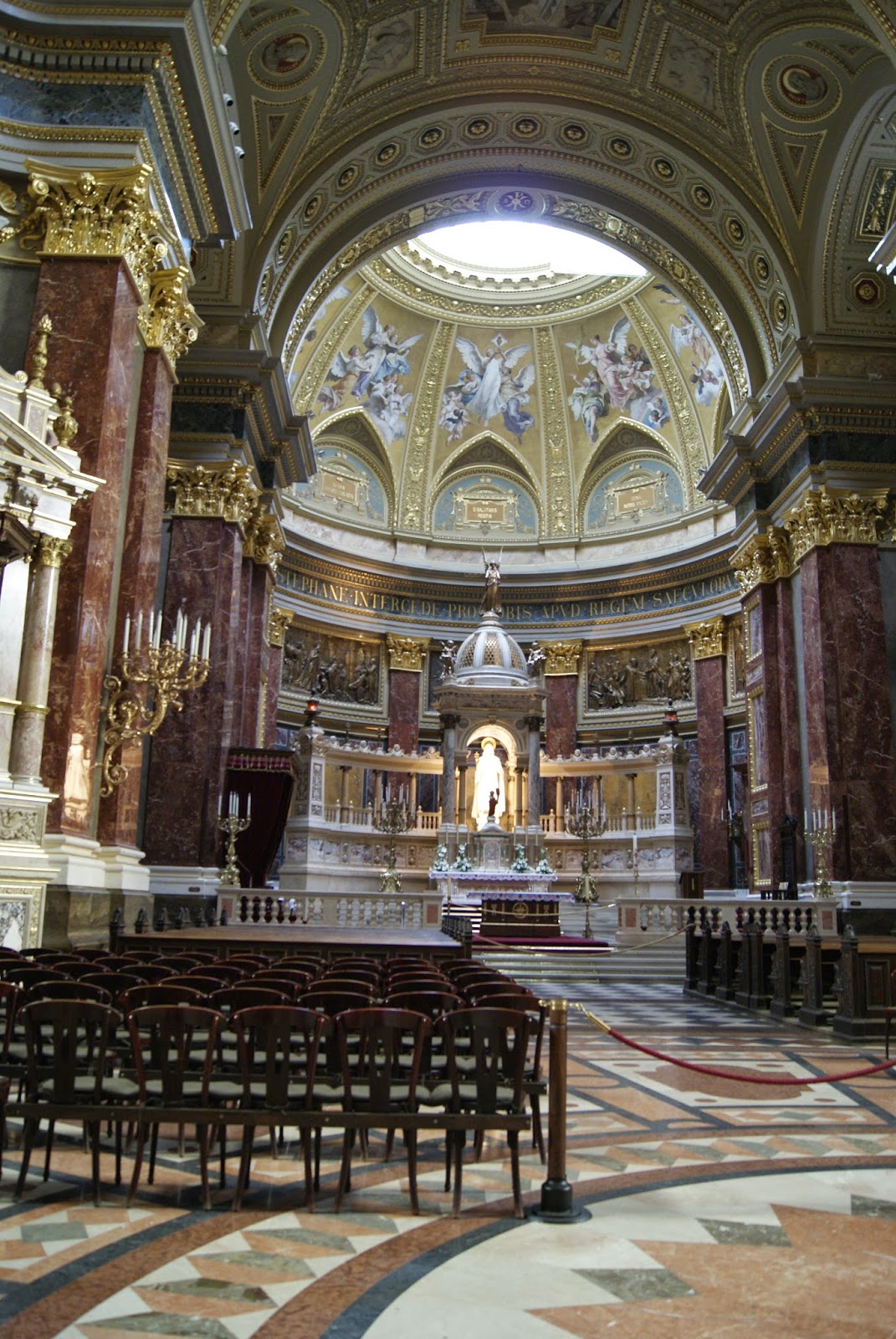
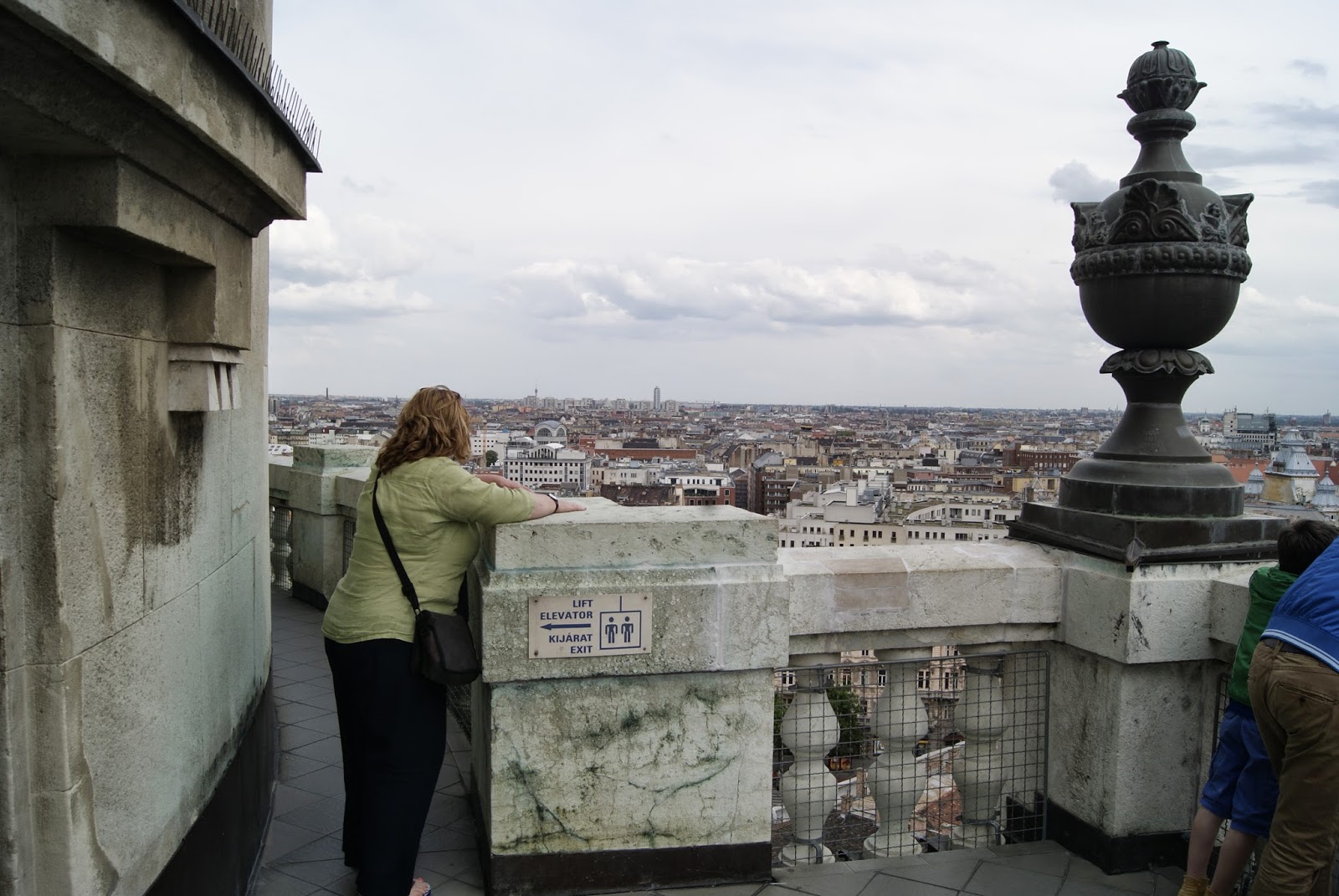
    In the afternoon we visit St. Stephen’s Basilica. Handily, this imposing structure is not far from the apartment and we’re soon marvelling at the highly decorated interior, more solid than the airy Gothic cathedrals we’re used to. There’s a lift up to the dome and despite a general wariness about heights, we buy a ticket up and take a turn around the outside and enjoy some really great views.

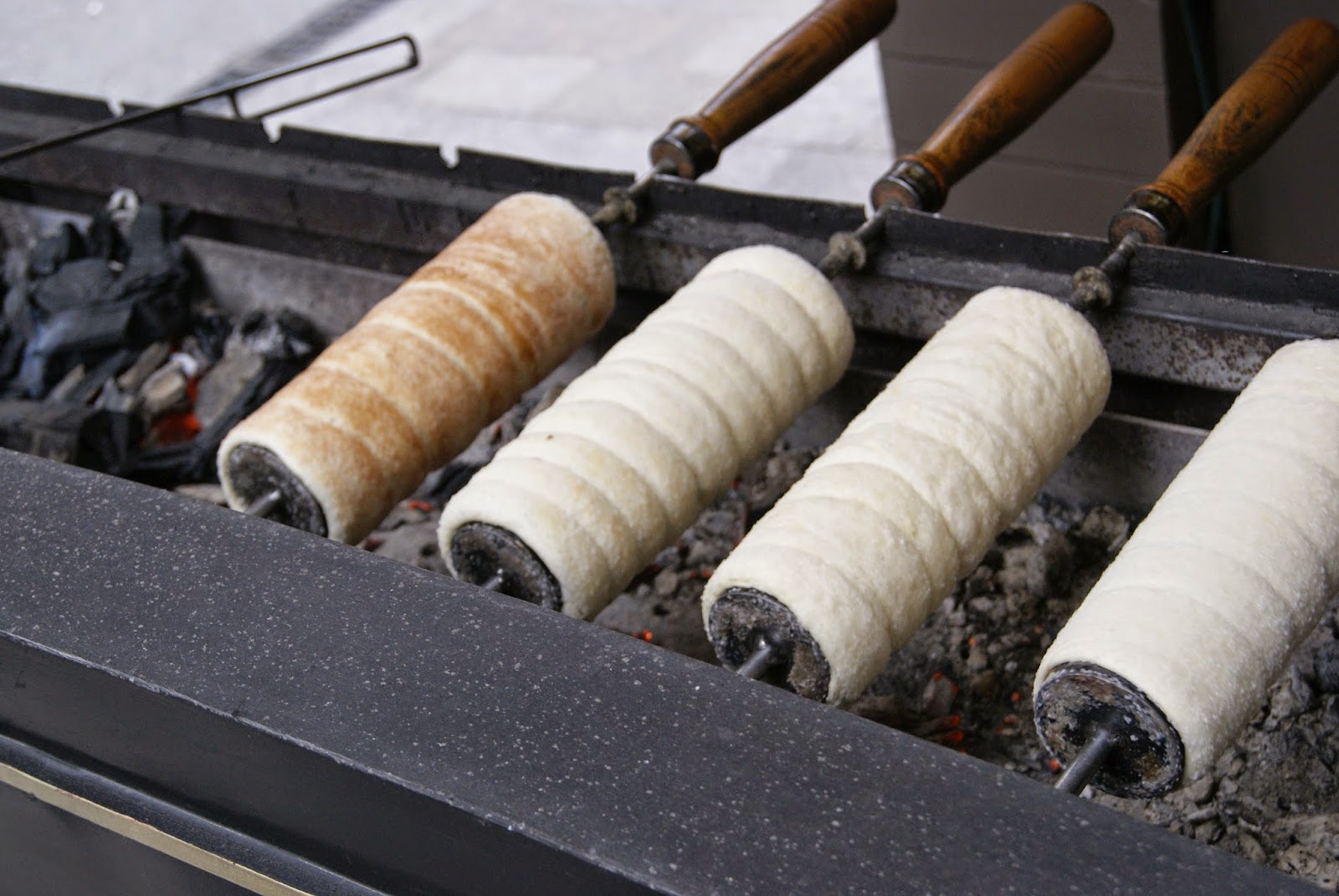
    Our day is rounded off with a relaxing stroll around our new locality, a beer by the river and being entertainment from a man playing a wine glass organ in the surprisingly deco square. We also stumble across a stall producing these weird tubes of cakey stuff, doused in cinnamon and barbecued. Very sweet, very delicious and perfect after our home-cooked goulash.

    Our first day in Budapest, also our first in the old Eastern Bloc, has been a real experience and we’re exhausted.

    Day three

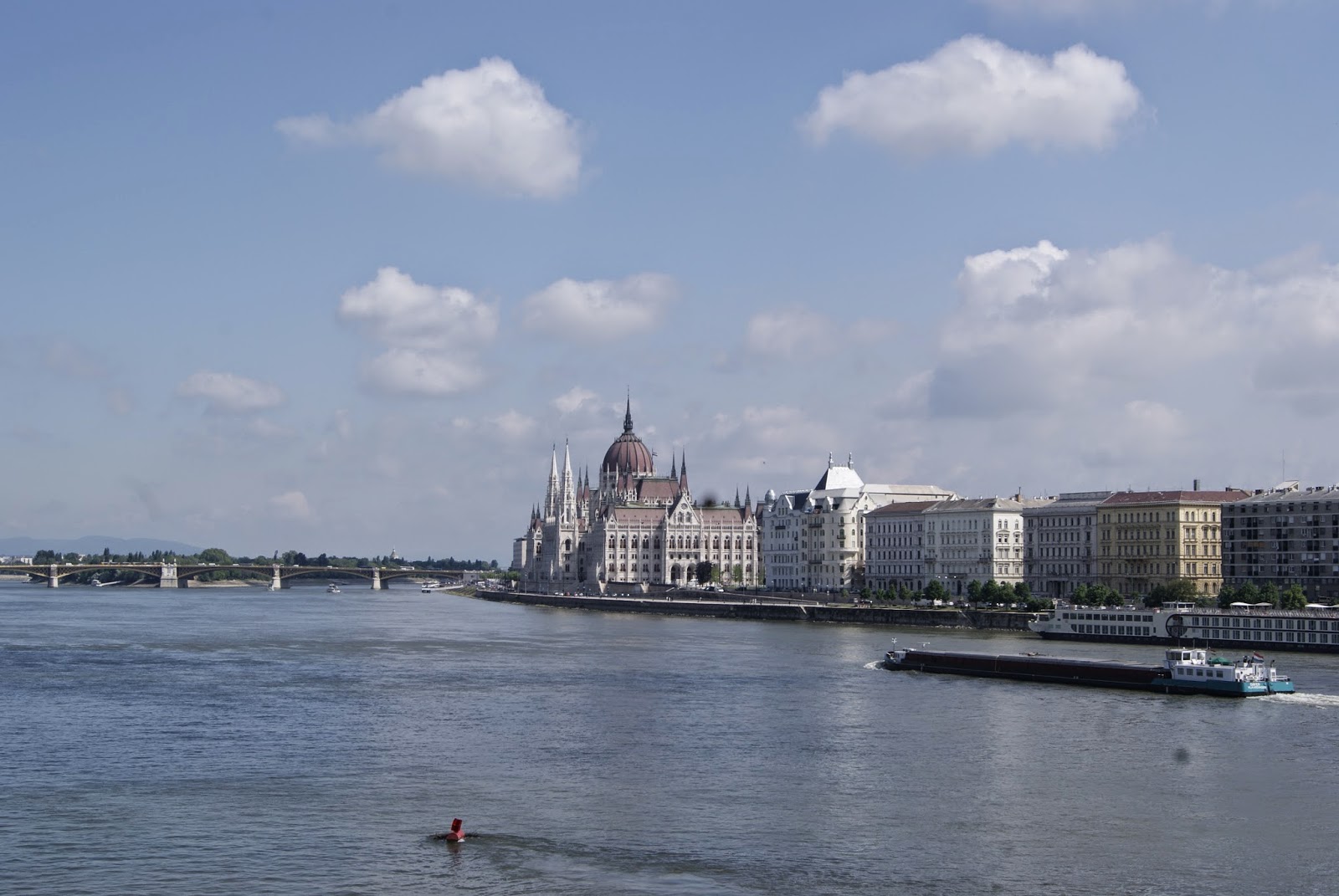
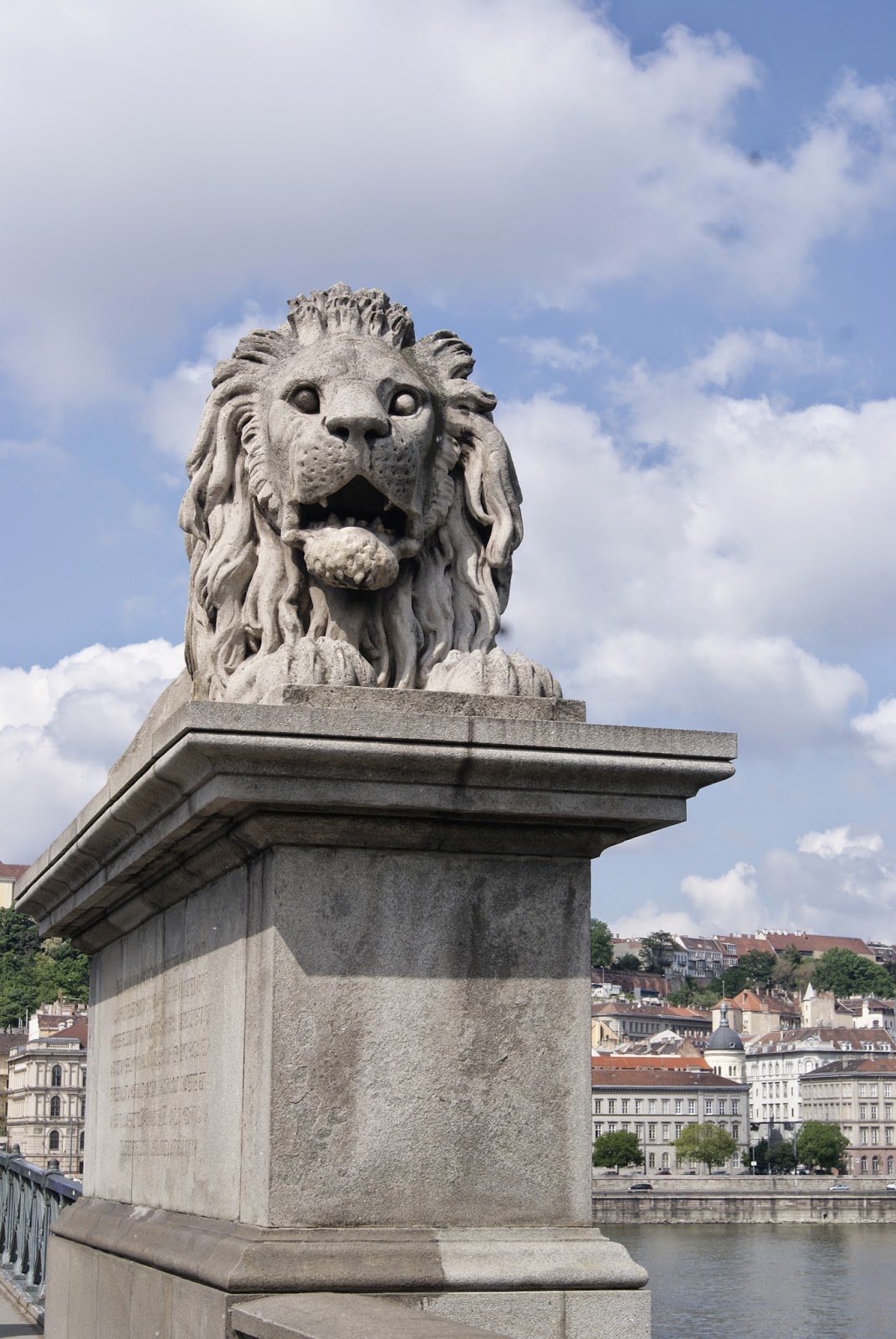
    The next day dawns bright and we head off to cross the historic Chain Bridge for a day on the hill of old Buda across the river. There are buses up the hill and you can, of course, walk but there is also a funicular and as you know by now we love a funicular. Our Budapest card includes a free guided walking tour of the old town so we decide to visit the national gallery in the morning before the tour at two.
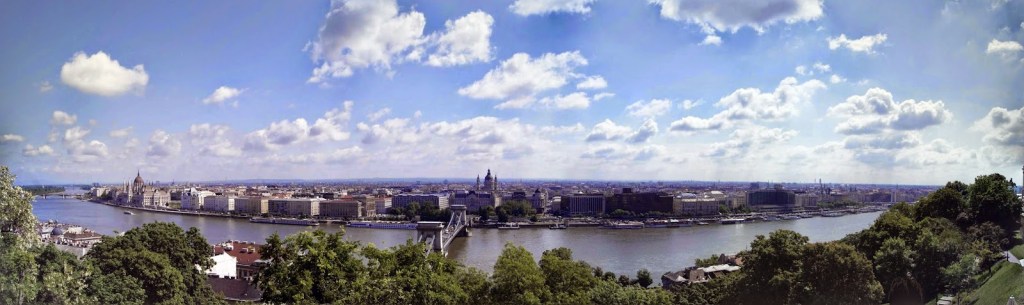
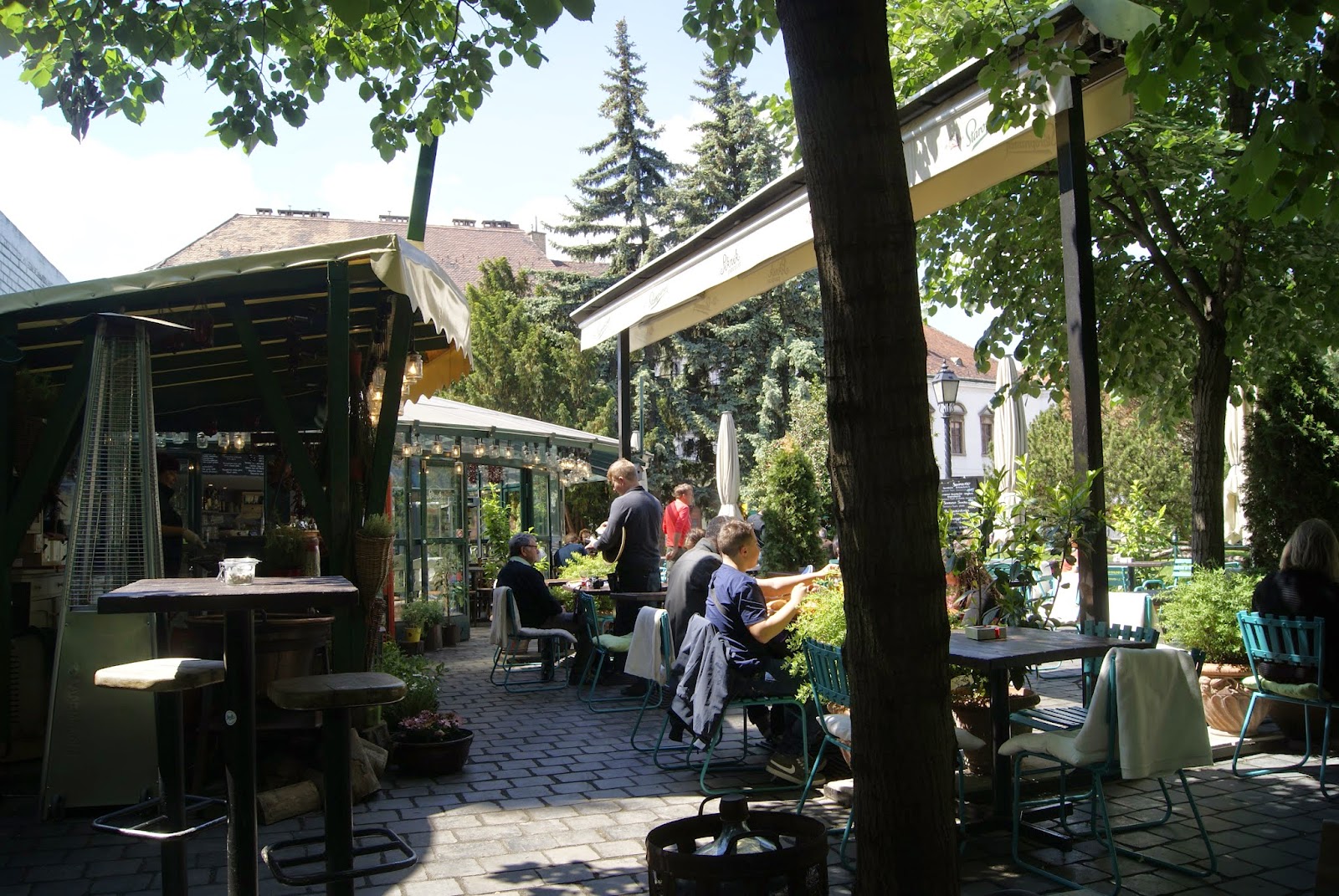
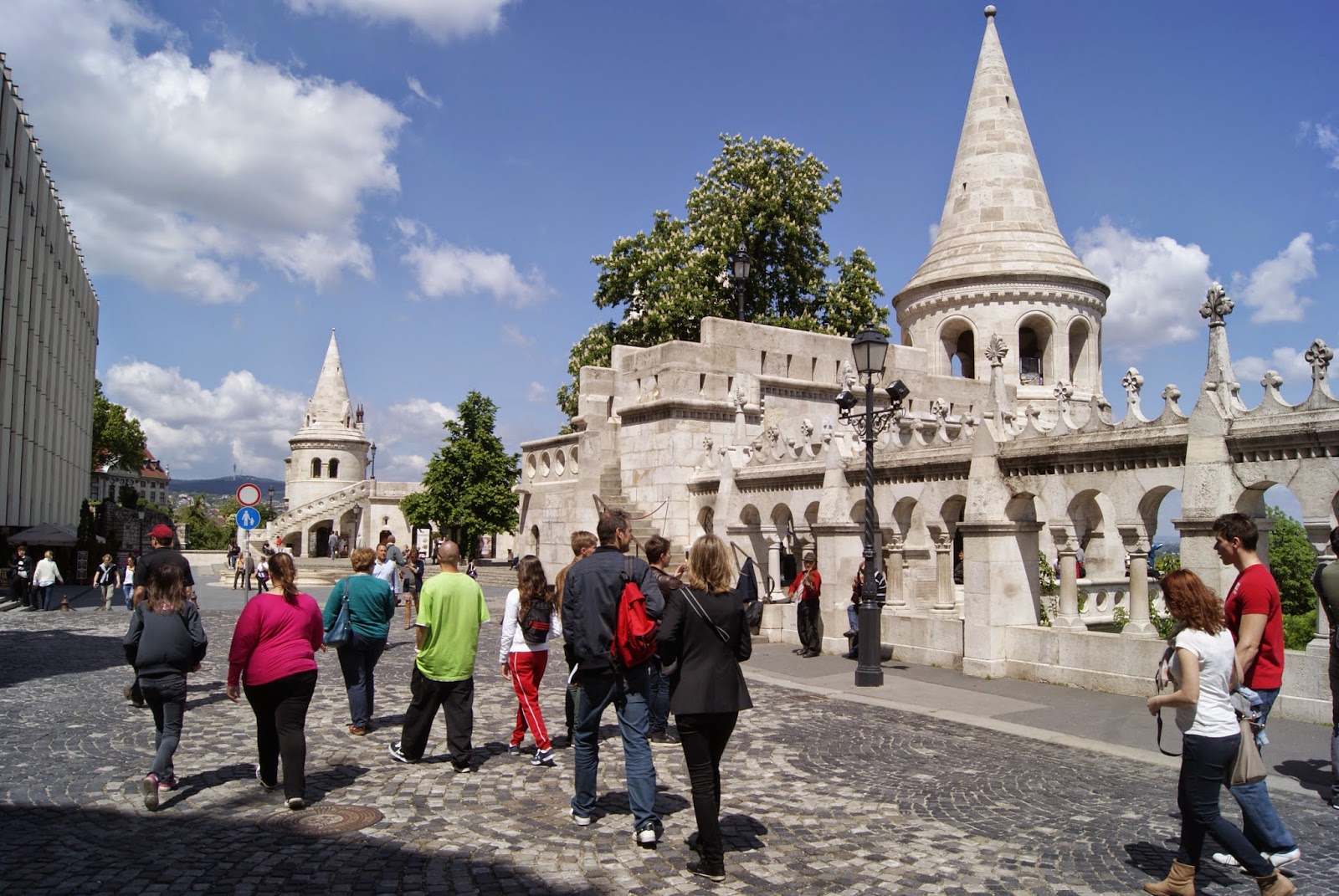
    The day by now is starting to boil so the cool of the national gallery and its fascinating tour through the history of Hungarian art, is very welcome. There’s still time for a bit of a wander, a beer and lunch before the walking tour starts. We take in the lovely view across the river from Fisherman’s Bastion where there’s also a large eagle on the arm of its handler with tourists paying to have their photo taken with it. It doesn’t look happy. We, however, are very happy with our lunch at a lovely and shady café nearby.

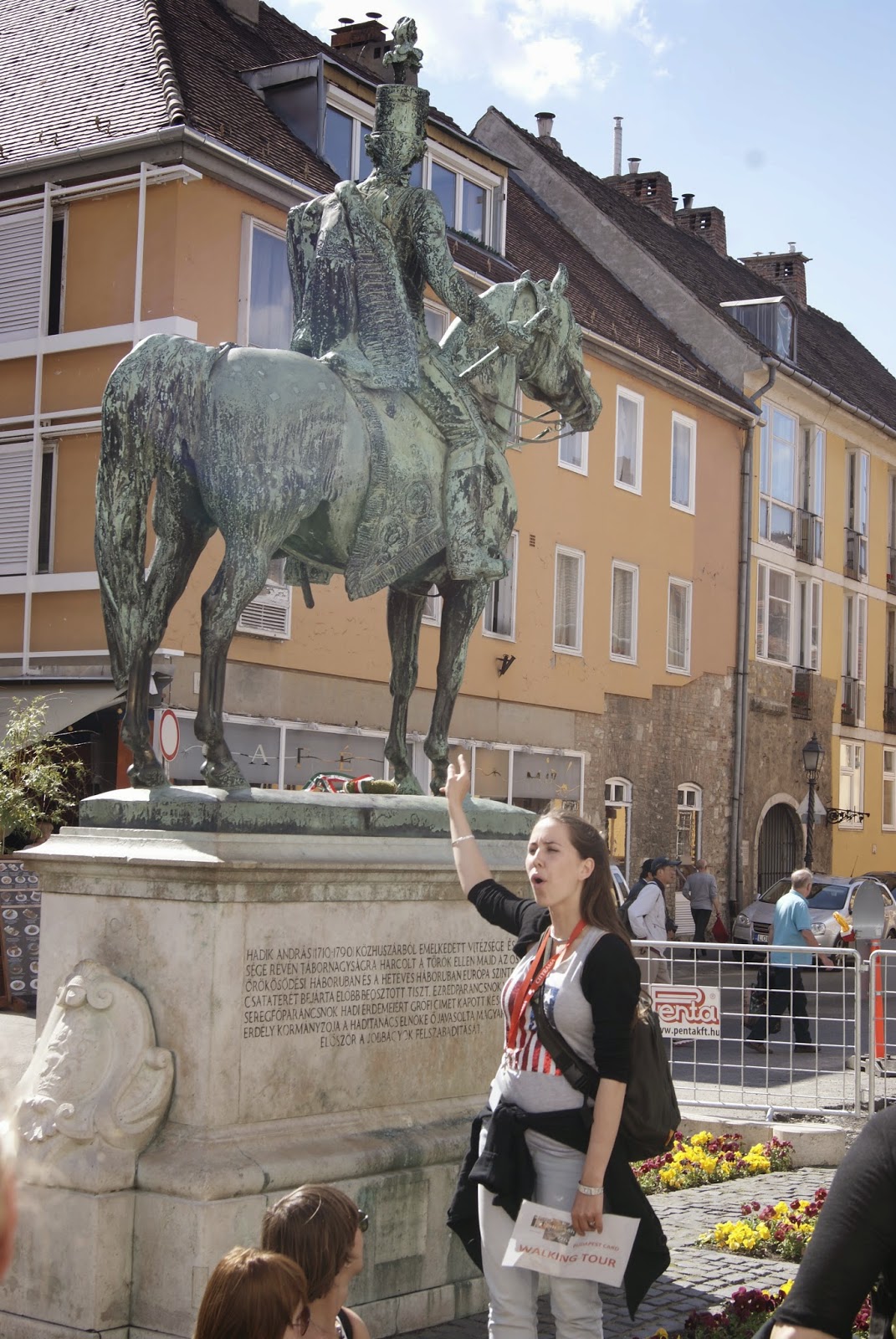
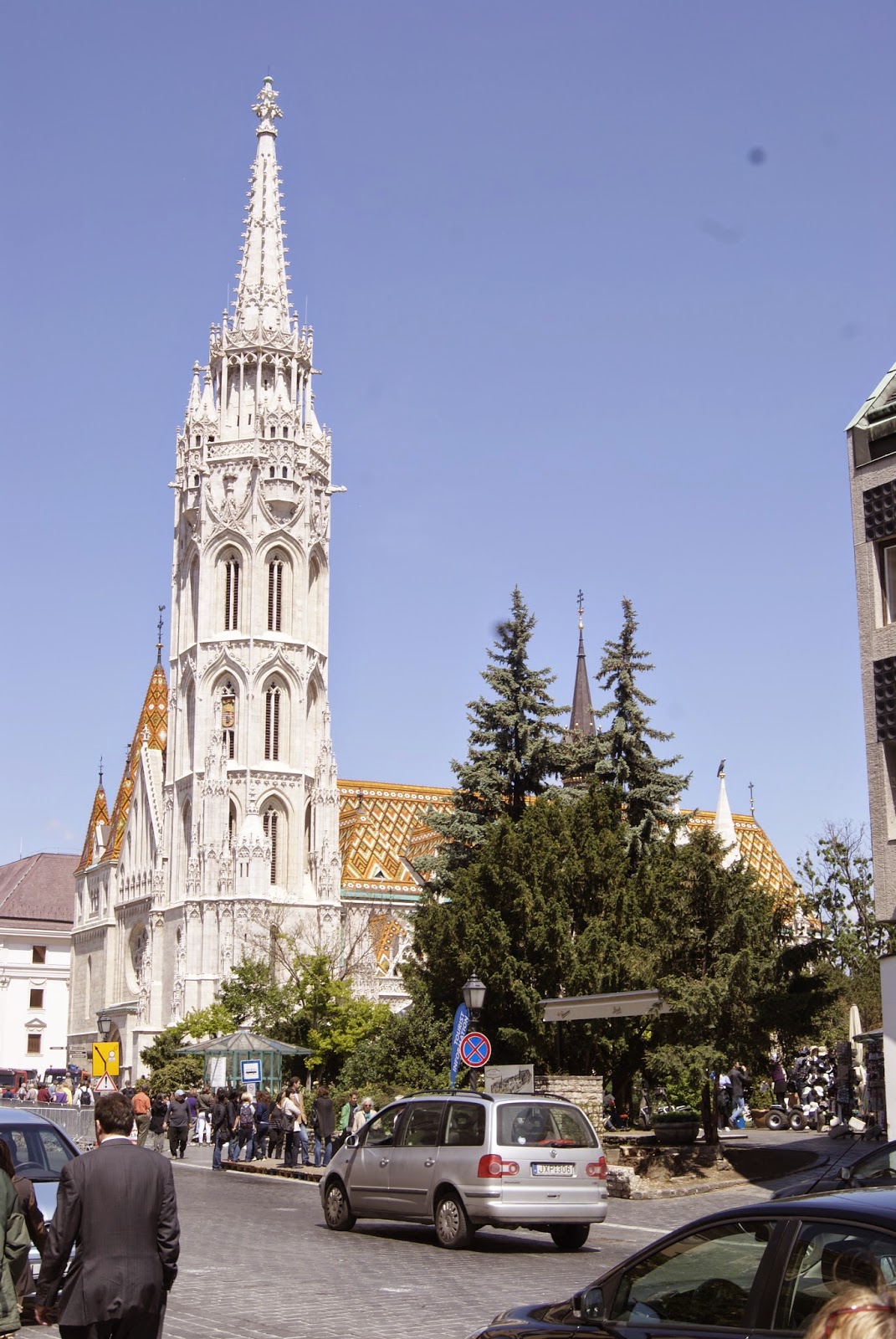
    Our tour starts outside the impressive Matthias Church and Viktoria our guide is a relative novice but very keen. The heat of the day is now intense as we head back towards the gallery, a former royal palace, for a quick history lesson. There’s a small concession stand and we pay a relative fortune for some much needed cold water which we guzzle as Viktoria tells us about the extraordinary fountain. Further round the tour is a drinking fountain and we again drink deeply and replenish our bottles. Every scrap of shade is welcome.
    The tour despite the heat is very interesting, including the tale of student superstition, rubbing the balls of the equestrian statue, which Viktoria relates without blushing.

    Fisherman’s Bastion

    We finish up back at the Matthias Church and grab another drink and a slice of cherry pie before catching the bus back down to the city. There are roadworks and the bus stop has moved but we find the right place eventually and wait. Half way down the hill there’s a horrible noise and an amount of smoke: we’ve broken down and have to wait on the verge for half an hour while a replacement is sent out before we can continue, weaving our way through the now rush hour traffic to Deák Ferenc. Back at the apartment we take a much needed shower and a restorative drink before dressing for our night out.

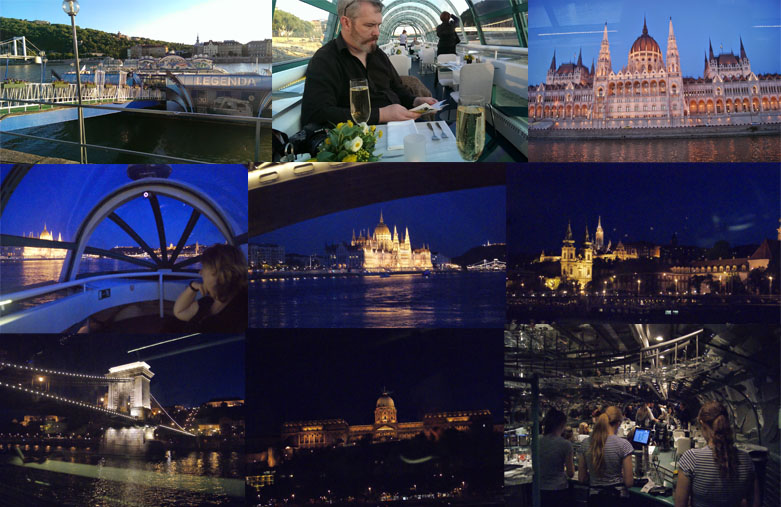
    Our evening is to be spent on the river. We’ve booked a dinner cruise along the Danube with Legende cruises and we have a thoroughly enjoyable, romantic evening. Dinner itself is not bad at all and we’ve secured a table on the top deck and as the sun sets, the city lights up for our delight.

    A selection of images from our dinner cruise.

    Day four

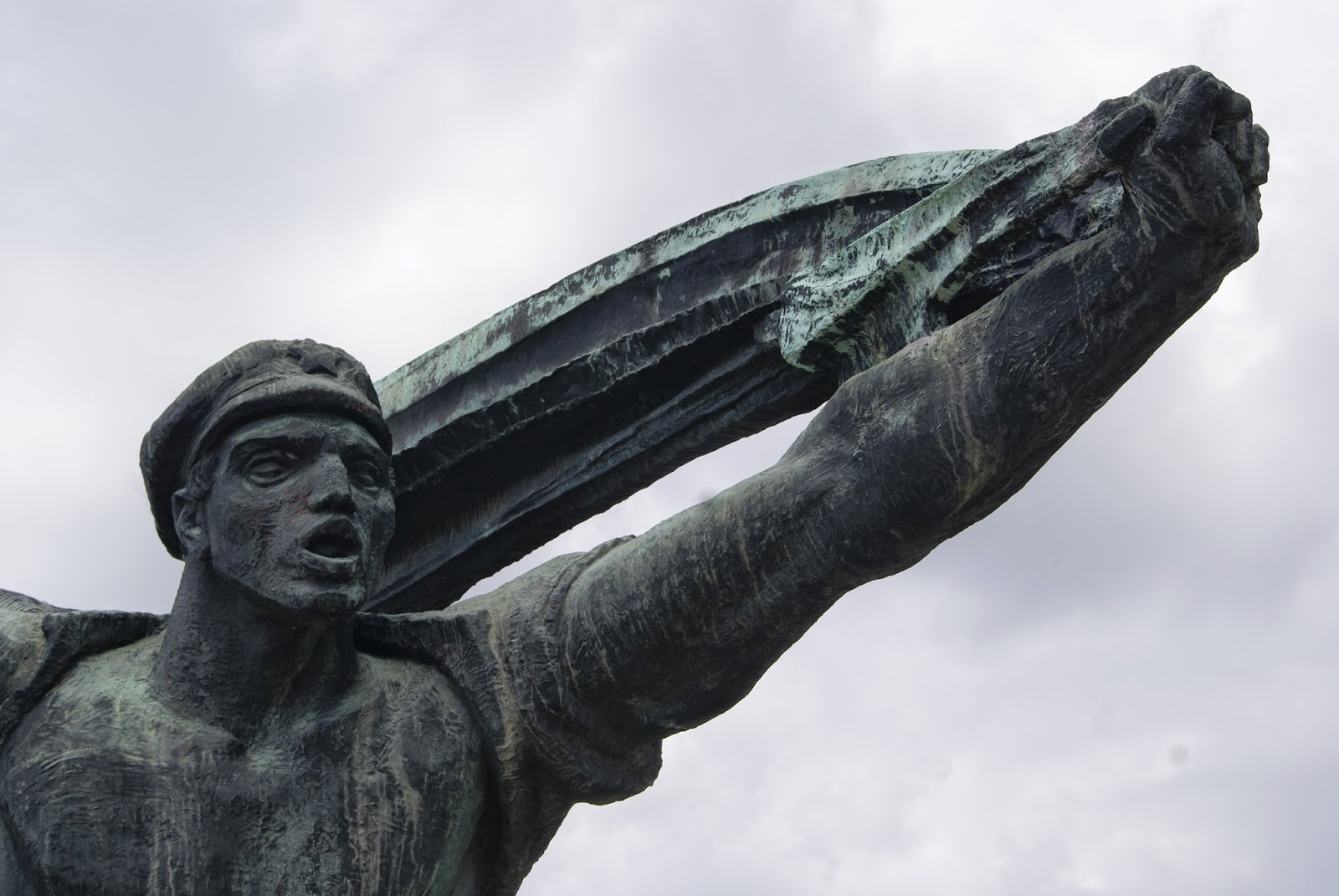
    The next day is very much a day of two halves, When the Warsaw Pact collapsed and Hungary was free to determine its own future, symbols of the communist era were torn down and instead of being totally destroyed, many of the statues were shipped out to Memento Park and put on show alongside displays of life under the soviet regime. It’s a fair way outside the city and we have to get a tram to the end of the line and catch a bus, as the direct shuttle from near the apartment goes and returns at inconvenient times for us. The bus wends its way through suburban Budapest for what seems like an eternity and just as we’re losing hope drops us outside the park.


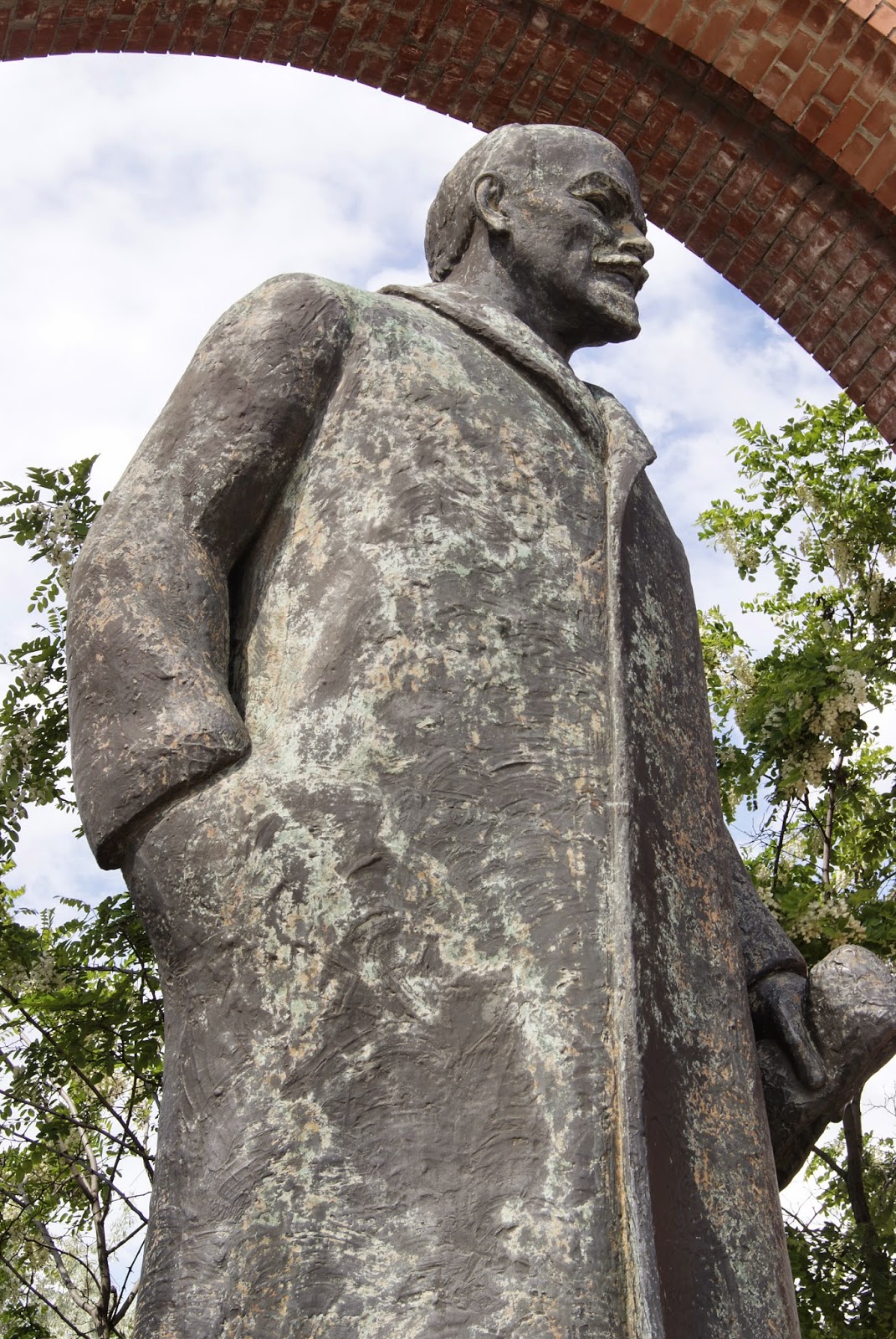
    It’s an eerie spectacle, and the power these statues once held is still evident even as ghosts of their former selves. There’s a pedestal topped by Stalin’s boots, a statue of Lenin cut off at the hip and a rusty old Trabant to boot. The museum’s building houses a fascinating display charting the ill-fated 1956 revolt along with an unintentionally hilarious spy training film.

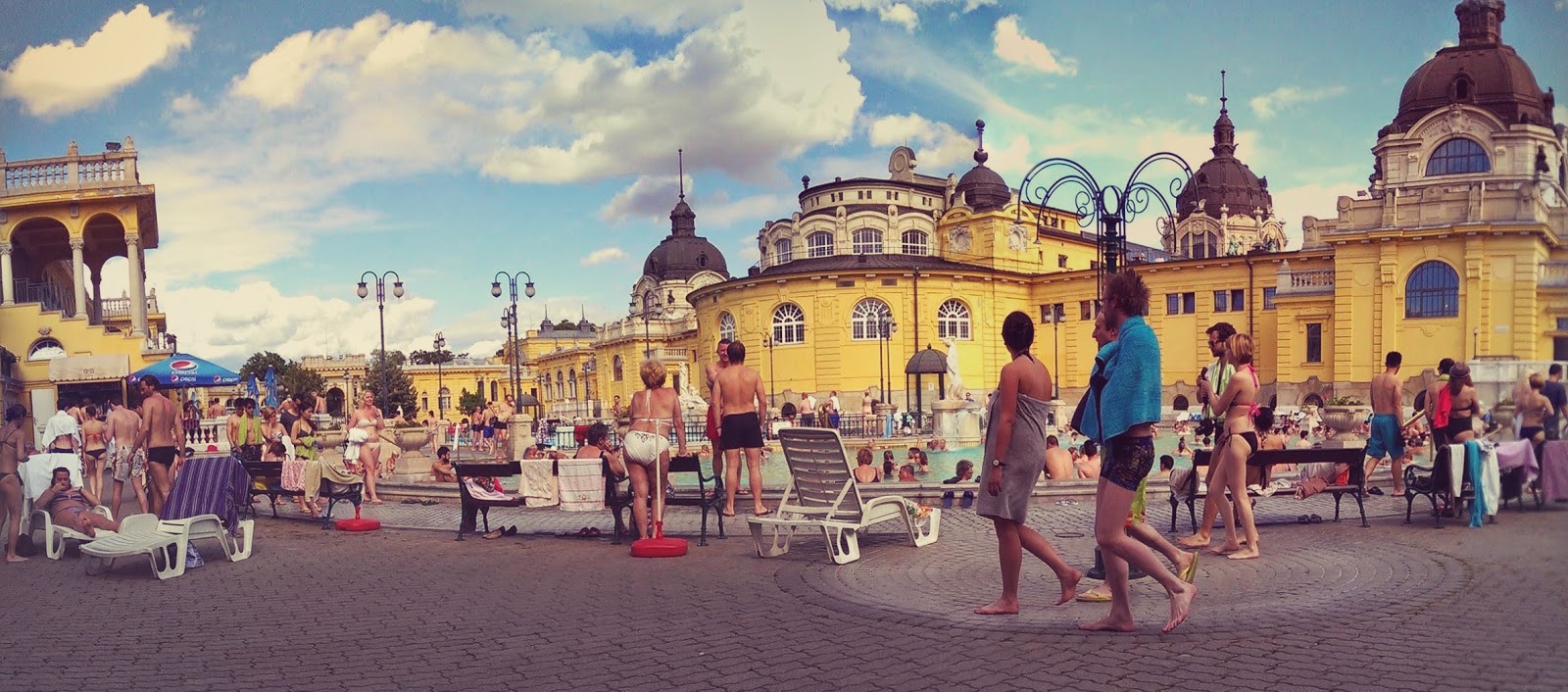
    A hot and dusty couple of hours later and we’re heading across town to the Széchenyi spa for an afternoon ‘taking the waters’. It’s a little run down, frayed around the edges, but has many saunas, steam rooms, and pools of all temperatures and it’s a most welcome three hours of much needed R&R.

    Day five

    Our final day in Budapest in many ways proves the most hectic. There’s a famous flea market on the outskirts somewhere, I’m still not entirely sure where, and we’re keen to visit. I’ve clocked its name but for some reason have not planned a proper route. Unfortunately there’s a metro stop with the practically the same name as the market and I assume it’s there. It’s not. Twenty minutes wandering around later we get a map up on the phone and finally work out that we need to take a tram and a bus from where we are to where we want to be. It’s an irritating interlude but the market is a joy. Row upon row of everything from junk to fine art, vintage clothing and collectibles, and a great little café in the corner.

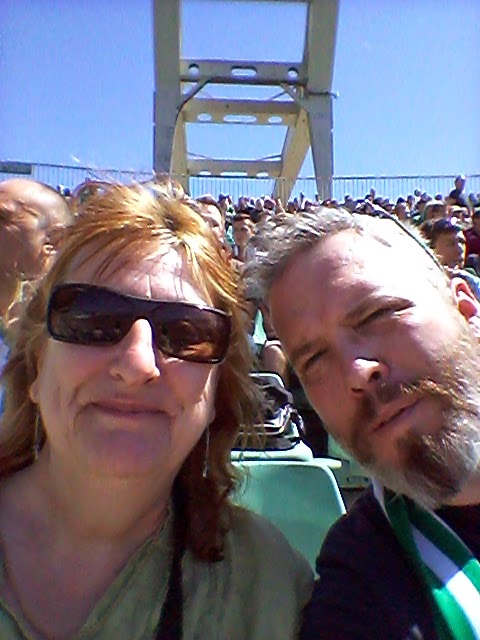
    The afternoon is taken up with Ferencváros v Diógyor. We’re knackered, sat on the bleachers in the full glare of the hottest sun we’ve experienced for years, knee deep in sunflower seeds. The stand opposite fills with green smoke and we feel for the mascot; it can’t be easy wearing a large green eagle costume in this heat and he’s clearly flagging. Ferencváros play out a comfortable 2-1 victory and the crowd goes home happy.

    Our last dinner in Hungary is at a popular traditional restaurant by the river, complete with roaming musicians, a fitting and tasty end to our time here. In the morning we’re off to Vienna.

  • Our first trip – Venice by train

    March 2011

    It all started as our silver wedding anniversary approached. Sarah had always wanted to visit Venice and I thought it would be great to be able to do this on the Orient Express, so I looked into it as a possible surprise gift. The “official” Venice-Simplon Orient Express turned out to be prohibitively expensive and actually a bit underwhelming in what it offered. Scouting around for alternatives we happened upon Planet Rail, specialists in first class rail travel who could offer a first class trip to Venice, four nights in a 4 star hotel and return via Montreux in Switzerland, staying at the 5 star lakeside Hotel Splendid, all for a bit less than the Orient Express charged for just the train. It also offered a great personal service and after a few chats on the phone, our trip was set.
    We arrived way too early at St Pancras International and took lunch at Yo! Sushi before heading to the Eurostar premier lounge. Business class on the Eurostar is very comfortable; wide seats, a snack lunch and plenty of legroom, so the London to Paris leg passed very pleasantly. 
    Our trip included all transfers so, having never been met by a driver before, we looked eagerly for our name being held up as we joined the crowds at Gare du Nord. We had ages to get to Paris-Bercy but our driver was clearly in a hurry and as we cut across the traffic to turn into the small station next to the Gare de Lyon, he hit the kerb hard and blew both nearside tyres and limped up to the station entrance. We left him staring forlornly at his damaged wheels and trundled our cases into the station and took the lift up to the lounge.
    The Paris-Venice sleeper

    Bercy is an odd little station, quite modern compared with many of the other Parisian mainline stations, and the first class lounge is very comfortable, but it’s not very welcoming. We had the one free cup of coffee we were allowed and waited for our train, the sleeper to Venice, to be called. It was to be our first trip on a sleeper and also our first meal in a restaurant car. The food was ok, nothing special, but it felt fantastic to be sitting down to a proper meal as we sped through the French countryside. Our compartment was pretty comfortable and having had a smooth ride during our meal, the tracks got a little bumpier and helpfully rocked us to sleep.

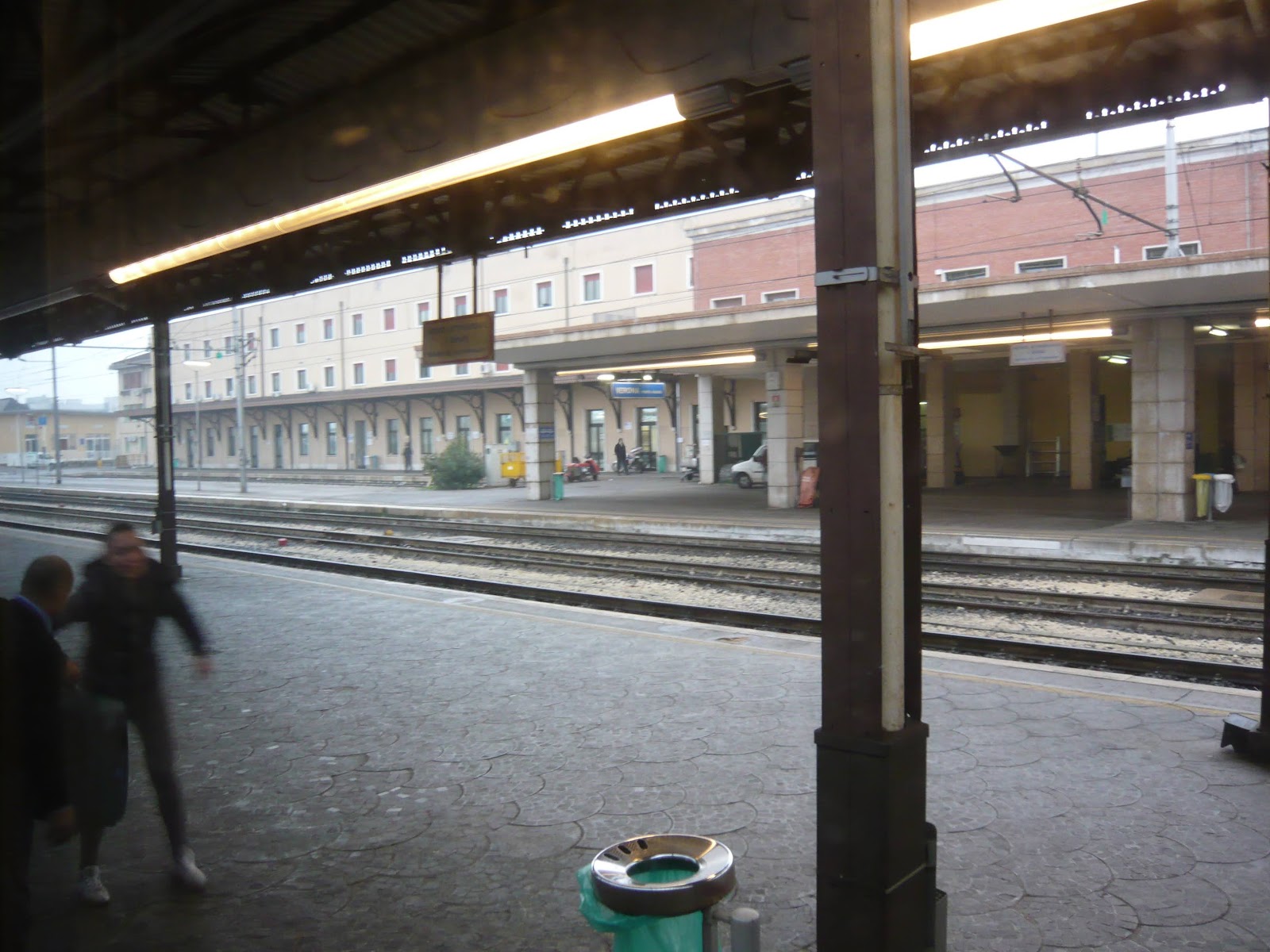
    Two Gentlemen on Verona station

    We slept soundly though the Alps and didn’t notice the scheduled stop at Milan. We were awoken with coffee and a strange, pre-packed croissant as we approached Verona where, conveniently, there were two gentlemen on the platform. Leaving Padua, the rural landscape slowly became a bit more industrialised as we approached Mestre and, as suggested, we tried calling the water taxi company to say we were on time but the language barrier and a poor connection thwarted our efforts. We were a little worried about being stranded at the station so we called Planet Rail and they came through, reassuring us that the taxi would be waiting.


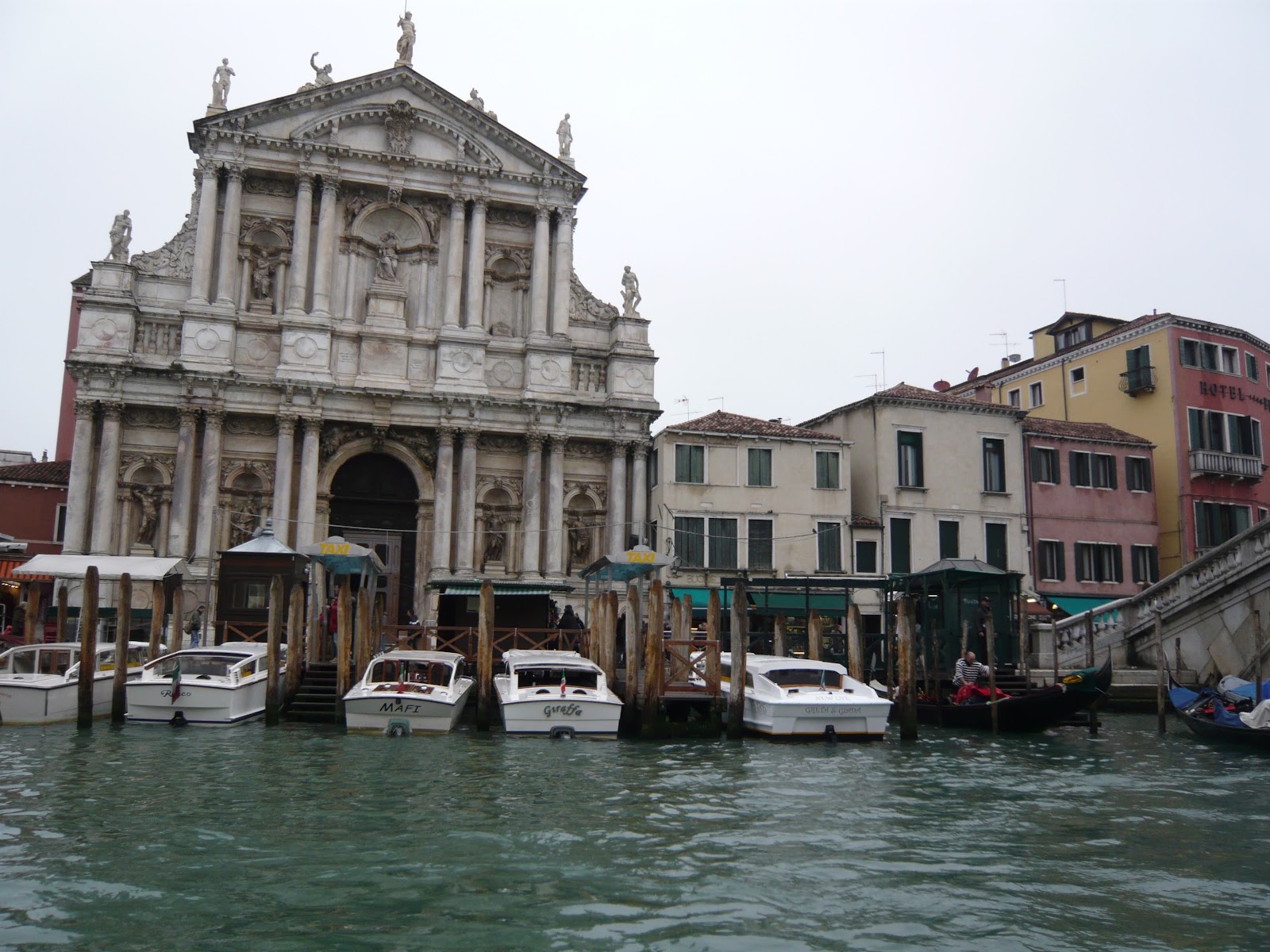
    If you ignore the large car park at the end of the causeway, approaching La Serenissima by rail has to be about the best way to arrive in this magical city and stepping out of Santa Lucia station to this view is breathtaking – especially when you then get met by a smart chap in one of the exquisite water taxis that serve the city. Venice is one city where, for the first-time visitor, everything is new and exciting. The trip to the hotel was a brief but fascinating journey, passing grocery barges, builders boats and even a water hearse, we arrived safely at the Hotel Ai Mori D’Oriente in the Cannaregio, away from the centre but close enough to be convenient.

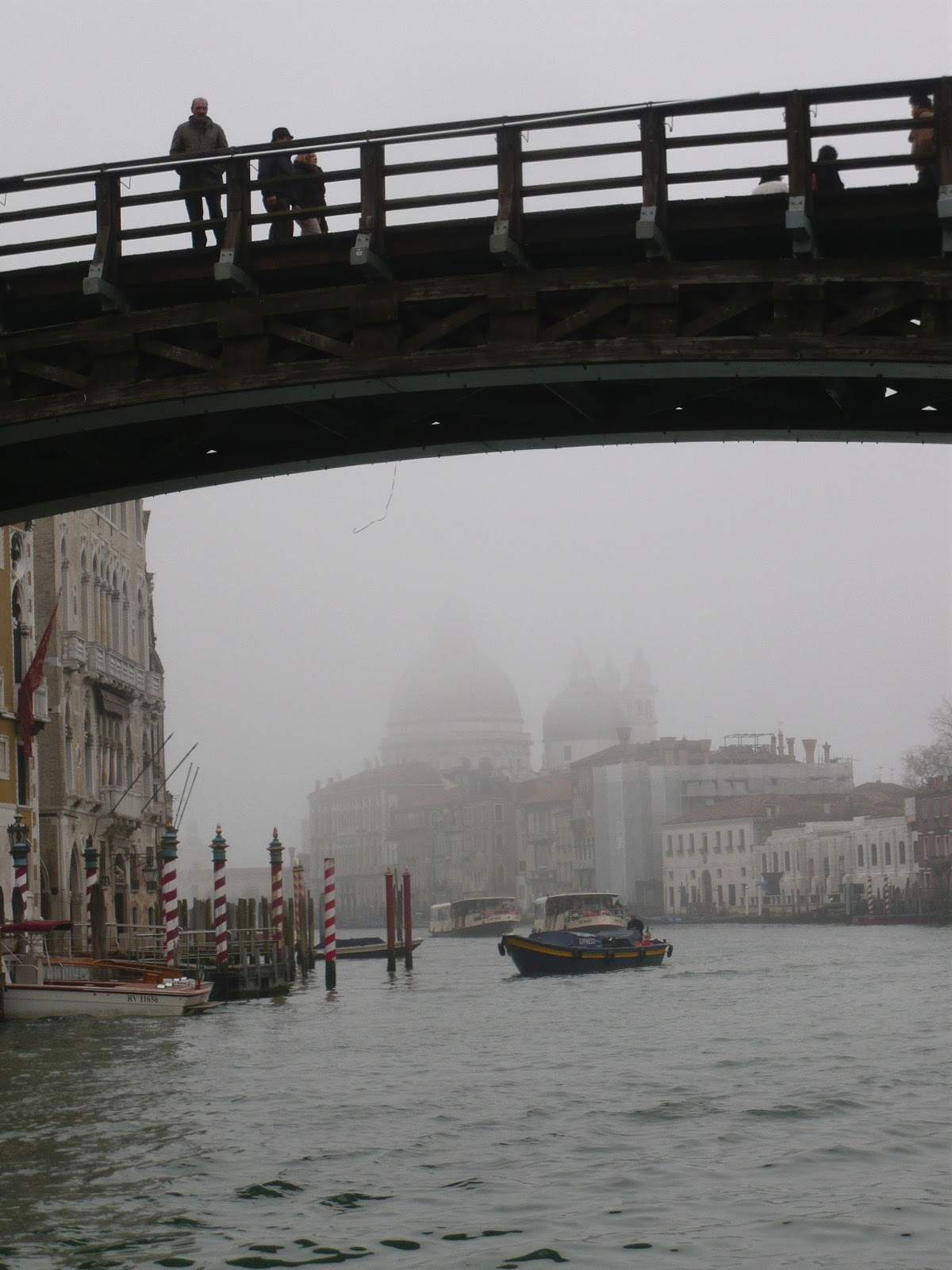
    The additional joy of this trip was the coincidental presence of our friend, and Venezianista, Christine whose own trip overlapped ours by a day, so having settled in to our room we met Chris for dinner and a few pointers to getting the most out of our stay (You too can benefit from here insights at www.littleguidetovenice.co.uk ). We met again for coffee the next morning before we headed off to our first stop, the vaparetto to the Gallerie dell’ Accademia. By the time we got there the rain had started in earnest and was now tipping down. Unfortunately, the quick dash to the entrance was fruitless as we discovered we had to queue for a ticket at the ticket office which was situated OUTSIDE in a portakabin alongside the building, with no shelter. We joined the queue along with over 100 other people, so by the time we finally got in, we were soaked to the skin. Wandering round a gallery squelching is never pleasant but we enjoyed the art and were merely thoroughly damp by the time we stepped out again. The rain had eased but the clouds loomed ominously for the rest of the day.

    The restaurant on the second night,
    This was before the fish tank burst!
    At the end of the first day the water
    was nearly over the edge.
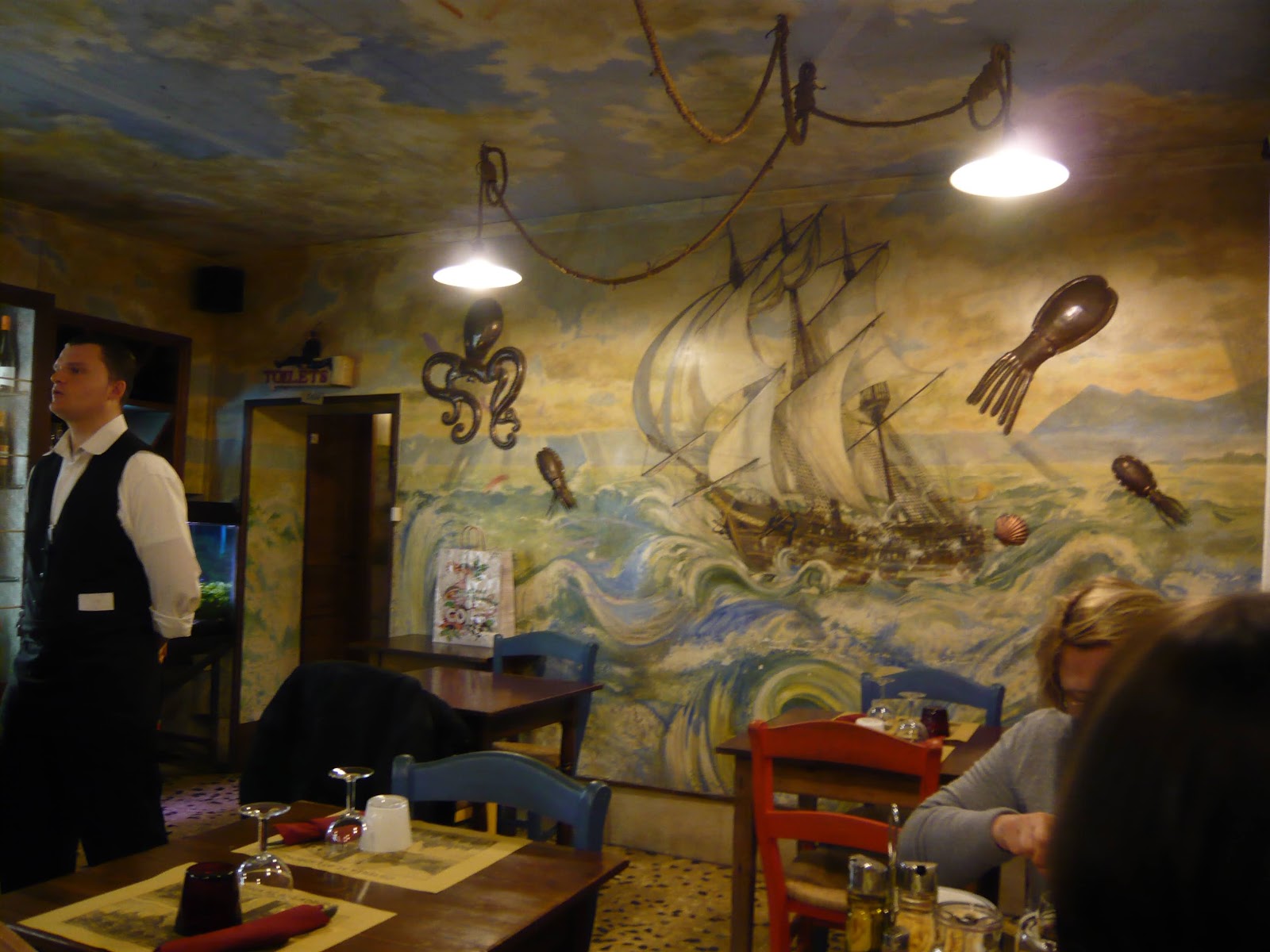
    One of the best ways to see the city is on the regular vaparetto (water bus) services – get a season ticket – so we spent some time cruising the Grand Canal before spending the afternoon at the Peggy Guggenheim gallery. Dinner was at a great little diner near our hotel, with seafaring scenes on the wall and a delicious line in local seafood. The evening was brought to an entertaining end as their fish tank suddenly exploded. We left them to clear up and walked back to the hotel with the canal water lapping at the top of the banks.
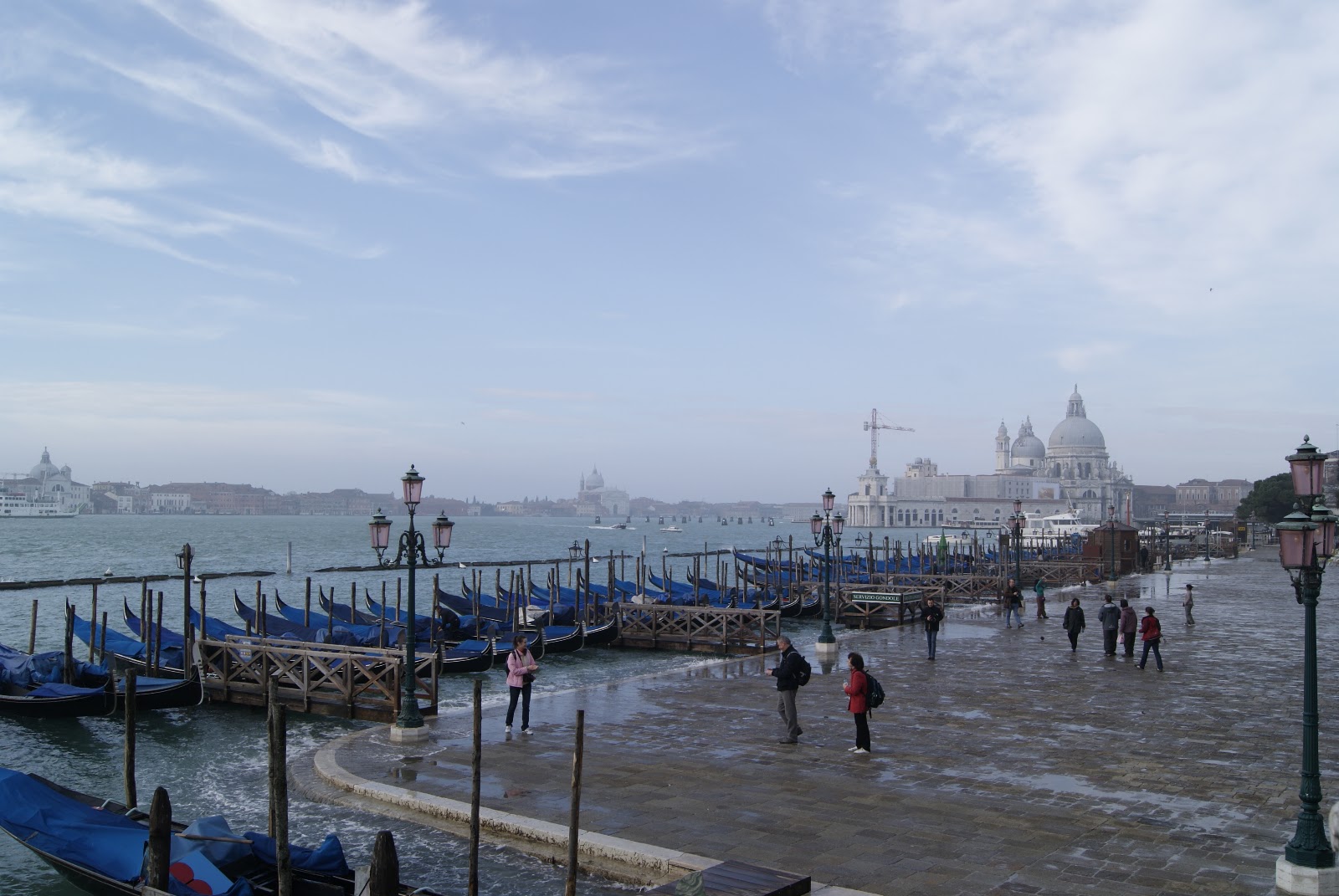
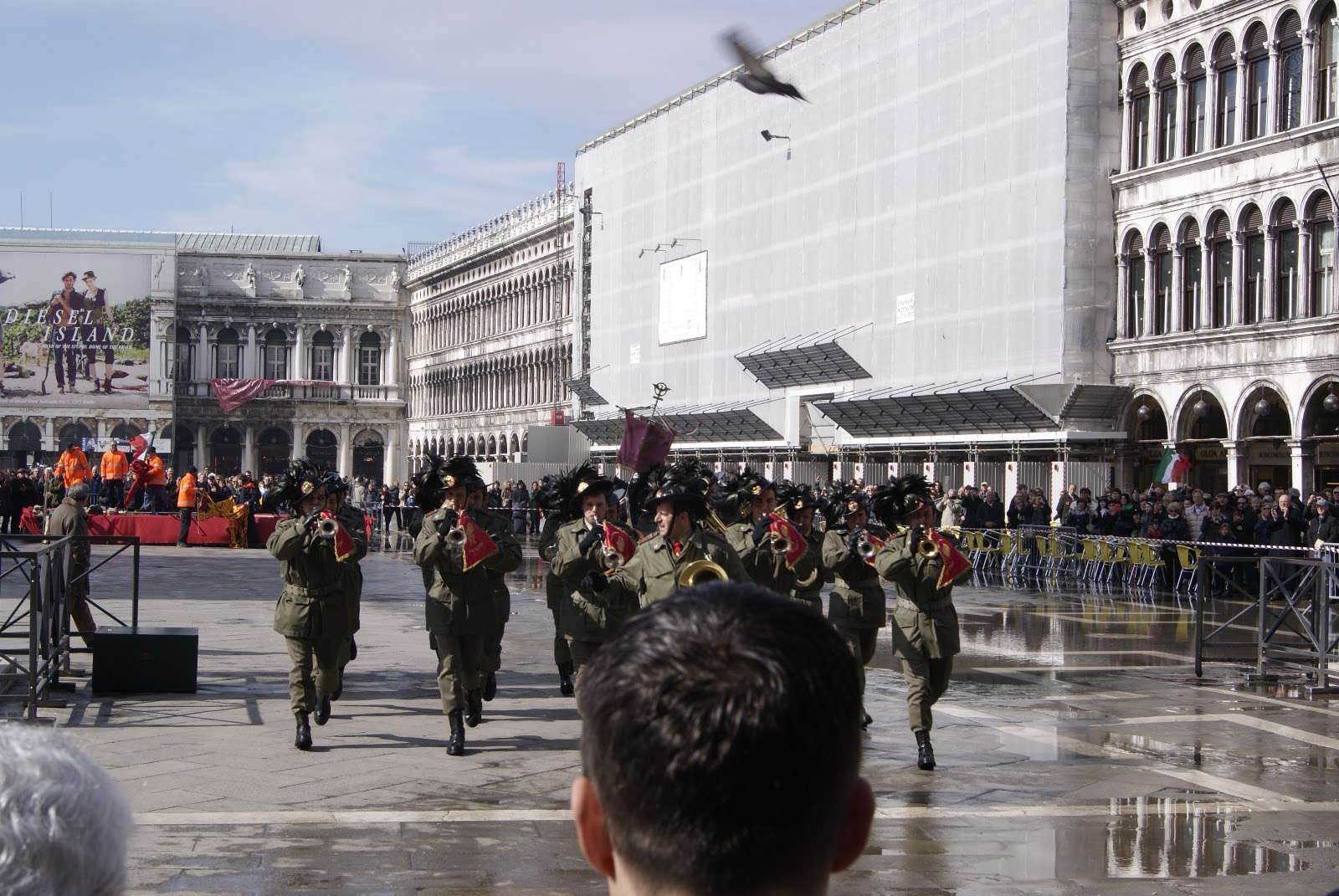
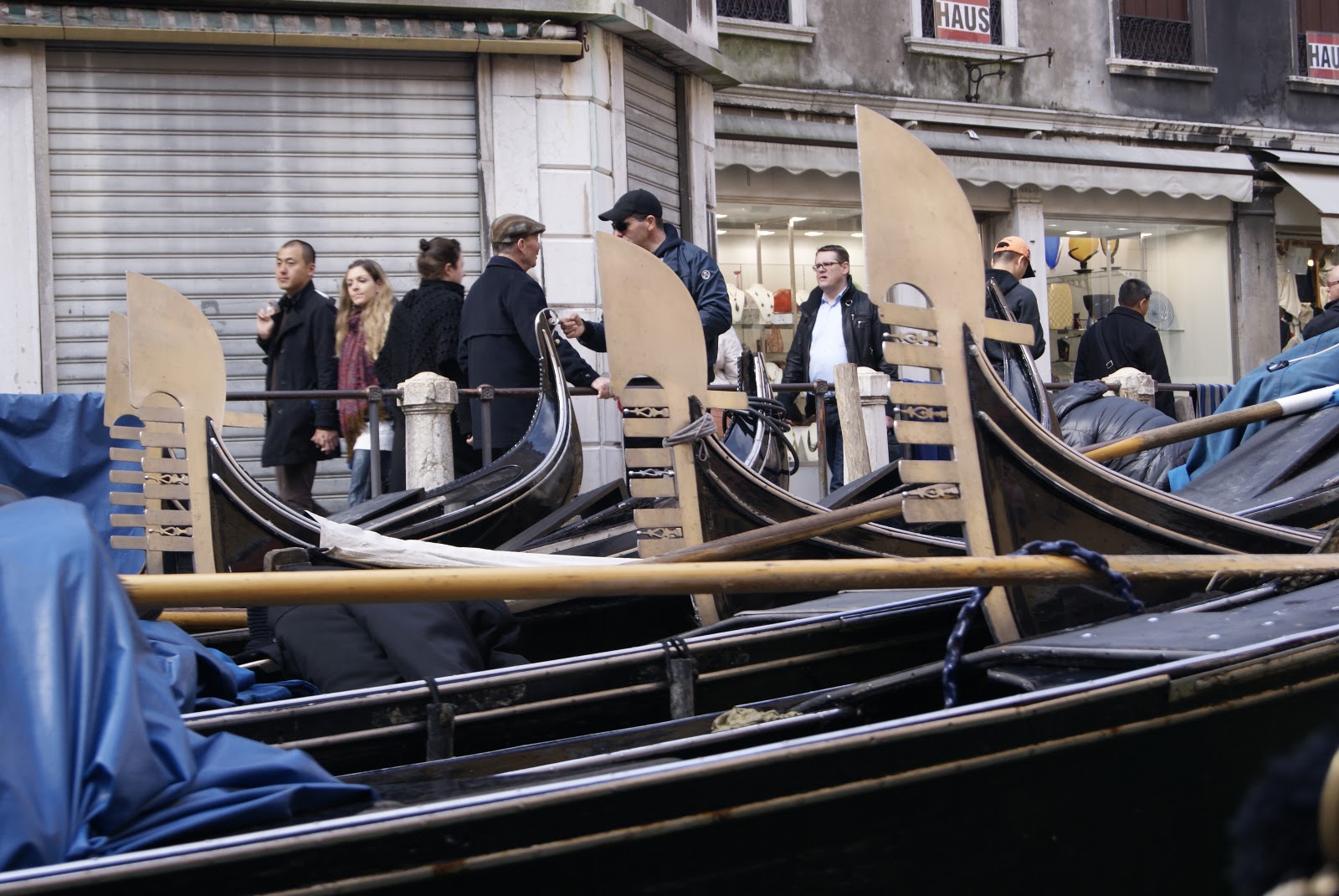
    Details are a little hazy now but our second day was taken up with what might be called the main sights. Taking the vaparetto to St Mark’s we had a great time exploring the Doge’s Palace, had a nice coffee in the square and watched a marching band of the Italian Army going through its paces – far more impressive than the RM band as they also have a bit of a knees-up as they go! We had decided from the outset to do as much as we could squeeze in, including a gondola ride. It’s easy to feel a bit ripped off as they charge a small fortune for sometimes not very much but if you stay away from those at the main tourist spots you can get a decent trip for your money. We paid €80 and did not feel short changed at all.
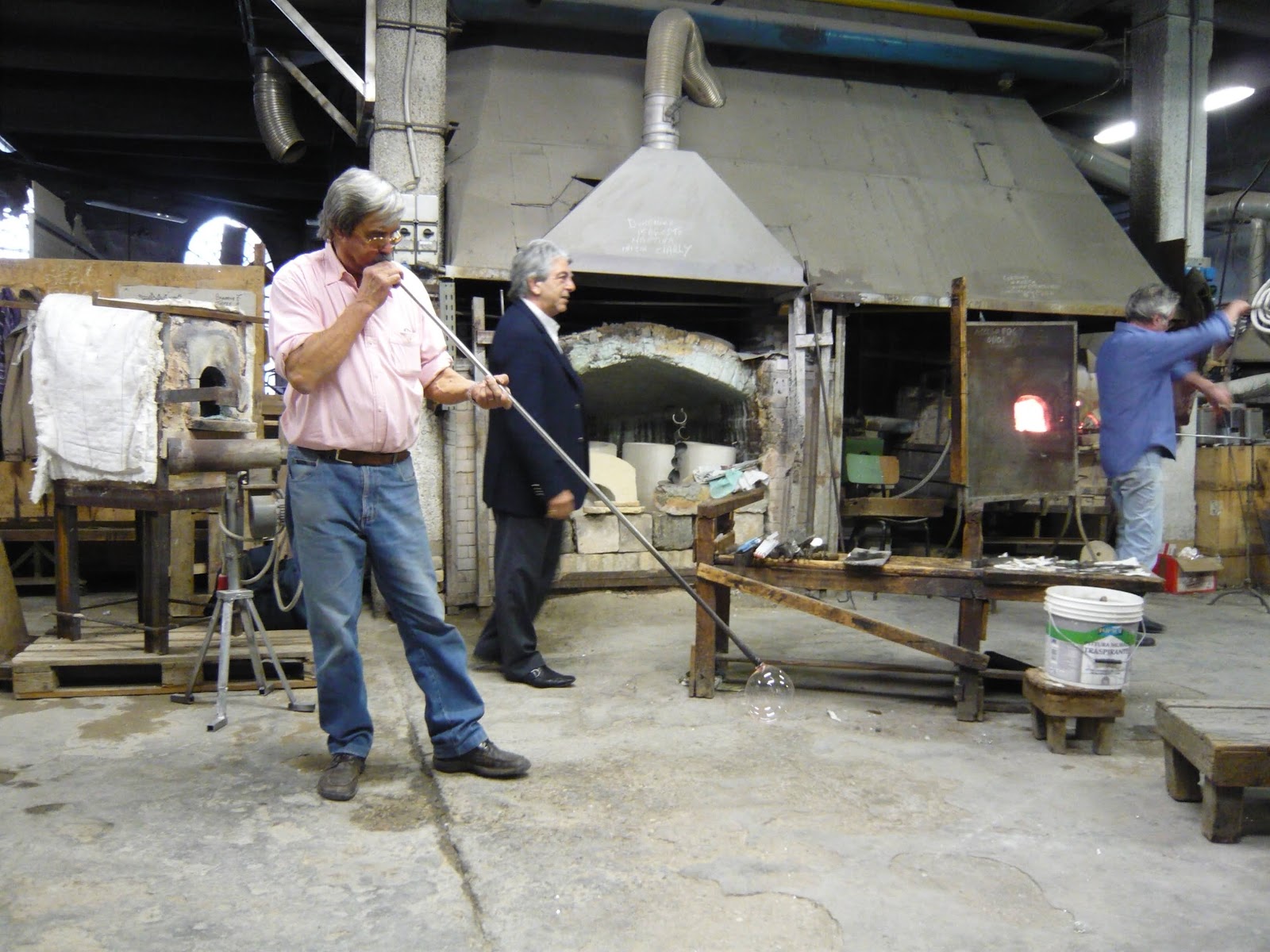
    After lunch we took a vaparetto out to the nearby island of Murano, historically famous for glass-making. Sadly most of the glass is now imported from places like Poland, but we found perhaps the last surviving works and went in for a demonstration. They showed us how they made their famous chandeliers and demonstrated glass blowing with a few tricks. Exiting through the gift shop we were happy to get what we now felt were genuine souvenirs – I’m particularly happy with my cufflinks.
    Blowing glass in the last surviving glass works on Murano
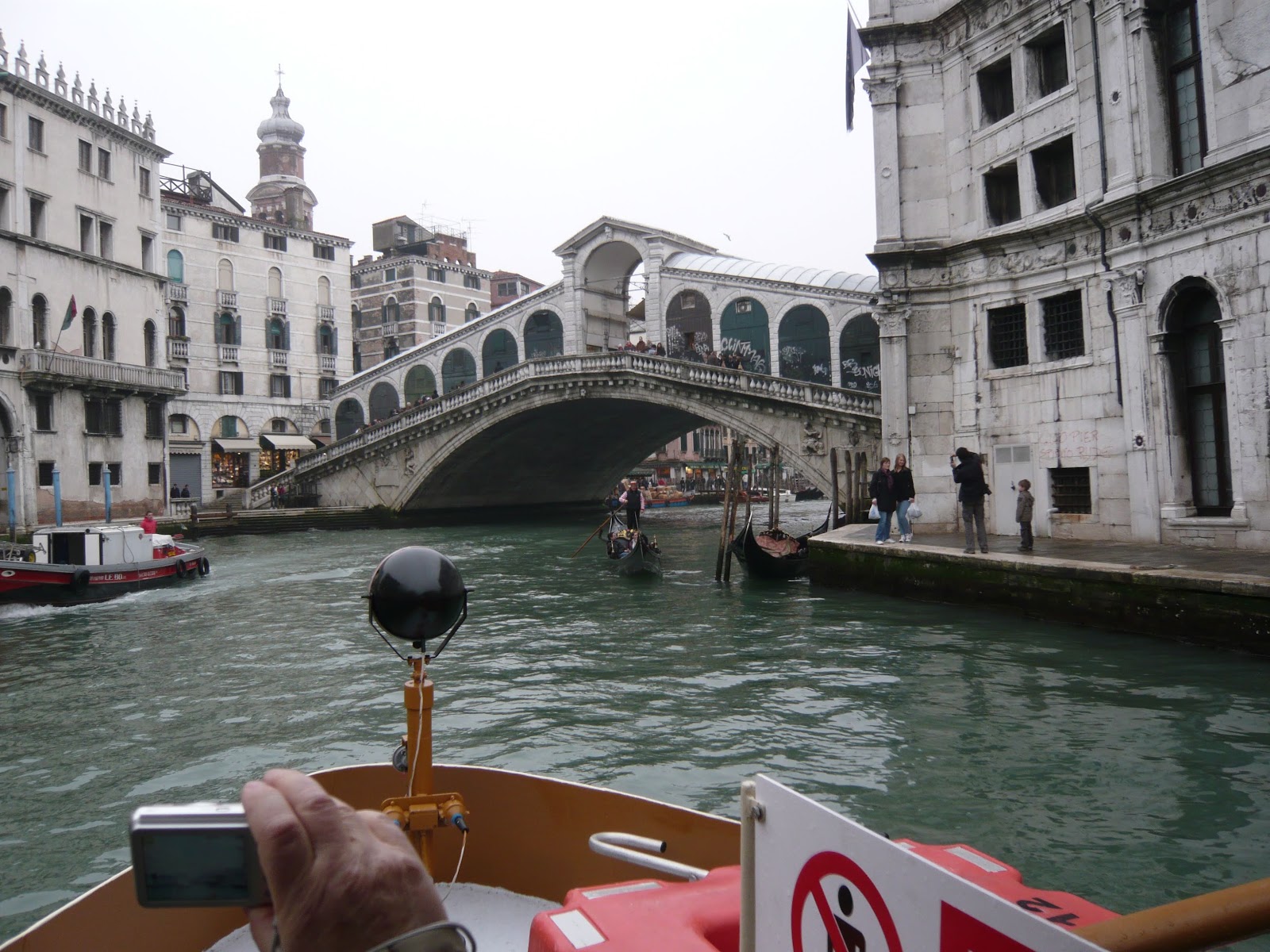
    It only rained on the first day we were in Venice and we managed to wear ourselves out packing in as much of the city as we could manage, even though we barely scratched the surface. Our third day was spent wandering the city again, mostly around the Rialto, its market and old piazze of San Polo where we found a small café for lunch and a spritz, spent a hour or two in the Scuola Grande di San Rocco marvelling at Tintoretto and discovered a beautiful little print works where we bought some book plates. Our wanderings brought us back to the station and we took our weary feet home.
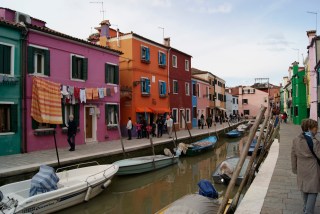
    On our last full day we decided to travel out to the colourful island of lace makers and artists; Burano. It’s a fair distance but there’s a vaparetto out to the Punta Sabbioni where you can catch another one to Burano. It’s a pretty and quite peaceful place to spend a few hours as not many people take the trouble to go there. 
    The colourful houses of Burano
    Here are a few of our other pictures:
    Rialto
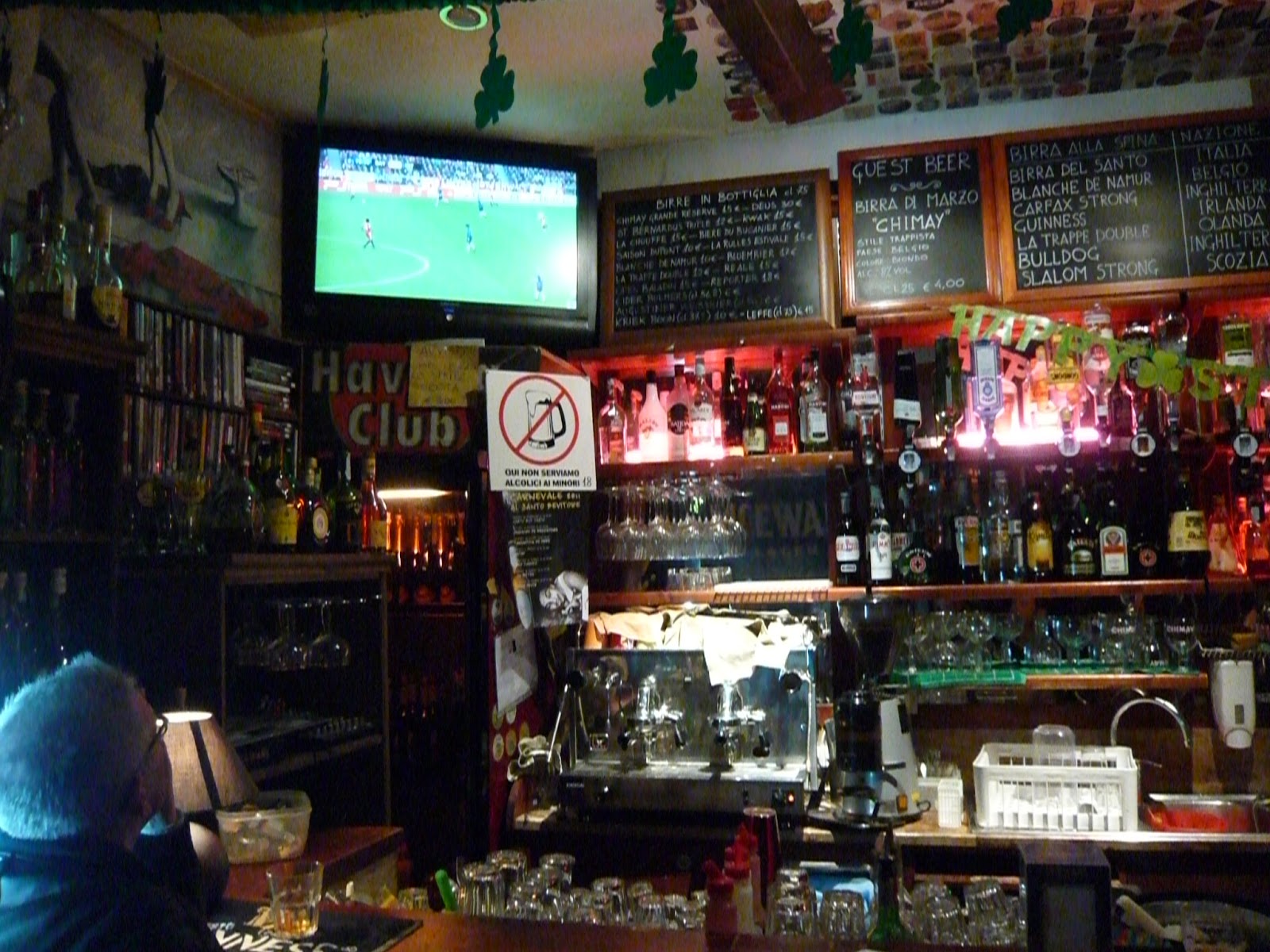
    Watching the football in a local bar
    Gondolas outside the Doges’ Palace –
    the water is a little high!
    Italian military band in San Marco,
    More gondolas
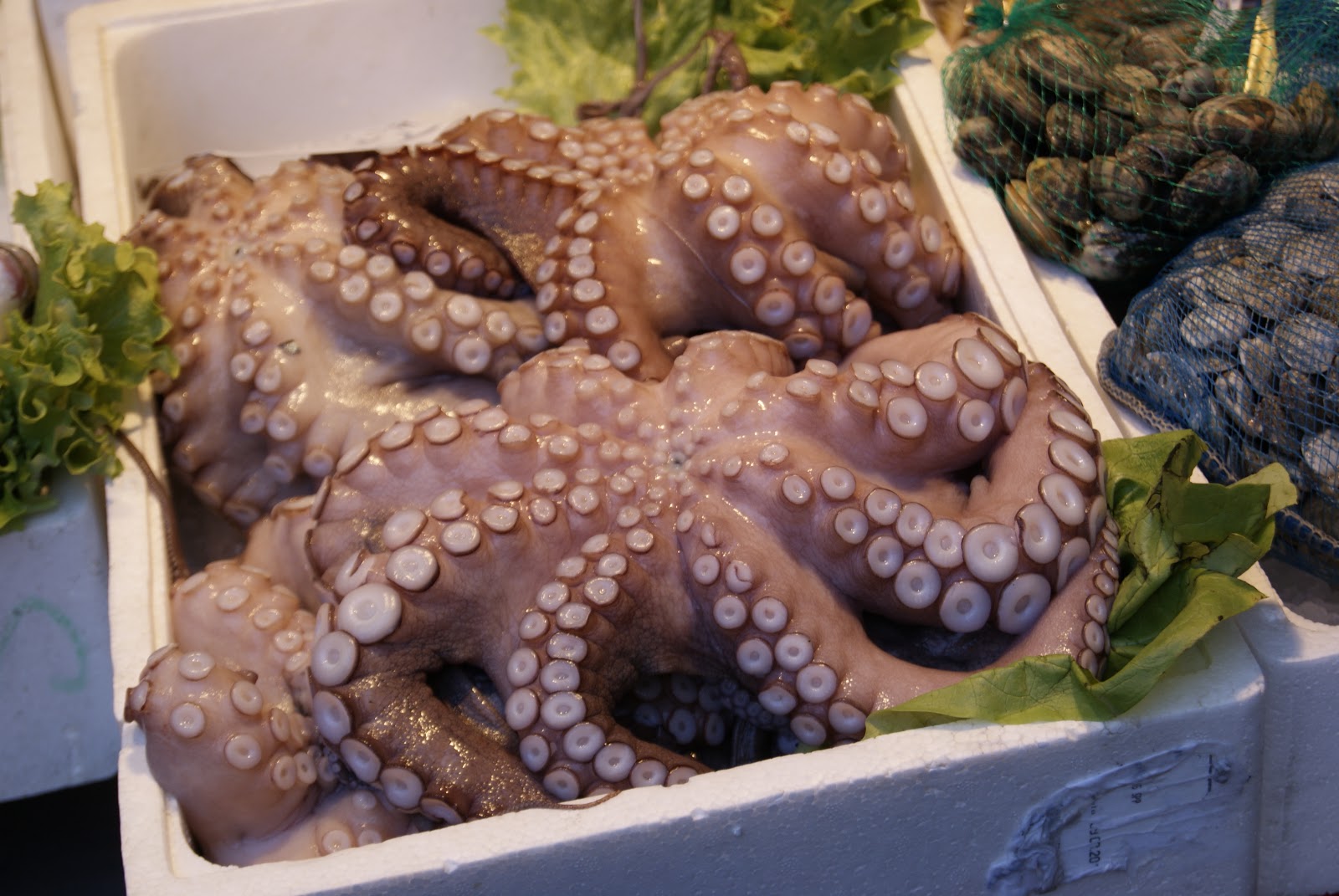
    An octopus at the marketplace

    Our final morning in Venice dawned and we were picked up by another water taxi and returned to Santa Lucia for our morning train to Milan. The first class compartment was surprisingly full of families as we enjoyed our complementary coffee and brioche-like affair and politely declined the free newspaper. Approaching Milan, the railway seems to go through the worst areas of what I’m assured is a beautiful city, cities do seem to show their worst side to the railway, but the station itself is an impressive edifice and we found our way to a small fast food outlet for lunch before catching the train up through the mountains to Montreux on the banks of Lake Geneva.

    The track to Switzerland winds past the beautiful Lake Maggiore and we enjoyed many stunning views in the spring sunshine before entering the Simplon tunnel to Brig. The rails then follow the Rhone valley to Lake Geneva and around to Montreux. Our hotel was just across the road from the station and our room had a wonderful lake view. One thing we noticed on our journey through Switzerland was the preponderance of vines – we had no idea the Swiss made wine in any quantity, so we ordered a bottle with dinner and jolly nice it was too. Dinner was ridiculously expensive but delicious and after a turn along the promenade, marvelling at the apparent incongruity of the Freddie Mercury statue, we turned in.

    We had most of the morning to kill before our train to Lausanne so we resolved to visit the Chateau de Chillon a mile or two up the road. Swiss buses are as reliable as you’d expect and we had a good couple of hours to explore what turned out to be a fascinating castle on the lake before returning in good time for our local train to the regional capital. As we travelled along we noticed even more vines taking up every available space along the track-side and yet we still haven’t seen any Swiss wine on the supermarket shelves here. At Lausanne we caught the TGV to Paris with lunch and wine included as we sped through the countryside on our way home, inspired to further rail adventures.

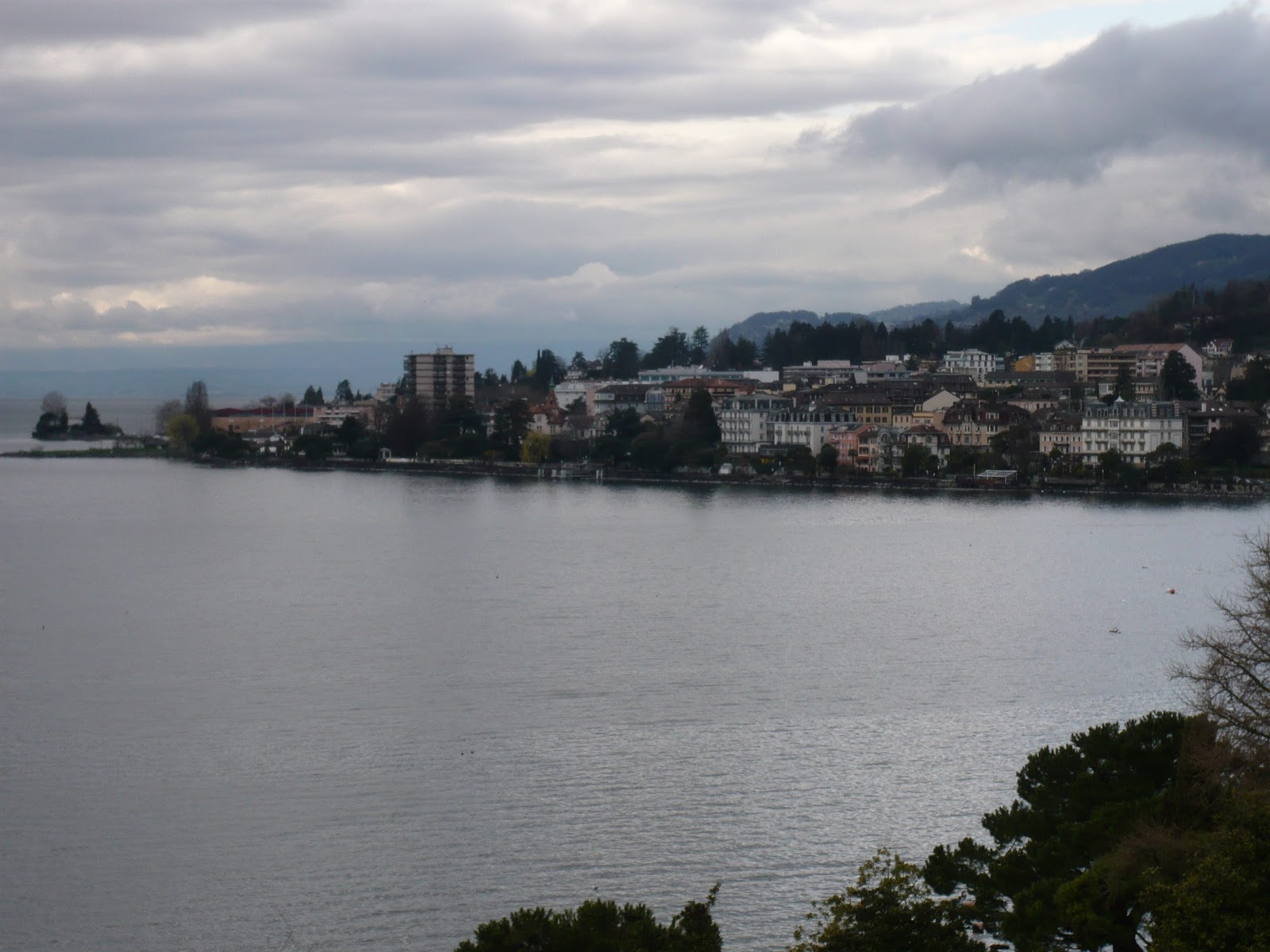
    Montreux from Chateau de Chillon
    Carbon saved: 160kg
  • Recollections of Lyon

    Recollections of Lyon

    September 2015

    We were looking for a suitable destination for a city break in September and settled on Lyon ahead of Ghent. There’s a new Eurostar service that goes directly to Lyon and beyond to Marseilles, but timings and prices meant we ended up booking the regular ‘via Paris’ option. 
    It was to be our first journey through the Gare de Lyon and our taxi from Nord dropped us about as far from the platform we needed as possible – obviously not his fault, it’s the regular drop-off point – but the station is very big with two upper halls serving about 25 platforms. The traffic had been pretty bad, so we only really had time to grab a quick snack from a concession stand before boarding the TGV south.
    Lyon itself lies at the confluence of the Rhône and the Saône, is known as France’s second city and for centuries home of the silk industry. I had booked an apartment near the Opera, down a pedestrianised street, and it was early evening before we arrived. It looked unpromising at first and, owing to confusion on my part about picking up the key, we found ourselves standing outside a large wooden door with no indication how we were to get in. A quick phone call and the owner texted us the entry codes and told us where to find the key to the apartment which turned out to be on the third floor in a building without a lift. Half an hour’s grumbling melted away when we saw the very comfortable interior. Having settled in we went out to look for dinner and eventually found a nice looking café bar doing organic burgers and the like which we wolfed down with a bottle of local wine.
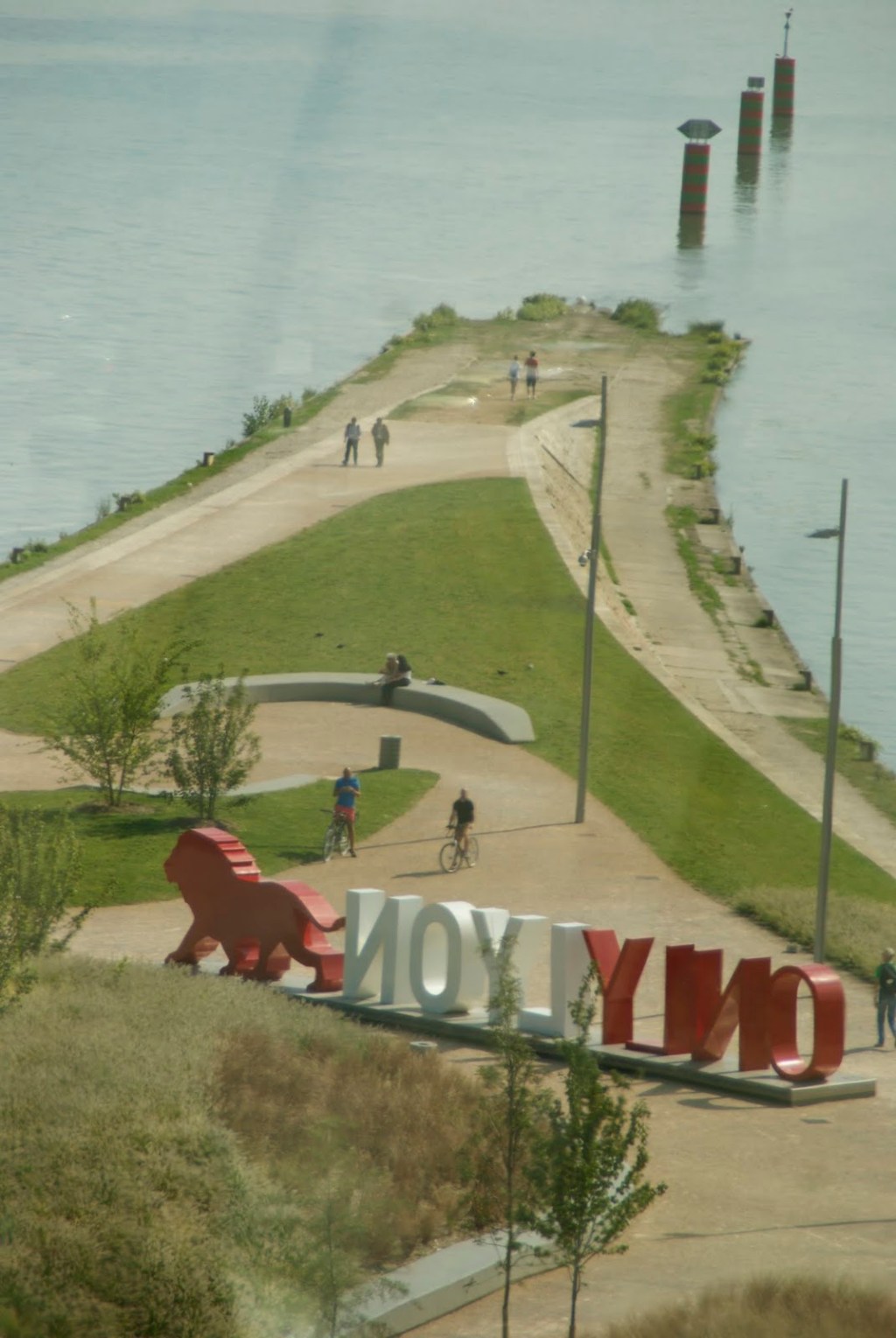
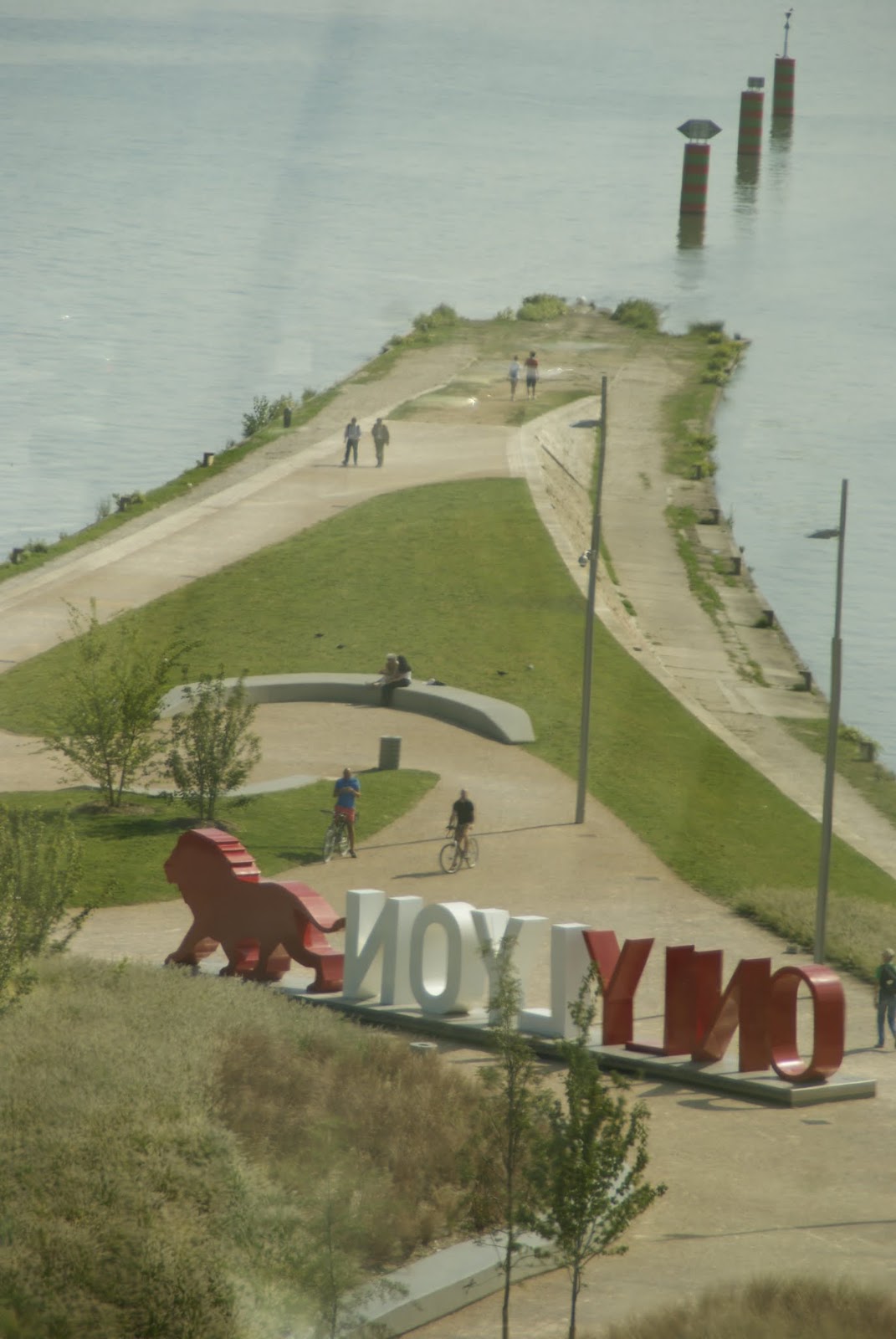
    The following morning we set of for the tourist office at the Place Bellacour, a massive square at the heart of the city, to pick up our OnlyLyon City cards. Suitably equipped we hopped on the metro up to Croix-Rousse for the market.


    We spent a marvellous morning browsing every imaginable stall and snacking on calf’s foot salad – surprisingly delicious. We had noticed a promising looking café, Le Clos Jouve, and headed back there for what turned out to be a delightful lunch before taking the trolley-bus back down to the centre.
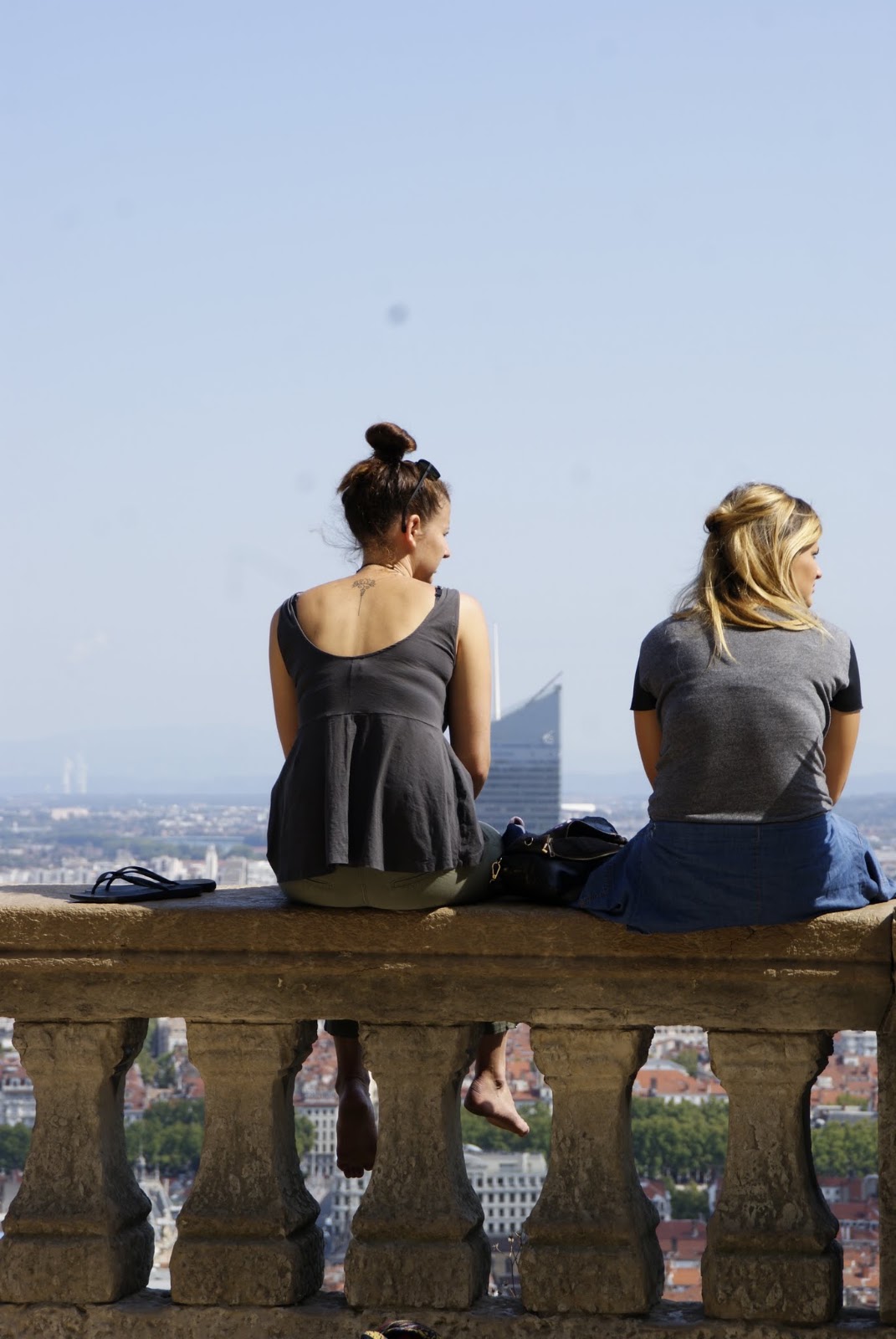
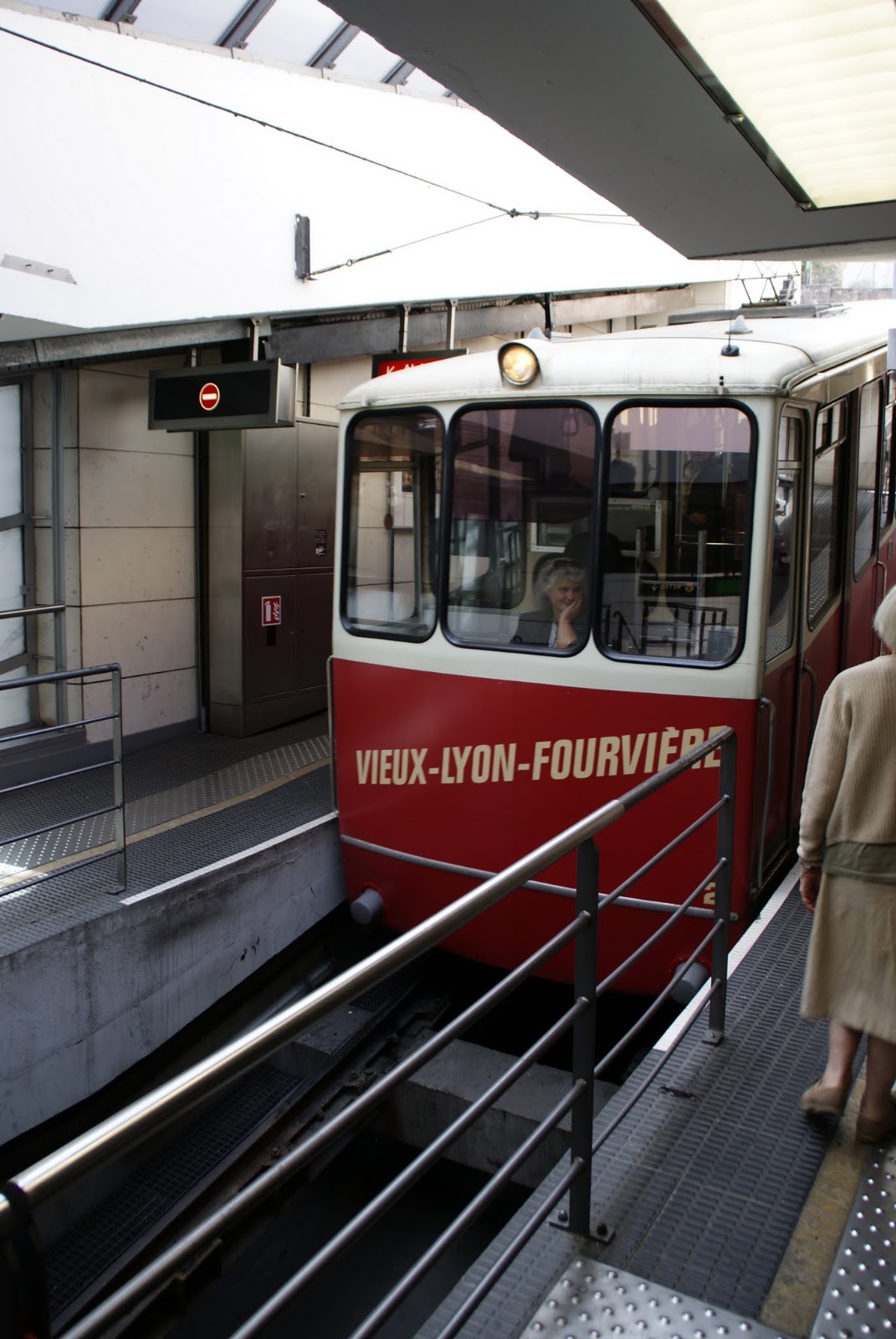
    We’re suckers for a funicular and Lyon has two. One ferries people up to Fourviére, the steep hill of Vieux Lyon, overlooking the modern city and where the imposing Basilique de Notre Dame sits. There’s a lovely square with cafés and a stunning view where we sat a while with the peaceful atmosphere being complemented by the old accordion player at the gate, before visiting the cathedral itself followed by the nearby museum of religious art, which is much smaller than it makes out.
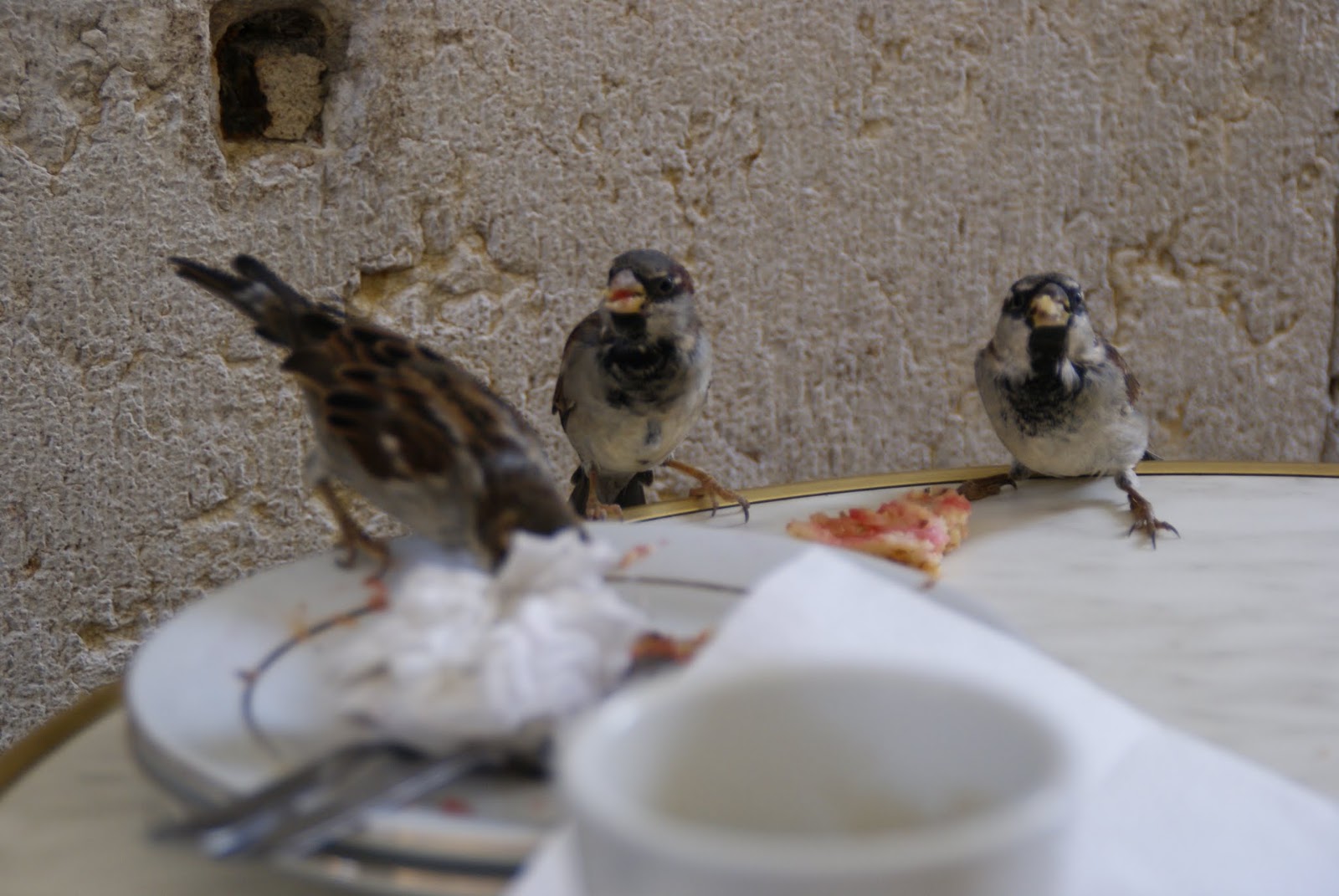
    Back down near the riverside the narrow streets of the old town have many attractions, including the small but fascinating puppet museum, telling (among others) the story of Guignol, the local alternative to the Commedia dell’arte’s Pulchinelle (Punch in England), created by an out of work silk weaver in 1808. After this we sat for a coffee and cake outside a particularly good patisserie. We enjoyed the local sweet delicacy; a praline tart, very pink and very sweet. And a major attraction for the local sparrows!

    We jumped on a bus back home before setting out for dinner at the exquisite Restaurant La Cuisine just round the corner.

    Day two in Lyon started with a trip to what turned out to be a gourmet food market at Les Halles – Paul Bocuse. Quite intimidating at first, we stopped for a beer before heading forth to buy ingredients for a magnificent birthday dinner; charcuterie, paté de fois gras, chicken, truffles, hand-made pasta and some local cheeses followed by some delightful little cakes.

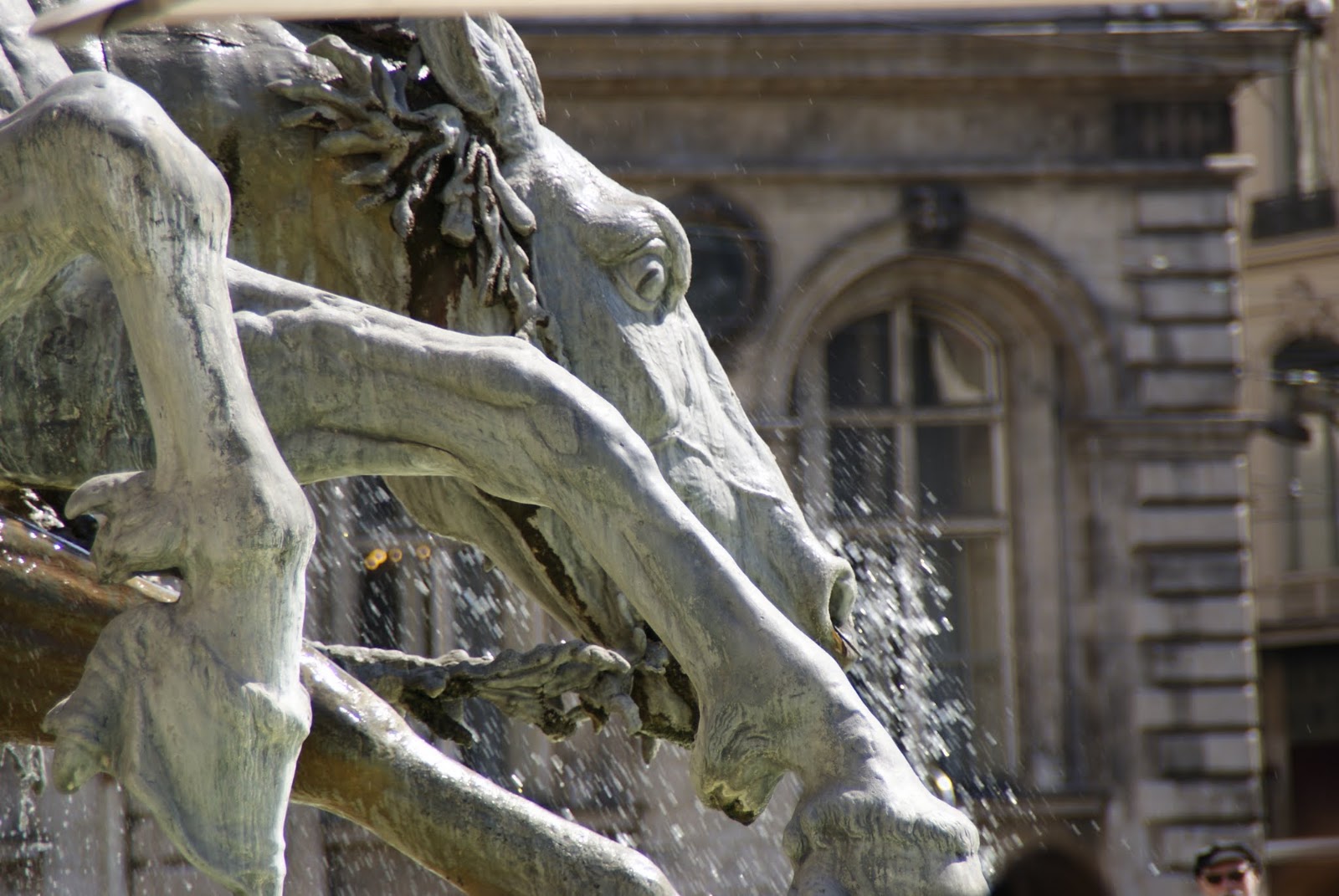
    Detail of the fountain at Place des Terreaux

    The rest of the day was a museum day, starting with the Musée des Beaux Arts which fronts the Place des Terreaux with its magnificent fountain by Frédéric Bartholdi. The museum itself surrounds a cool garden courtyard and is full of antiquities and fine art. This happy couple of hours was followed by the even more brilliant Musée de l’Imprimerie. I’m fascinated by printmaking and indulge in some of the practices myself, so this was especially interesting for me but is worth anyone’s while visiting, covering as it does the history of printmaking around the world as well as its special focus on Lyon.

    Our dinner was as fabulous as it promised and we collapsed, bloated, into bed.

    Our last day in Lyon was again a day of museums, topped off with the perfect end to a few days in the culinary capital of France.
    First stop was the Musée des Tissus – textiles – not usually my cup of tea but very well curated with some exquisite fabrics and costumes. The attached decorative arts museum is in the manner of a furnished house through the ages, which we both loved despite the not so subtle attentions of the security guard following us around the upper floors. After lunch at the very friendly Café Marmot we grabbed a tram down to the Musée des Confluences.

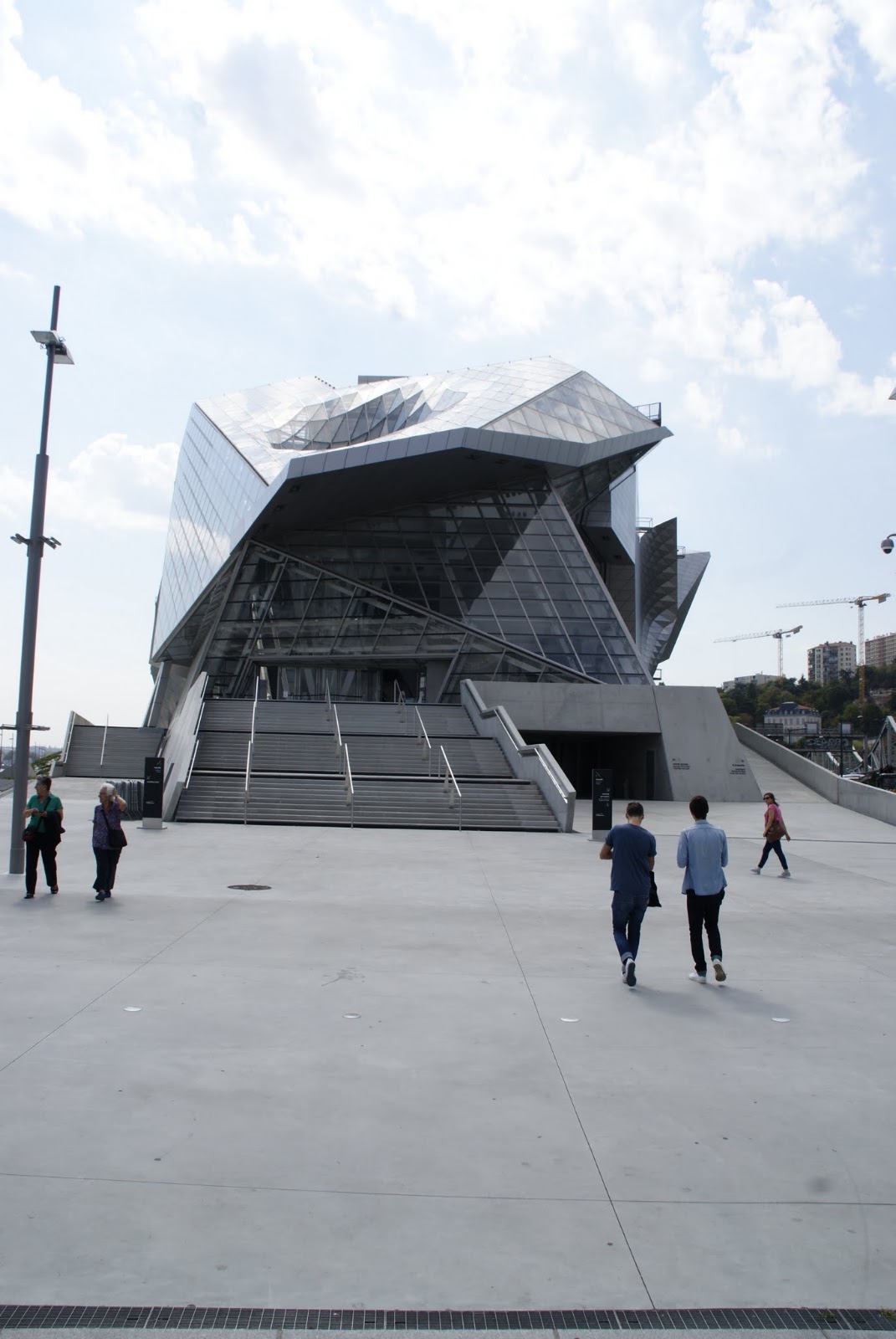
    This is just brilliant. A modern combination of history, science and natural history museums with gallery and performance spaces thrown in, in an ultra modern, statement building right on the confluence of the two rivers. This is a “must see” for anyone visiting Lyon.

    Unfortunately, we were by now too tired to visit the currently difficult to get to La Sucrière, a modern art space created in an old sugar warehouse – part of the ongoing regeneration of the former industrial heart of the city. It was also the start of the Lyon Biennale so it was a double pity to miss it but neither of us could face the mile or so walk from the nearest transport stop and it was also getting late.

    Dinner that night was at the Bouchon Le Jura, a hyper traditional restaurant offering Lyonnaise classics beautifully cooked. Luckily we got there early enough to secure a table, as we watched many others turned away, and had a lovely evening.

    The next day we were up early to catch the bus back to the station, which we found eventually, hidden behind a building site. Otherwise, Lyon’s transport system cannot be faulted – everything links up and one ticket covers all metro, trams, buses (regular and trolley), and funiculars. A couple of hours later we traversed Paris using the RER this time and found it much more convenient than getting a taxi. We were home by teatime.

    Lyon is a lovely city and we’re hopeful we will visit again, perhaps as part of a wider holiday to the Swiss Alps or en route to the Riviera, but we will go back if we can.

    Carbon saved: 100kg

  • Casablanca part two: “…and back”

    Casablanca is a huge, sprawling city of seven million souls. It’s very busy and a bit grubby and there are really only two reasons for the tourist to visit; if you have an abiding interest in mosques, or to pay homage to the film (as I said at the start, the greatest film ever made, no argument). Another planning oversight means we’ve arrived on a Friday so the mosque is out – not open for tours on the holy day – which is a shame for us but we’re only really here for Rick’s anyway.
    Here’s looking at you, kid

    Our hotel was on the edge of the old medina, but this is not Tangier and it’s not that attractive. We find our way through it and along the main road to Rick’s but we’re the best part of an hour early. There’s a square nearby with a park at its centre and a few cafés and we wander over an take a seat. It’s not the usual tourist area, just an everyday café and we drink mint tea and watch the world go by. All sorts of people pass, all sorts of garb and modes of transport. Three young lads on a single moped nearly get taken out by a woman driving and texting but they make the gap before it closes.
    Next door is a carpenter’s shop and he arrives on scooter with the panels for a set of doors he’s making. It’s a lovely interlude and quite an interesting insight into life in Morocco’s second city but Rick’s is about to open and we need to be there on time.


    Rick’s Café Americain, the establishment at the heart of the film was obviously not a real place and the Rick’s we are standing outside was only opened in 2004. It’s heavy wooden doors open and we step in and secure a table for dinner, possibly one of the last available judging by how full it gets later. The interior is designed to be a faithful evocation of the movie version and it looks fantastic. I had feared it would be some awful pastiche but it’s wonderful, just as you might imagine it would have evolved into over the intervening years, even in the hands of Señor Ferrari. The food is pretty good and the service is spot on, we have a wonderful evening.


    Day 5: Casablanca to Algeciras
    Back to Tangier

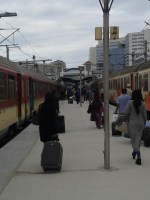
    We have a fairly relaxed morning, the train back to Tangier isn’t until after 11am so we can have a leisurely breakfast before checking out and getting another rickety red cab back to the station. Our driver this time is quite chatty and we discuss Morocco, the king, society and all the building work going on before he drops us off. Our train’s already at the platform but we have time to get a sandwich to have later for lunch from a small concession stand before boarding. This time our co-occupants are an uptight looking French woman and a trio of young men who have the air of being ‘up to something’. They spend half the journey to-ing and fro-ing and have a large wad of cash but they’re no trouble and the journey is otherwise uneventful and we roll into Tangier 15 minutes late. The walk from the train to the station hasn’t got any shorter and we need to go straight to the port to catch the ferry back to Tarifa so another taxi it is.

    I can’t help thinking that Tangier Port needs to start sorting its act out if it’s to attract more cruise ships. Of course, the passport stamping requirements aren’t their fault – a yellow form to fill in this time before a passport stamp to confirm we’re leaving – but the boarding process could be streamlined and an escalator or two wouldn’t hurt. There’s a delay boarding as a nervous coach is coaxed on to the ferry and further delay when on board before we get under way at least half an hour behind schedule and, having boarded in daylight, it’s now dark. I’m worried by now that we’ll get stranded in Tarifa or get to the hotel in Algeciras after midnight, and the passport queue at the arrivals hall doesn’t help matters. We also need Euros or we’re walking the mile or so to the hotel. In the end, everything is fine; the bus is there, there’s plenty of room and we get back to Algeciras in good order, there’s an ATM and we get a cab to the hotel where there appears to be a dinner dance happening. Even better, the buffet restaurant is still open and we inhale a meal before turning in. Actually, just because our room has a balcony, we have a quick cuppa outside before bed.

    Day 6: Algeciras to Madrid
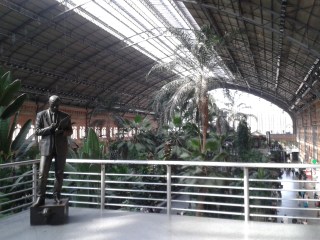
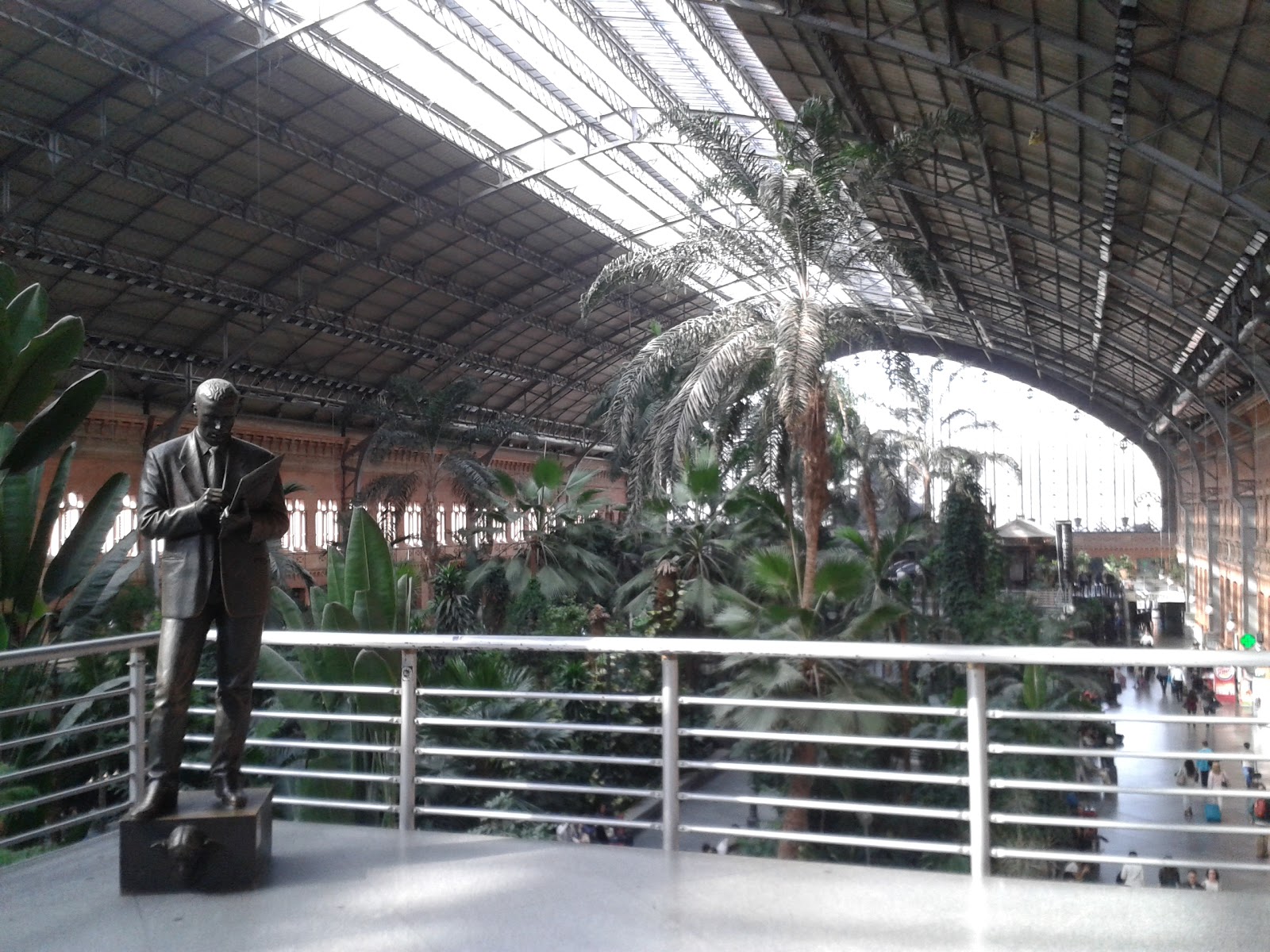
    The “rainforest” at the heart of Madrid’s railway station

    Up early for breakfast, we check out and get another cab back to the station. Our train is already there but the x-ray machine is not ready and it is ten minutes before we can board. This service takes us back through the Sierra Nevada, this time by a more direct route, and we arrive in good order at Madrid Atocha station which is Massive; there’s a rainforest in the hall (with signs saying ‘please don’t abandon your turtles here’). We finally work out that we need to go up to the third floor to get out and across the car park to the chaotic three-lane taxi rank where we secure a cab, whiz round the ring road to the Puerta Toledo and are dropped outside Hotel Ganivet for our 3-night stay in the capital.

    We like to go to a match if we can when visiting foreign cities and this time Atlético Madrid are at home. The stadium isn’t far from the hotel so we decide to grab some lunch before wandering down to see if we can get a ticket for the match tonight. There are a couple of likely places around the Puerta Toledo and we sit down outside one, order a beer and a burger and relax. The family at the table next to us turn out to be English, and football fans also going to the match. In regular life they support Norwich City and we have a pleasant chat about football and our respective clubs before we head off to secure our tickets.
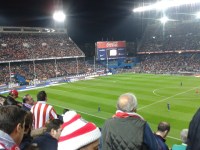
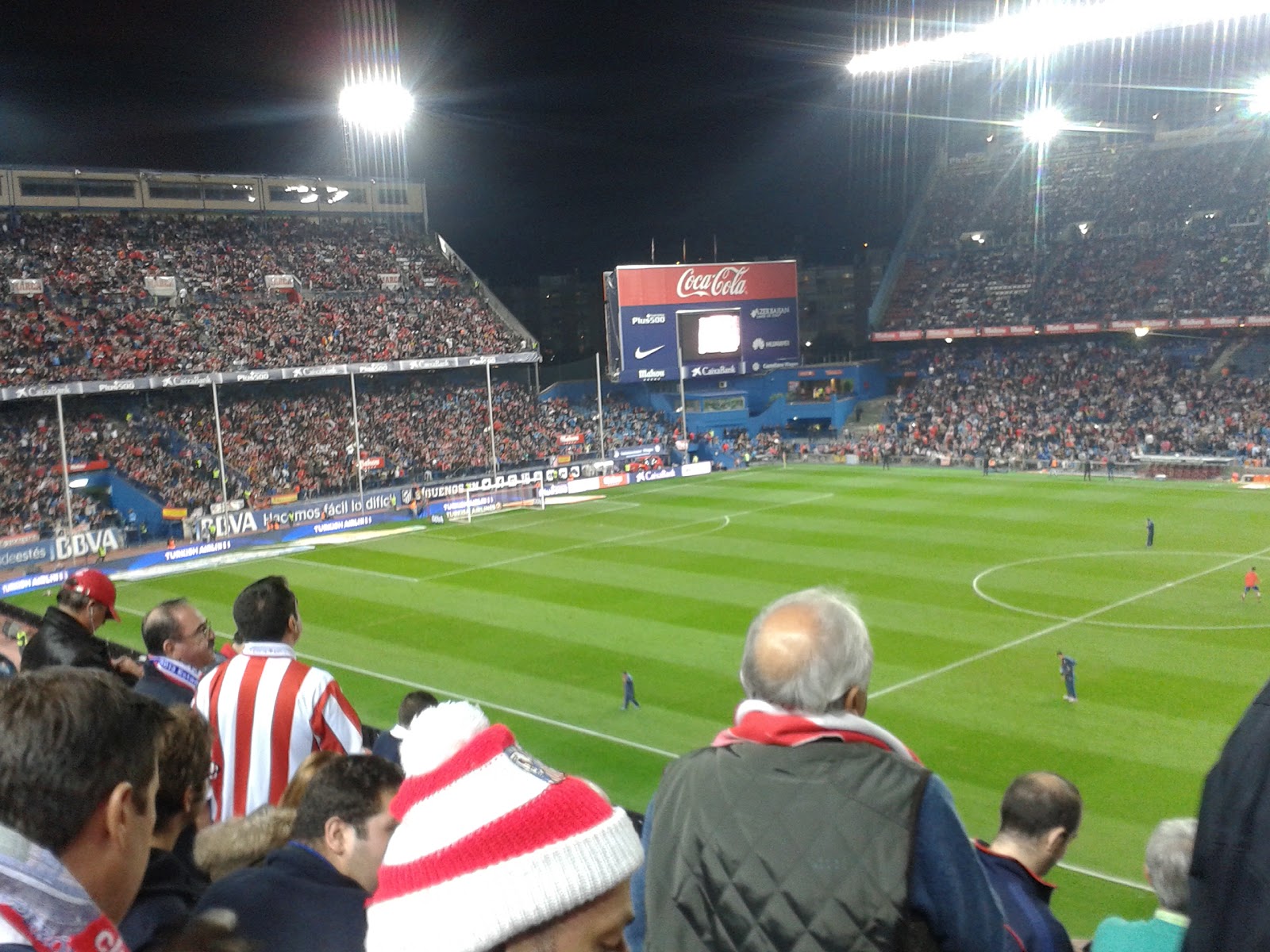
    Vincente Calderón stadium is quite impressive and when we return the streets around it are thronged with fans from long before kick-off. We buy a packet of dried beans of some sort and some jelly sweets which turn out to be shaped like fingers. I don’t know why, but sunflower seeds are de rigeur at a lot of foreign grounds and there are large piles of discarded shells under some of the seats when we leave. The match itself is very entertaining with Atlético running out comfortable winners despite a late and dubious penalty award to Valencia.

    Day 7: In Madrid

    First order of the day, after breakfast (standard hotel fare) is to get to the Prado before the queues get too long. Unprepossessing from the outside, the Museo Nacional del Prado is a treasure trove of the most wonderful works of art and well worth the €14 entry and more. Incidentally there’s a ticket + guide book offer for €23 – take it; the guide book in question is a hefty tome, on sale in the shop for €19.50. It’s hard to pick a highlight, Albrecht Durer’s famous self-portrait is there, as well as the ‘other’ Mona Lisa. There’s The Garden of Earthly Delights (Bosch), Fra Angelico’s Annunciation, Rubens’ Three Graces, and countless other brilliant and famous works. But the two that draw the most crowds, and for good reason, are Goya’s 3rd May 1808 in Madrid and the famous and brilliant Velasquez portrait of Felipe IV’s family; Las Meninas. We do our best and see most of what’s on offer before we leave to get some lunch.

    We decide to head for the Plaza Mayor, as recommended by our hotel clerk, but there ore no direct buses and the man in the information kiosk suggests it would be easier to walk the half mile or so. Madrid has buses by the thousand but they don’t appear to go anywhere useful from any one starting point. We’re tired and hungry and the walk is not much fun and we get there only to find it’s subject to building work and lots of it. Eventually we choose to sit outside the Museo de Jamon for our lunch; a cold meat platter and pork chop/ham and chips. The building work that we thought was largely on the other side of the square starts in earnest right next to us spoiling any tranquillity we may have been enjoying and forcing us to flee, after paying, back to our hotel for a siesta.
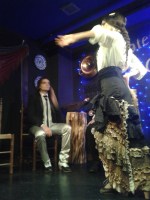
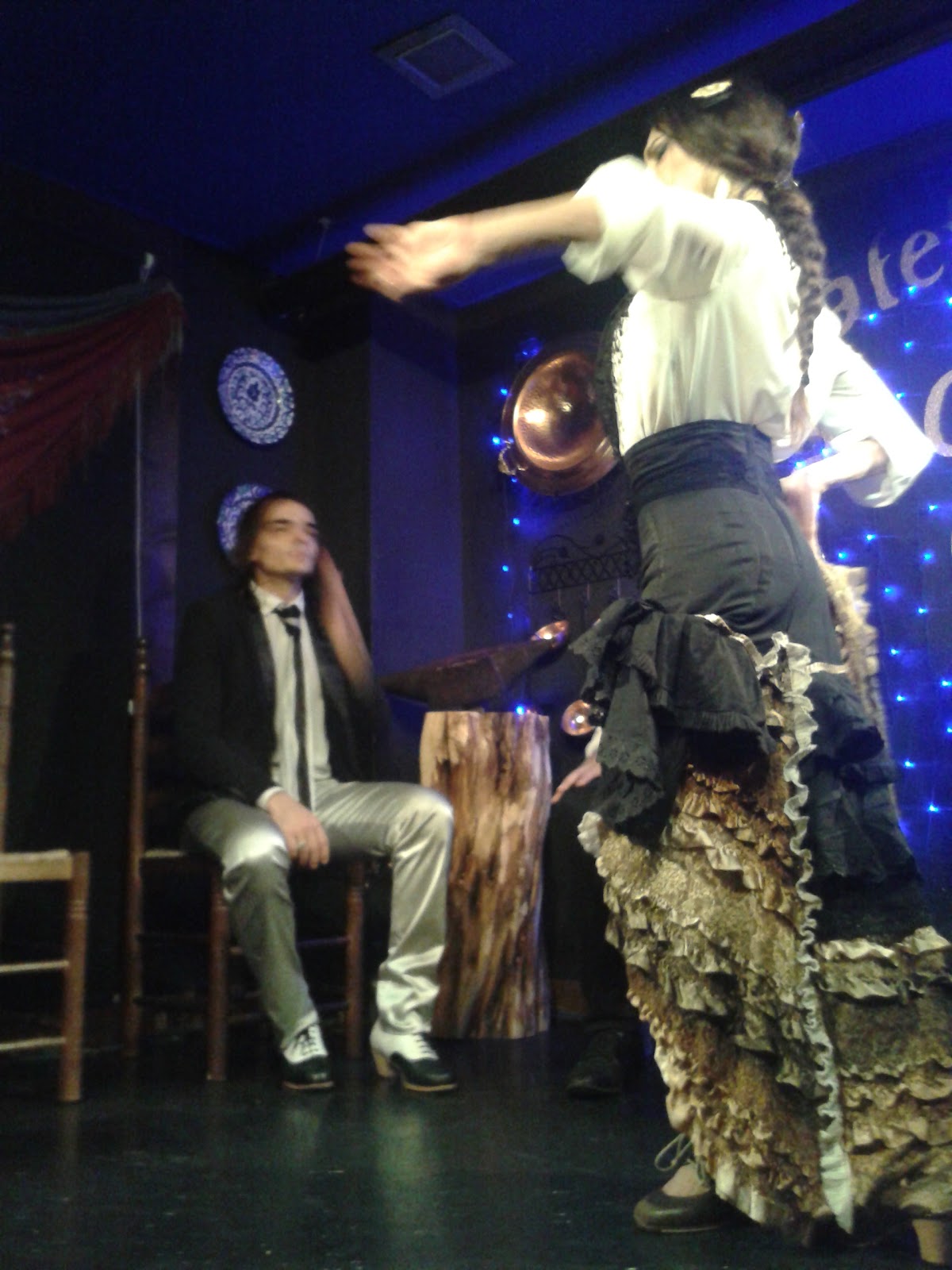
    We’ve booked an evening at a flamenco club, with dinner included, on the other side of town and thankfully the nearest metro line goes straight there, give or take a short walk. Doors don’t open until 9:30pm with the show starting half an hour later. Madridians do not seem to eat before 9pm at the earliest and it’s difficult to get used to but here we are, eager and hungry at Tablao Flamenco La Quimera and we’re shown to a table right by the stage, front and centre. The food is simple but welcome and there’s a glass of wine included for good measure. The show itself is extraordinary. This is not some touristy, night club version, but the genuine flamenco experience; three dancers, a guitarist and cantor entertain us for nearly two hours (with a break) with the most fabulous display of flamenco dancing, hot and sweaty. It’s over and we’re down in a tube station at midnight for the ride home.

    Day 8: In Madrid

    Last day in Madrid and we decide to take the tourist bus, eventually finding the nearest stop around the corner from the hotel. It’s not a bad way to see the city but the weather’s changeable so the roof remains closed for the morning, and some of the headphone sockets don’t work. The gallery we want to see is closed on Tuesdays so we go back round to the royal palace. We grab a quick beer before going in but it’s not as quick as we’d hoped and the day is turning out a lot colder than we’d expected. The palace itself is fronted by a large parade ground with stunning views over the landscape to the south, opposite this is the cathedral (because we wouldn’t want the little royal dears to have to go far to church, would we?). Anyway, the palace itself shows off royal wealth and privilege in all it’s hideous glory; chock full of sumptuous décor and furnishings in this still “working” palace but no photos allowed. The cathedral opposite is quite nice but nothing special.
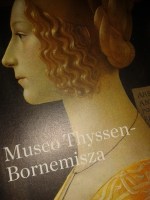
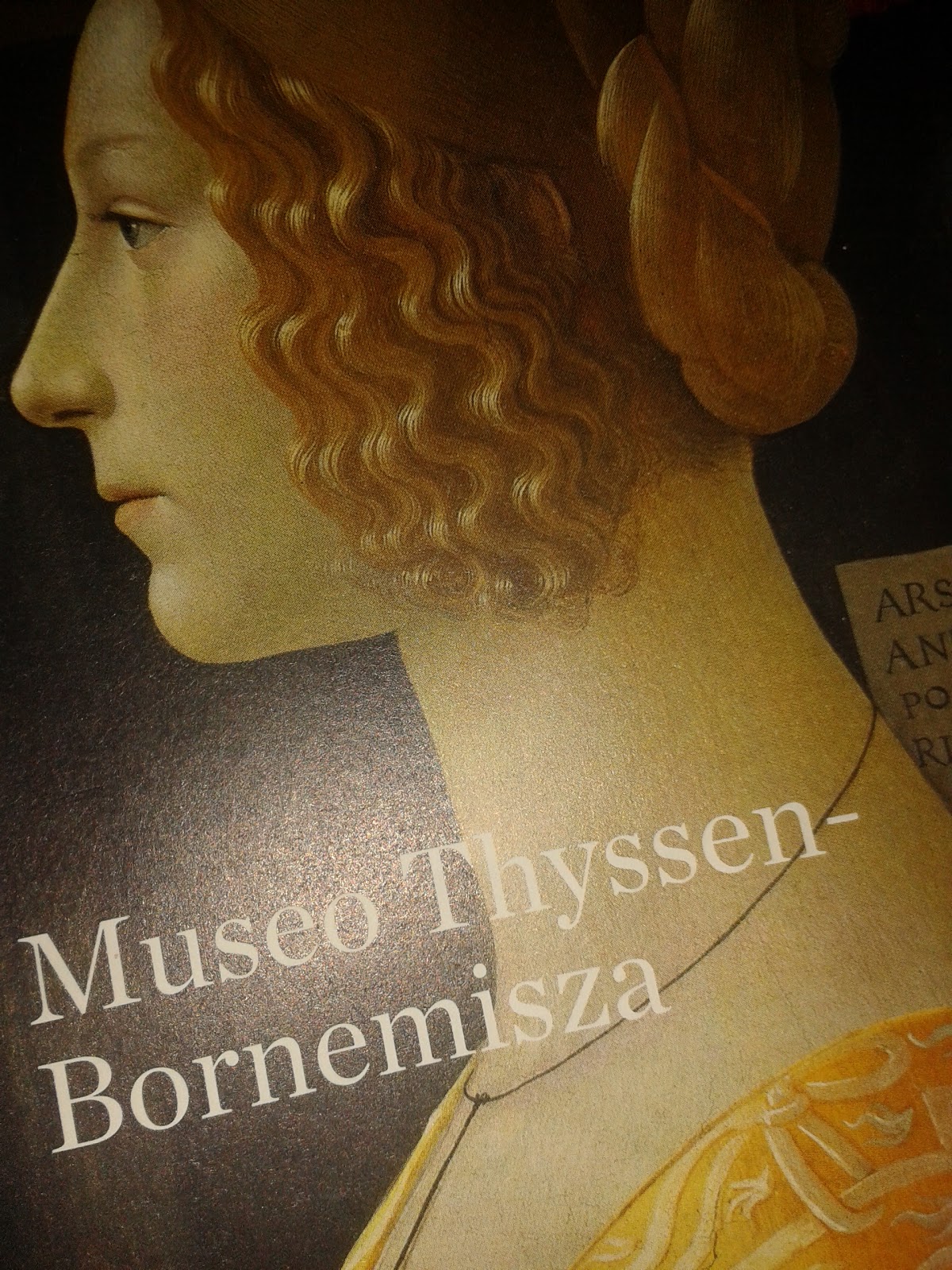
    There’s another art collection in town and we decide to visit, grabbing a quick coffee and apple tart in its café before we start. It’s the Museo Thyssen-Bornemisza a once private collection of the most stunning art. We start with the temporary exhibit of Edvard Munch works themed by mood, which is an eye-opener, and then head for the main collection. We’re about half way round and have to stop to take stock of what we’ve seen. The collection is so vibrant, it’s astounding the breadth and quality of the work on show from El Greco and Caravaggio through Van Gogh and Degas to Matisse, Chagall, Rodin, Picasso all the way to Rothko and beyond. We are really glad we made the effort.

    We go to catch a tour bus back round to the hotel area but it’s approaching 6pm and they’re scaling back operations so we have to wait about half an hour in the now very cold evening for a bus that’s still working. We get back at about 7pm. A quick freshen up before we go out again for dinner. We’ve got a very early train to catch so we decide to eat early and locally at the Taberna Oliveros. What a joy this was, even though we nearly died of a chick pea overdose. It’s a charming place, all tiles and quirky features with an attentive owner who appreciated our willingness to try the hearty local food, nearly killing us with kindness and dessert. A great finale to our time in the Spanish capital.

    Day 9: Madrid to Paris

    5:10am and the station is virtually deserted. The man at the x-ray machine won’t start it up until quarter past so we wait. The train isn’t until 6:05 but I’m habitually early, allowing time for every potential setback. Our train gets to Barcelona at 8:40 and it’s full of businessmen even though it seems a strange commute, “Pride” is showing again and we’re halfway there before the sun pokes its head above the horizon.

    Breakfast at Barcelona Sants before we get the TGV back to Paris. This time we travel the coast in daylight and the promised flamingos are duly sighted, standing round in clumps in the Etang de la Palme and other coastal waters. Heading north from Montpellier, the weather turns wetter until we near Paris and much of the journey is spent dozing after such an early start to the day.

    Our hotel for the night is 200m from Gare de Lyon and we find it quite easily. It’s not a bad room but the whole place could do with a spruce up. We need to find somewhere for dinner and the nearby A La Biche Au Bois looks a likely place and it turns out to be a gem, and a very popular one too. We were very nearly turned away but they managed to find us a table for what was a great meal, topped off with a magnificent cheeseboard; oh, that Brie! Suitably stuffed, we waddle back to the hotel. Thankfully I’ve had the foresight not to book an early train.

    Day 10: Home

    Not much more for me to add. A croissant and coffee at a local café, the RER back to the Gare du Nord avoiding the large pile of vomit in the carriage, sitting in the always uncomfortable Eurostar terminal waiting for a slightly delayed train, habitual pasty at Waterloo before a better than usual SWT train to Fratton.
    Home from one of our better holidays.

    Carbon saved: 270kg

    October 2015
  • Casablanca part one: “There…”
    Every so often I’m to be found browsing seat61.com wondering where we can reach by train and how easily it can be done, or perhaps just dreaming of the day we can just take off and travel the world. During one of these reveries I noticed it was quite easy to get to Morocco in a couple of days, especially with the new Paris-Barcelona TGV service. So a plan was hatched to go to Casablanca, just because we could, to pay homage to the greatest film ever made (and I will brook no argument on this). Originally we thought of spending about a week in Morocco but in the end decided that passing Madrid twice without stopping was folly, so the journey was split between the two (as is this account).

    October 2015
    Day 1: Fratton to Barcelona

    We get to Paris almost on autopilot these days; the trundle down the road to Fratton station, join the bleary-eyed commuters into Waterloo, then crowded Bakerloo and Victoria line trains to St Pancras International. Standard class on the Eurostar is actually about the most cramped train we use, but the journey is usually smooth and straightforward. This time it stops at both Ebbsfleet and Ashford, which is new for us, but arrives more or less on time in Paris Nord.
    We need to get to Gare de Lyon for the TGV to Barcelona. Last time we were in this situation, going to Lyon, we got a taxi but the Paris traffic rendered it slow and expensive. On the return leg we had discovered the RER ligne D, a direct link between the two stations pausing only at Chatelet Les Halles. So we arrive at the station €15 richer and in plenty of time for lunch before boarding.
    The new high speed link between Paris and Barcelona is a joint SNCF/Renfe enterprise and there’s a moment’s consternation as the guard takes our tickets away with him but he eventually manages to explain he has a French machine and ours are Spanish tickets. We are thus settled in our very comfortable first class seats with a glass of wine, speeding south on what should be a six hour journey to the Catalan capital.
    The scenery through France south of Paris can be spectacular, particularly along the coast, but it’s October and just past Montpellier the train is delayed so we pass through the region in the evening gloom. After enjoying a spectacular sunset over the distant Pyrenees, we finally arrive at Barcelona Sants over 20 minutes late and in the dark.

    This is where I have to admit to a planning oversight. When booking the hotel for our overnight stay I looked at a map, found a large railway station and searched for nearby hotels. What I didn’t realise was that the lines going into Barcelona Sants, the main station, are largely underground and thus don’t show up clearly on maps, unlike the large and apparently barely used Estacio de Franca near the waterfront and this is where I found our hotel and the restaurant I’d booked in advance.

    Luckily there’s a suburban train between the two stations.
    Unfortunately our TGV was late and we missed it.

    So the €15 saved in Paris was spent in Barcelona and we arrived at out hotel just in time to rush to the restaurant next door and beg them to hold our reservation for 5 minutes while we checked in and dumped our cases.
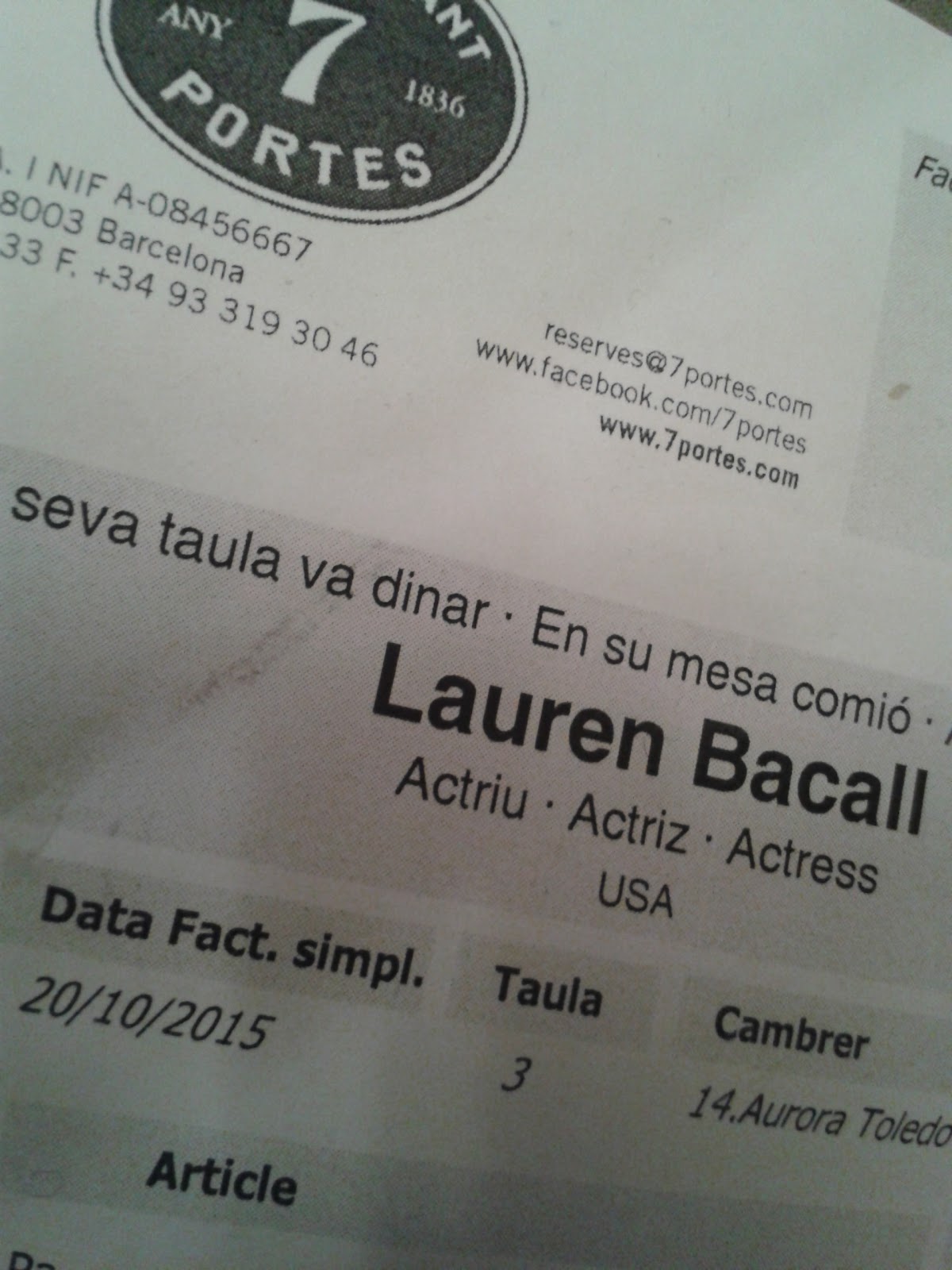
    Thankfully the maitre d’ was obliging and we collapsed in to our chairs at the table once occupied by Lauren Bacall and enjoyed a fantastic meal of local charcuterie, salt cod salad, proper dark and earthy paella, sausage and beans and a welcome glass or two of cava. I finished off with a grappa sorbet, which was a very interesting experience and set me up nicely for a good night’s sleep.
    We staggered back to the hotel, all of twenty yards, and collapsed into our spacious bed, not forgetting to set the alarm for 6.30 the following morning.

    Day 2: Barcelona to Tangier

    If you have an intercity ticket in Spain you get a free suburban train connection if you need it. With this in mind we rock up at Estacio de Franca at 7am ready to catch one of the several trains that will take us back to Barcelona Sants in time for our 8.30 departure. The station is a cavernous shell with ten platforms, no concession stands, and no trains yet either. Ours should be here by now but it’s not. Eventually, just as we’re wondering whether to get another taxi, just to be on the safe side, a train rolls in to the station and sits at the platform we’re expecting ours to be. But there’s no announcement and the boards don’t change. There are by now about twenty people waiting for this train, half of them decide this must be it and set off to board. We’re among those who wait – we can’t afford to be wrong and end up in Girona. Finally a guard appears and assures us that this is the train we want and we arrive at Sants with enough time still for breakfast.
    Since the Madrid bombings, Spanish stations x-ray all baggage for intercity trains, so there’s a queue for the machine and another for the ticket check-in desk but we’re soon off to Antequera on the Malaga train with what turns out to be the FC Barcelona handball team heading for a match in Cordoba (which they win comfortably). Spanish turista class is more comfortable than second class in the UK, “Pride” is playing on the little tv screens above our heads but we’re crossing an unfamiliar landscape and it’s fascinating. By the end of the day I must have seen a billion olive trees!
    Antequera Sant Ana is a new out of town station, built we suspect as an interchange for the high speed lines. We get off and learn that our connection to Algeciras is delayed so there’s not much to do but sit in the pleasant autumn sunshine looking out on yet another massive olive grove and wait out the extra 15 minutes. We left Barcelona 1000km and over five hours ago and it’s going to take another three hours to finish the 150km to Algeciras as we spend the next two climbing high into the Sierra Nevada behind an engine whose chugging demeanour would be so much more fitting were it a steam loco. The scenery is breathtaking however and we’re loving it.
    Arriving in Algeciras, our first concern is to exchange our emailed ferry booking into an actual ticket. It’s a short walk to the ferry port and we have no trouble achieving our goal and settle down in the café with a beer and a sandwich to wait for the shuttle bus to Tarifa. We’ve decided to cross the straits this way because the fast cat from Tarifa goes directly into Tangier, whereas the ferries from Algeciras tend to go to Tangier Med, the commercial port some 50km out of town. It’s also supposed to be more romantic but the crossing’s not till 9pm and it’s still October so it’s dark by the time we leave.
    Crossing to Morocco is an administrative palaver. X-ray and passport check in the port, police form and passport stamp on the boat, an official checks your passport as you get off the boat see you have indeed got it stamped, another x-ray and passport check in the terminal before you are released into the Moroccan night. There are also young men offering help with every eventuality, for a price not mentioned in advance. We scurry out towards the gate, resolutely refusing all offers of help with our bags, our currency or our transport arrangements. Our hotel is a small riad in the medina, quite close to the port – it looks easily walkable but it’s dark and unfamiliar and I can’t make out exactly where we are on the map. A taxi pulls up on the off chance and says he will take us for €5 so we give in and go with him. Sadly he approaches the place from the wrong direction and can only drop us around 50m short of our destination. It’s now about 10pm. Getting more and more spooked we drag our frighteningly noisy cases up the narrow cobbled street, though strange sounds and smells, till we spy a sign that says “Dar Jameel”. Of course, it’s not a conventional hotel with a brightly lit porch and a doorman; it’s down an alleyway, there’s a small sign and a heavy wooden door. We knock. After what seems like an eternity a very friendly young man answers and ushers us in, we confirm who we are and are offered mint tea and a seat on a very comfortable divan.
    Our room is on the top floor and there’s no lift, so one final effort awaits before we can reach the sanctuary of the bed. But we’ve made it – Fratton to Tangier overland in two days.

    Day 3: In Tangier

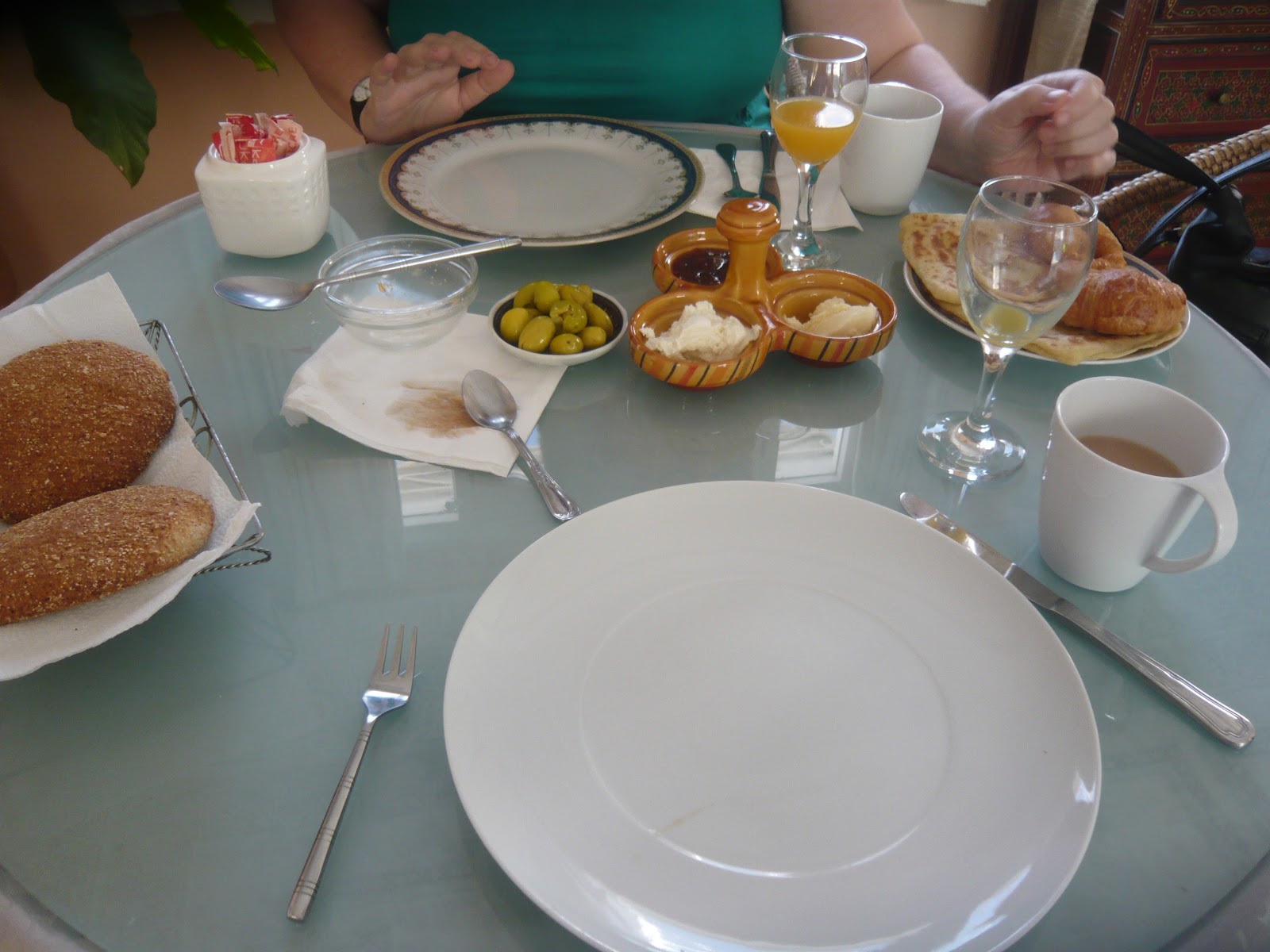
    Awoken by the call to prayer from the nearby mosque, day three dawns along with the re-realisation that we’re on a different continent. Looking out of the window the scene is as benign today as it was scary last night and we’re excited to go exploring. The breakfast room is just outside our bedroom and we help ourselves to juice and coffee. I have a yoghurt too. We are then brought rolls, flatbreads, olives and cream cheese along with croissants and jam; a real mix of cuisines.

    We need cash and the nearest ATMs are in the Grand Socco (square) which we are assured is not far and easy to find. The route takes us past the mosque and along what turns out to be a fairly major street through the medina. “Mr Haggler” cheerily invites us into his shop but we politely decline and carry on, through the Petit Socco, until we spy an ATM. It turns out to be empty but there’s another across the square and we stock up with Dirhams and head towards the Casbah.

    We find our way eventually, our map’s not great and we end up taking a long way round, there’s a lovely looking café and we stop for mint tea under a tree. Various tour parties pass through and there’s a small group of young men ever willing to help. They’re happy to leave us alone while it looks like we’re not going anywhere, but as we start to move off one of them is at our shoulder offering to guide us to the museum. He’s not easily put off and he’s still with us offering titbits of information as we go along. We give in and Karim takes us on a tour of the sights of the Casbah finishing up at the door to the museum. He’s very personable and speaks a number of languages – he has marketable skills – but wants an absurd fee for his efforts. We stand firm and he accepts a more reasonable amount and we part.
    The museum is a cool oasis, and although the exhibits are not shown off to their best effect, it’s interesting. There’s a garden and we sit a while before moving on.
    On leaving the Casbah we are approached by another would be guide and it takes quite an effort to shake him off but we are eventually left to wander the streets on our own. Fetching up again at the Petit Socco we stop for mint tea and cake. Sitting outside to watch the world go by leaves us open to approaches from the various hawkers plying their wares but it’s all very convivial and they’re politely rebuffed and anyway are easily distracted by the groups of tourists that pass regularly from the German cruise ship in port today.

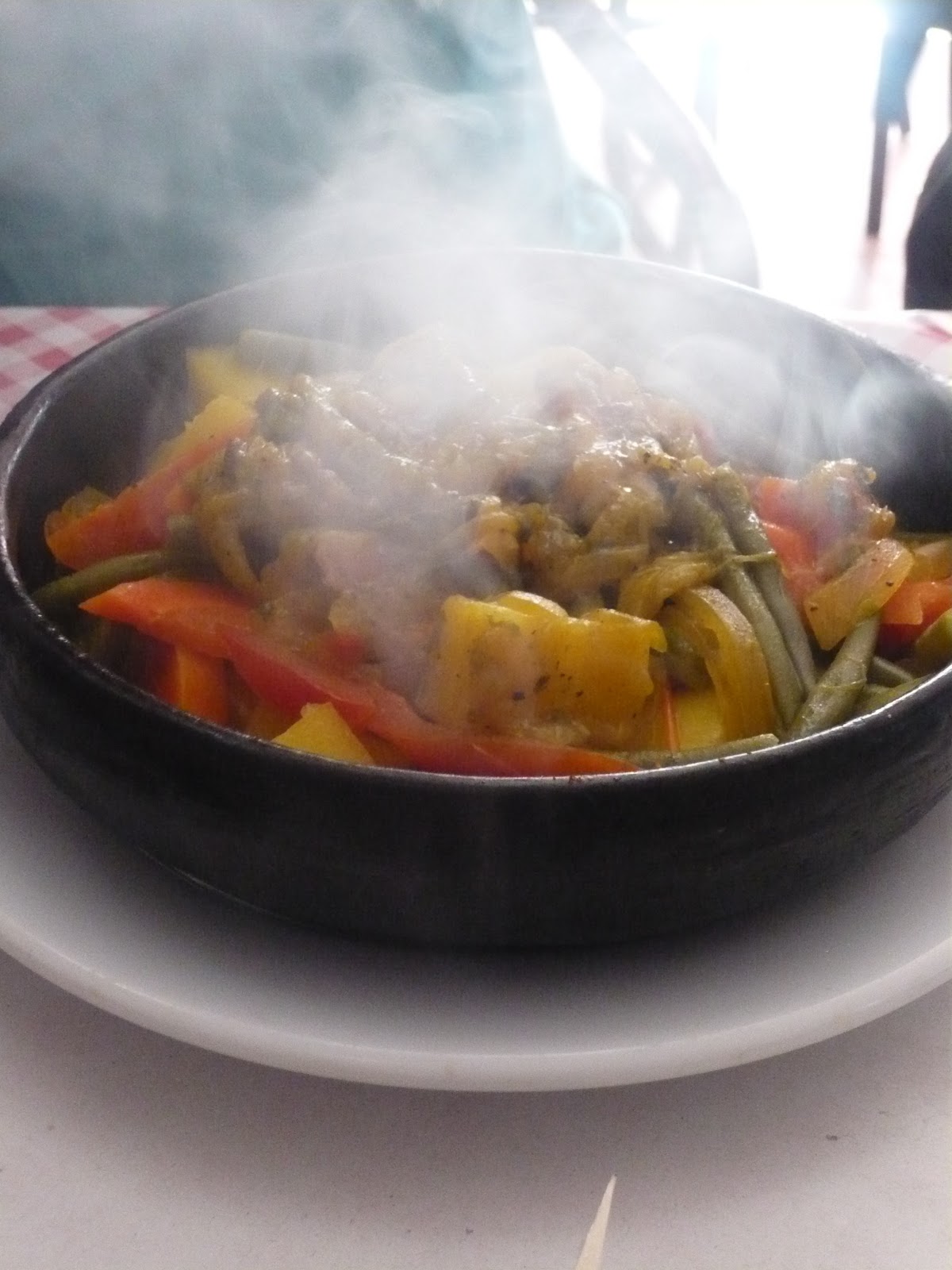
    There’s a modern art museum not too far away and we head off. The route takes us through a flea market and the stalls get increasingly “jumble-y” as we make our way up the hill. The gallery turns out to be closed though so we decided to head down towards the beach and to lunch. We pass, fascinated, through the more food oriented end of the market and stop at a small restaurant near the beach for cous cous and tagine. It’s strangely empty for a place close to the seafront and the waiter is clearly not used to tourists, but the food is tasty and filling. I drop my camera on the floor and it throws a hissy fit, refusing to work until we get home again. Which is as annoying as you can imagine as I’m left with my phone for remaining pictures.
    There’s massive development going on at the seafront; they’re building a new port to attract more cruise ships and it’s eaten up half the beach. A lot of the beach-side bars and clubs have also closed and there’s a definite ‘end of season’ feel about the place. Still, we decide to head for the sand anyway and find our way down from the promenade.

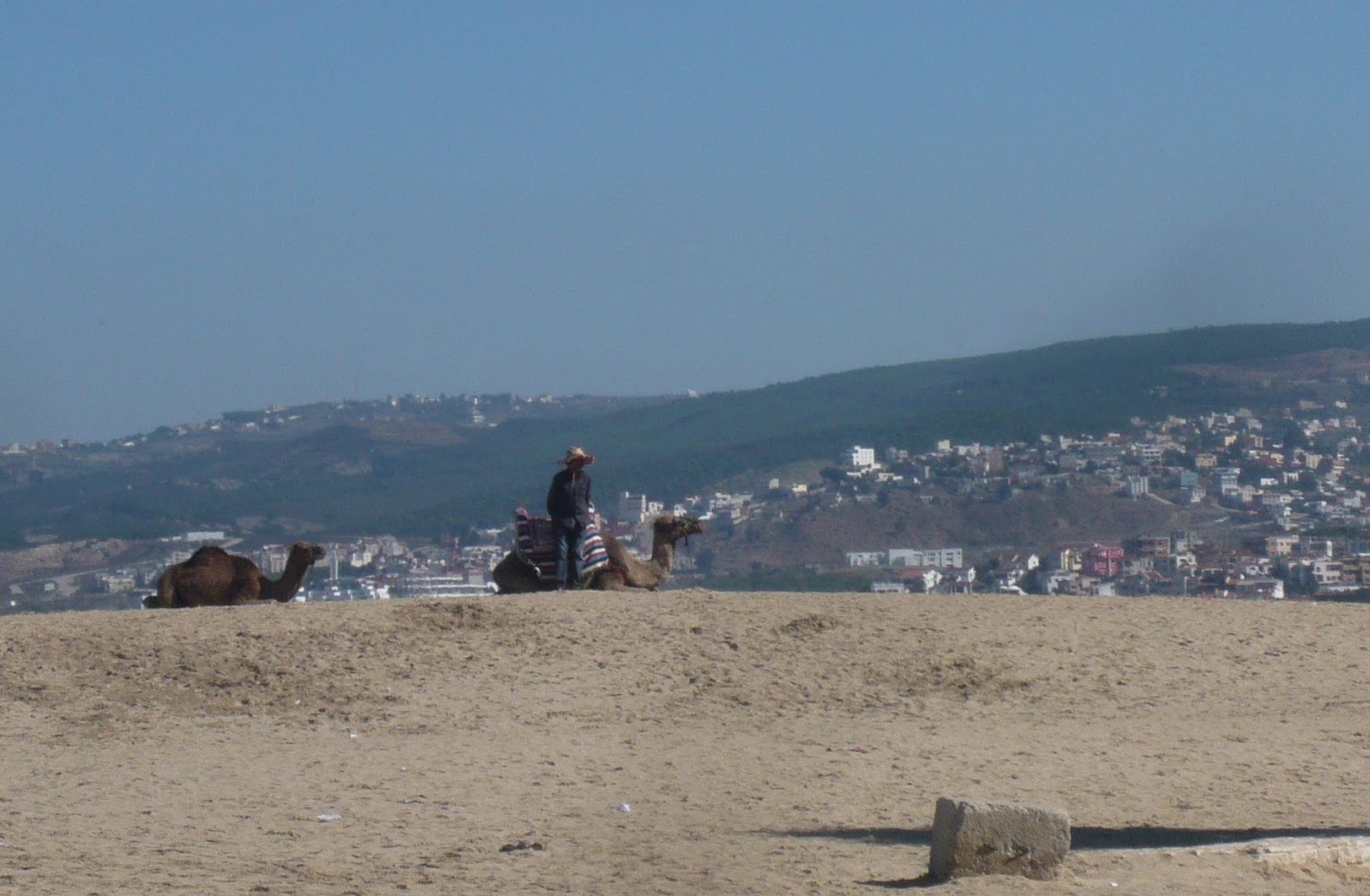
    And there sat Layla the camel. Terrific excitement as we took turn to ride, chatting with her handler whose brother lives in Rotherham of all places. After which it was high time for a siesta and we strolled back to Dar Jameel.
    We had noticed a nice looking restaurant round the corner and decided we’d eat there. A good choice; we had a great meal. Nearby we passed a small workshop three-quarters full of loom and stopped to look. The proprietor, or at least the chap left to watch over it, scurried over and we started chatting. His English was particularly good and we noticed a hint of an unusual accent, not surprising as it turned out he’d spent 19 years in Glasgow! Hand woven scarf duly purchased, we retired to bed for an early start to Casablanca in the morning.

    Day 4: Tangier to Casablanca

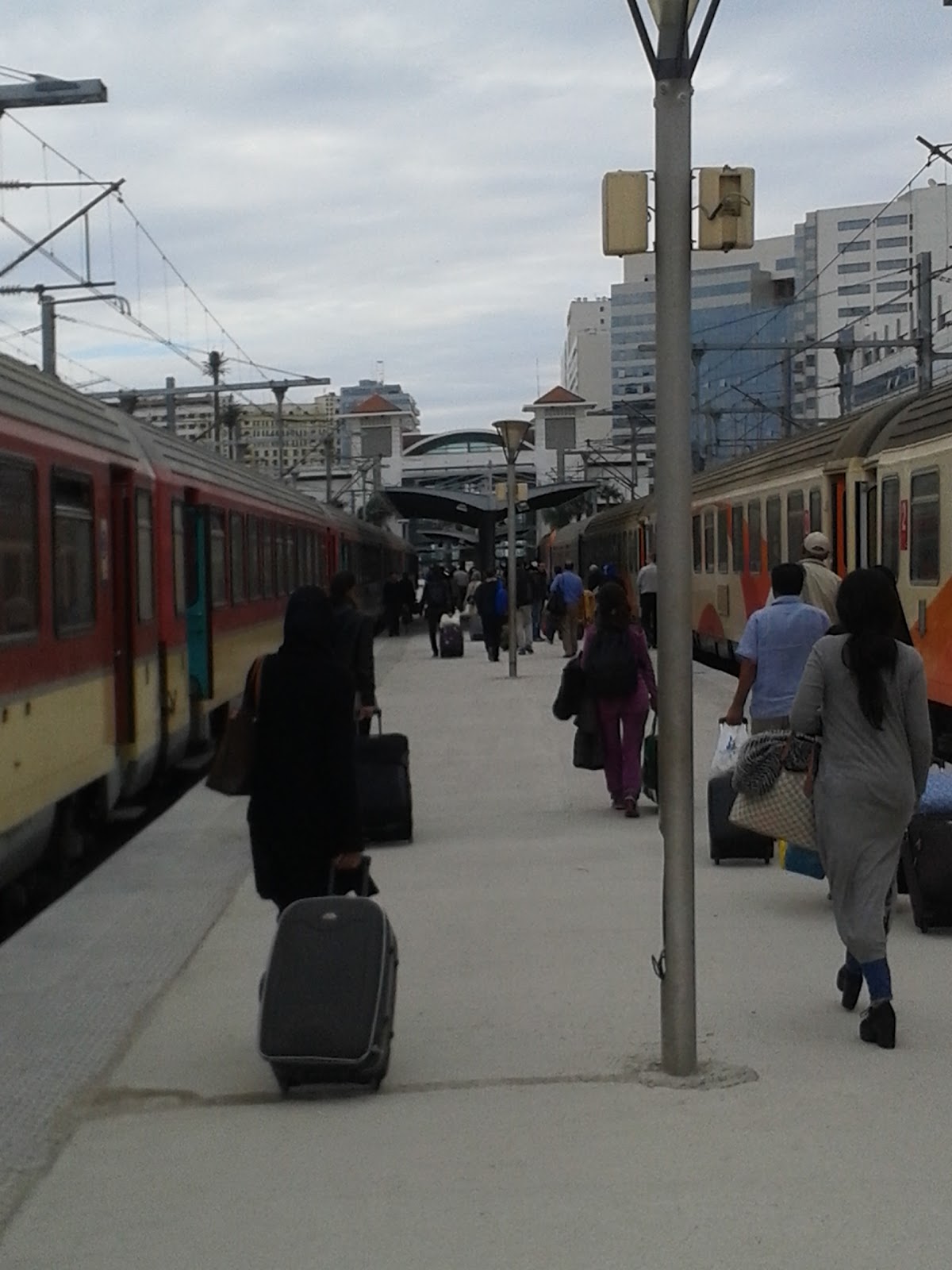
    Tangier station is a curious affair. It’s a long way from the building to the platforms past ornamental gardens and the train isn’t necessarily parked as near to the end as it could be. First class tickets on ONCF are pretty cheap and they afford you at least the luxury of air-conditioning. The whole system is getting upgraded, there’s a high-speed line being built, but the current stock is reminiscent of 1980s British Rail – the lavatory is a toilet bowl over a hole in the floor for instance.

    First class in Morocco is routinely the carriage at the back of the train so we find our compartment quite easily and settle in for the long journey south. Travelling through the Moroccan countryside is pretty eye-opening. For a start, it’s much greener and more fertile than we imagined, most of the land we travelled alongside was being farmed – lots of small strips chequer-boarding the land we passed were being ploughed, either by tractor or oxen, ready for the winter growing season. It’s a beautiful country. Cattle egrets (I think that’s what they were) followed the livestock and the plough and small herds of sheep and goats, and cows, dotted the terrain feeding on the remains of the harvest helping to clear the land for the next crop.
    Alongside this bucolic idyll, building work was going on everywhere and not just the new rail line, which incidentally was being constructed piecemeal rather than from one end to the other. There were both large construction projects and new housing of all sizes and all stages of completion in the towns and villages along the tracks. Interestingly, houses look like they’re built almost from the inside out – people would be living in structure that appeared completely unfinished from the outside, others would be superficially rendered, some had more elaborate rendering, a few were painted and finished but all were lived in once they were habitable. There were of course other structures that were less salubrious still, sometimes what looked like an animal shelter turned out to be someone’s home and sadly there was rubbish, mostly plastic, everywhere.
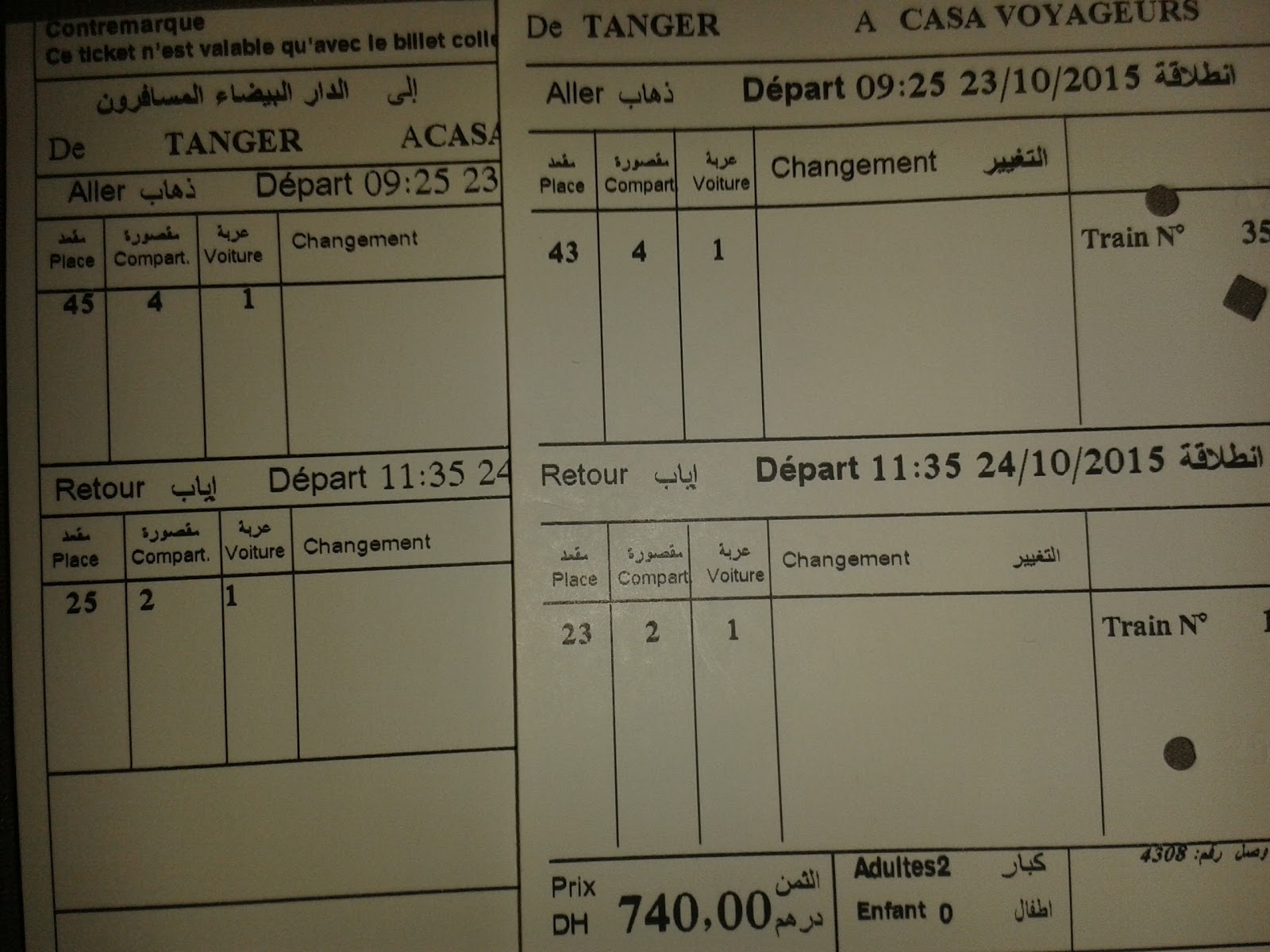
    Our journey was incident free (apart from the small boy getting frightened witless by an express train passing the window as he looked out) and we arrived at Casa Voyageurs station 5½ hours after leaving Tangier. Once again I’d booked a hotel near the wrong station but at least it was in the area of town that we wanted to be. A taxi was required so we approached the rank, such as it was, and were ushered towards one of the many ropey-looking red hatchbacks claiming to be a licensed cab. Casablanca’s traffic is mental. Weaving around other weaving cars we somehow made it to our hotel, but not before our driver picked up a young woman along the way in what appeared to be a perfectly normal transaction – the taxi was not full, and she could make use of the spare seat.
    Our room was enormous with a super king-sized bed. And there’s plenty of time for a quick rest, perhaps a shower, before heading to Rick’s for dinner.

    Next: Rick’s, a late night crossing, Madrid and home.